

























































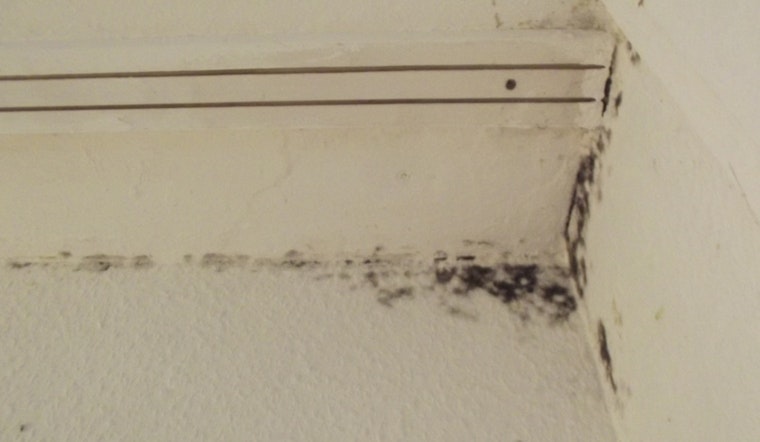
Mold has now shuttered two Richmond elementary schools within weeks of each other, forcing hundreds of children out of their classrooms and into borrowed spaces at community centers as the district races to clean up buildings that, in some cases, have stood for more than a century. Bellevue Elementary in Church Hill, a 114-year-old school, closed after mold was discovered inside four classrooms, and Richmond Public Schools says it will keep the whole building shut until the day after Labor Day even though it is treating the entire structure out of an abundance of caution.
According to Axios, RPS has sealed and cleaned the four affected classrooms at Bellevue and plans a full-scale remediation of the building. While work continues, Bellevue students can attend an Educare program at the Lucks Field Community Center, according to the outlet's reporting. Kylie Brown, a Richmond Public Schools spokesperson, has been the district's point of contact on the closures.
Bellevue is the second Richmond campus to shut down over mold this school year. Obama Elementary students started the school year more than a week and a half after the rest of the district after mold was found there, and per RPS, those students are set to return Thursday. A third school, McClenney Elementary, also drew concern after suspected mold was reported, though RPS has since completed remediation there and the school has reopened all rooms.
What Went Wrong Inside Obama Elementary
The mold problem at Obama Elementary traced back to a moist pipe hidden inside a supply closet above ceiling tiles, according to a report from The Richmonder. That moisture allowed surface mold to spread across auditorium music equipment, laptops, and classroom walls, and it was discovered as staff prepared classrooms ahead of the school year. Obama Elementary has since completed its mold remediation, but the disruption forced the district to offer displaced families the option to transfer.
Richmond Public Schools received more than 1,500 applications for elementary school enrollment this cycle, and 38 Obama Elementary students, roughly 13% of enrollment, applied to transfer to McClenney or Overby-Sheppard elementary schools. RPS gave seats to 21 of those 38 applicants, per district data shared with Axios, and accepted all transfer applicants in grades 2 through 4 outright. Where demand in a given grade exceeded the open seats, the district resorted to a lottery, and it currently has 389 open elementary school seats districtwide.
McClenney's Scare, and a Different Outcome
Not every mold report has resulted in a closure. Suspected mold was also flagged at McClenney Elementary in late August, but air quality test results released on August 31 confirmed indoor mold levels were not elevated, according to the same Richmonder report, clearing the campus to remain open for students and staff. The contrast underscores how the district's testing protocols have produced different outcomes even amid heightened scrutiny of its aging buildings.
At Bellevue, an initial assessment by environmental consultant Southern Environmental identified unconditioned outside air entering through attic access points as the likely cause of the moisture buildup, mixing with indoor conditioned air inside the building. That finding prompted RPS to begin sealing attic insulation alongside its broader remediation work in August, as detailed by The Richmonder.
An Aging District Runs Out of Room to Patch
The back-to-back closures land against a stark backdrop: more than half of Richmond's city schools are over 50 years old, and a dozen are over a century old. School closures kept hundreds of children out of classrooms during the first weeks of the school year, and parent frustration has run high over both communication and what feels like a recurring cycle of facility failures.
Money has been part of the problem for years. In April, the City of Richmond front-loaded $9 million into RPS's capital improvement fund for urgent repairs, including $1.9 million for window replacements at Bellevue Elementary itself, but that move reduced projected annual capital allocations to just $795,500 a year from fiscal year 2028 through fiscal year 2031. Virginia, unlike many other states, provides no guaranteed state funding for local school construction or capital maintenance, leaving that financial burden entirely on local budgets.
A November Ballot Measure Could Reshape the Math
Richmond voters may get a chance to change that calculus. House Bill 334, passed by the Virginia legislature, allows any city or county in the state to place a referendum on the November ballot for an additional 1% local sales tax dedicated exclusively to school construction and major renovations, with revenue barred from covering operating costs. Richmond Mayor Danny Avula estimated in July that the tax could generate $47 million annually for Richmond Public Schools and leverage up to $850 million in school capital projects through 2034.
State law bars local school boards and city governments from spending public dollars to lobby for the referendum's passage, which is why a newly formed group, Virginians for Modern Schools, has stepped in. Former Richmond School Board member Kristen Nye and former city Chief Administrative Officer Lincoln Saunders launched the statewide advocacy organization in August, aiming to raise $1 million to $1.5 million to support similar sales tax referendums in more than 20 Virginia localities. Whether Richmond's mold-plagued buildings get the money to fix their underlying problems for good now rests largely on that November vote and the privately funded campaign built to win it.





