

























































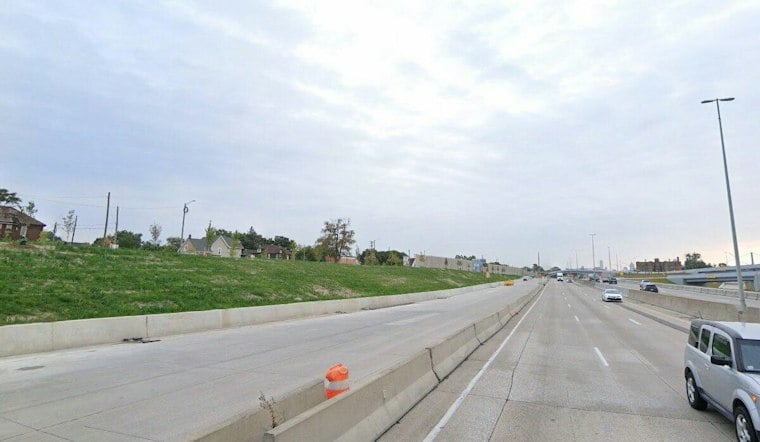
A motorcyclist is hospitalized with serious injuries after a chaotic sequence on southbound Interstate 75 in Detroit Friday night: a high-speed rear-end crash followed, moments later, by the rider getting struck by another vehicle after running across live freeway lanes. Michigan State Police say the collision happened south of the Davison Freeway around 9:47 p.m. on Friday, September 25, 2026.
A Rear-End Crash Sets Off a Dangerous Chain of Events
According to CBS Detroit, troopers responded to the scene after the motorcyclist, who was heading southbound on I-75, slammed into the back of another vehicle. Witnesses told the outlet the motorcycle had been traveling at a high rate of speed and weaving through traffic before the impact. The rider then got up and ran across the freeway lanes, where a separate vehicle struck him, per the same report.
Michigan State Police reported the motorcyclist was struck by a vehicle following the rear-end crash, though investigators say they do not yet know why he ran into the roadway. Officials say the investigation remains ongoing, and no additional details on the rider's condition or identity have been released.
What Michigan Law Says About the Crash Sequence
The initial rear-end impact carries its own legal weight under state law. Michigan's rear-end collision statute, MCL 257.402, establishes a rebuttable legal presumption that a driver who strikes the back of another vehicle traveling in the same direction is negligent, according to Michigan Auto Law. That presumption is reinforced by the state's Basic Speed Law, MCL 257.627(1), which requires motorists to drive at a speed that allows them to stop within the assured, clear distance ahead, as detailed by the State of Michigan.
But the rider's decision to run across active lanes introduces a separate legal wrinkle. Under Michigan Compiled Laws Section 257.679a, pedestrians are strictly prohibited from walking or running on limited-access highways like I-75, making foot travel on the freeway a civil infraction in its own right.
A Recurring Danger on This Stretch of I-75
This is not the first time the I-75 corridor near the Davison Freeway has seen a high-speed motorcycle crash turn severe. In September 2024, a 21-year-old motorcyclist traveling at more than 150 mph rear-ended an SUV on the north side of I-75 near Davison and was found in the center lane, according to FOX 2 Detroit.
Secondary pedestrian strikes following an initial highway collision have also proven dangerous in Detroit before. In January 2024, a woman was critically hurt on I-75 after stepping out of her vehicle following a crash and being struck by oncoming traffic. Both cases underscore how quickly a survivable vehicle crash can turn catastrophic once someone ends up on foot in live freeway lanes.
Motorcycle Safety Numbers Across Michigan
The crash also fits into a broader pattern of motorcycle risk statewide. Michigan recorded 3,187 motorcycle-involved crashes in 2024, resulting in 168 fatalities, according to state traffic data published by the Michigan Department of State. Based on vehicle miles traveled that same year, Michigan motorcyclists were more than 22 times more likely to die in a traffic crash than occupants of passenger vehicles, per Michigan Auto Law.
State police aviation units have increasingly focused on catching extreme speeders on Metro Detroit freeways. In July 2026, a state police helicopter tracked a motorcyclist weaving through Detroit traffic on I-75 at speeds reaching 140 mph before troopers made an arrest, FOX 2 Detroit reported. The Michigan State Police Traffic Crash Reporting Unit processes roughly 315,000 qualifying crash reports each year into the state's central database, giving investigators a broad dataset to draw on as they piece together Thursday night's crash.
Whether the motorcyclist was wearing a helmet has not been disclosed. Under Michigan Vehicle Code MCL 257.658, riders 21 and older may legally ride without a helmet only if they have held a motorcycle endorsement for at least two years or completed an approved safety course, and carry at least $20,000 in first-party medical benefits. For now, investigators say they still do not know why the rider ran into the roadway, and the case remains under investigation.





