

























































Five siblings in Mount Vernon are cooking dinner, getting the younger kids to school, and handling bills on their own after federal immigration agents arrested both of their parents within weeks of each other. The siblings — 20-year-old Ana, 18-year-old Gio, 14-year-old Michael, 12-year-old Robon and 10-year-old Itzel — are all U.S. citizens, born in the United States to parents who came to the country roughly 20 years ago.
Their mother, Maria Garcia, was arrested by U.S. Immigration and Customs Enforcement near downtown Mount Vernon about two weeks before this reporting, according to KING5.com. Michael was in the car with her, on the way to her job at a nearby farm, when he saw ICE agents get out of a vehicle behind them. Video of the arrest shows an agent speaking to Garcia in Spanish while she was handcuffed. The outlet reports Garcia has no criminal history.
The children's father was arrested separately by ICE in downtown Mount Vernon after he went to pay a DUI ticket, the station's report states. He has since chosen to self-deport to Mexico, leaving the five siblings to manage the household without either parent present.
A Rushed Goodbye and a Cross-Country Transfer
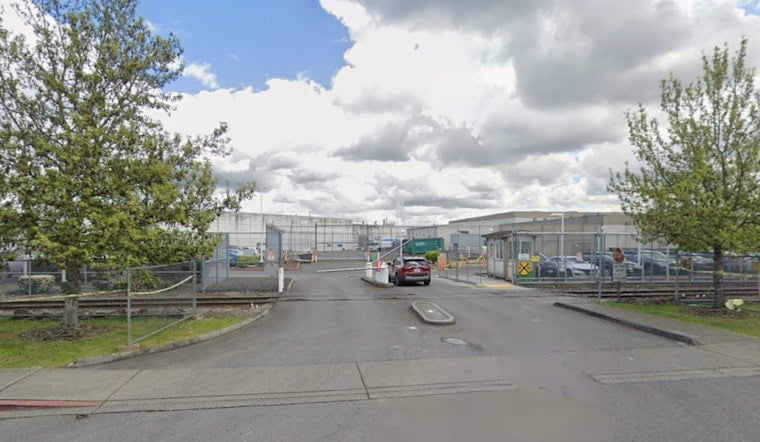
Garcia was initially held at the Northwest ICE Processing Center in Tacoma, the region's primary immigration detention facility, run by private contractor GEO Group with a capacity of 1,575 beds, per the Northwest Immigrant Rights Project. She was later transferred to an immigration detention facility in Arizona, according to the same KING5 account, a move that has complicated the family's ability to communicate with her and mount a legal defense.
Ana Garcia said the siblings had little opportunity to say goodbye to their mother before she was taken. She told the station she did not know why their mother was not coming home, but reassured her youngest sister, Itzel, that things would be okay. Ana said she believes her mother would not want the siblings to go through this. Ana now lives in New York with her fiancé, who is helping the family, and she is remotely helping navigate benefits and day-to-day needs for her siblings back in Mount Vernon.
Older Siblings Step Into Parents' Roles
The oldest Garcia siblings have taken on responsibilities their parents used to handle, and the family says its focus now is keeping the younger siblings in school and maintaining some sense of normalcy. Friends and community members in Mount Vernon have stepped in to help, the report notes, and the siblings have launched a fundraiser to help cover attorney fees, since the family needs an immigration attorney to represent Maria Garcia in Arizona. The siblings say they hope their mother can eventually come home, and they are weighing whether to remain in the United States themselves as she fights her case.
Legal experts note that federal law offers little protection against the kind of separation the Garcia family experienced. ICE's updated Detained Parents Directive, issued in July 2025, gives agents internal guidance to consider the parental responsibilities of primary caregivers during detention and removal proceedings, according to U.S. Immigration and Customs Enforcement. But that directive is administrative guidance, not an enforceable legal right, and it did not prevent Maria Garcia's arrest, detention or transfer out of state.
State Law Keeps Local Police Out of Immigration Enforcement
Washington's Keep Washington Working Act, enacted in 2019, bars state and local law enforcement agencies, courthouses and jails from asking about immigration status or assisting federal agents with civil immigration enforcement, per the Washington State Office of the Attorney General. That law explains why Mount Vernon police were not involved in either arrest; both actions were carried out solely by federal ICE agents, who operate independently of the state restriction.
The Tacoma facility where Garcia was first held has already been the subject of state scrutiny this year. In April, Governor Bob Ferguson and Attorney General Nick Brown filed a federal lawsuit against GEO Group to force state health inspections at the center, after more than 3,500 detainee complaints about medical care, food quality and facility conditions, as Hoodline reported in its piece on the court fight over the Tacoma lockup. Rapid transfers like Garcia's to out-of-state facilities have become more common as detention capacity strains under record enforcement volume; federal contracts with private operators including GEO Group carry $45 billion in congressional funding earmarked for 2025 and 2026 to expand nationwide capacity toward housing 100,000 detainees annually, according to Oregon Public Broadcasting.
A Family Caught in a Wider Enforcement Surge
The Garcia case lands amid a nationwide spike in immigration enforcement. ICE arrests reached a record monthly high of 49,571 in July 2026, according to TRAC Immigration data, and Maria Garcia's mid-August arrest fell within that same peak period of federal activity. Similar disruptions have hit other Western Washington families in recent months, including a Pierce County nurse's family split apart after a traffic stop once her Temporary Protected Status ended, and a group of North Seattle landscapers detained in a daylight street stop this summer.
Mount Vernon's Hispanic or Latino residents make up 36.8% of the city's roughly 35,300 population, according to U.S. Census Bureau estimates. Maria Garcia worked in Skagit County's agricultural sector, which generates about $350 million in annual crop and livestock output across 90,000 acres and depends heavily on seasonal and migrant farmworkers, per Washington State University Extension. That workforce has already been shrinking: hired farm labor in Washington fell 23% between 2017 and 2022, with migrant farmworker numbers dropping 37% to about 35,000 as reliance on H-2A guest worker visas nearly doubled, according to a 2024 analysis by The Daily Chronicle.
For now, the Northwest Immigrant Rights Project, which offers legal representation for detainees at the Tacoma facility, advises undocumented parents to set up power-of-attorney and caregiver agreements for their children in case of sudden detention — a safety net the Garcia family did not have in place when agents arrived. Ana, Gio, Michael, Robon and Itzel are left instead to lean on each other, their fundraiser, and the Mount Vernon community while their mother's case moves forward in Arizona and their father remains in Mexico.





