

























































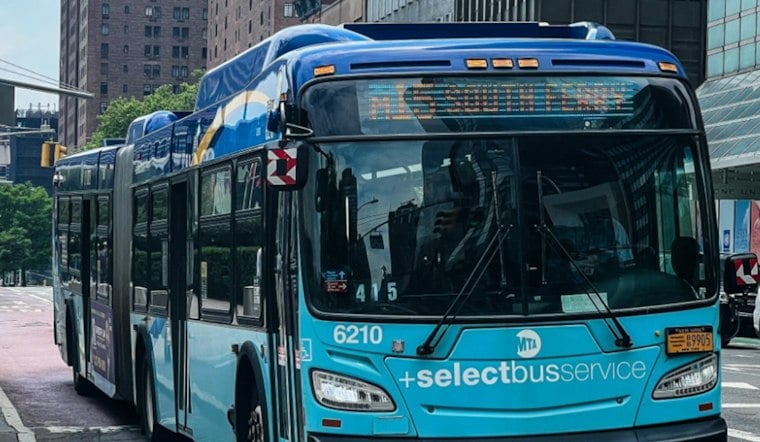
New York's Metropolitan Transportation Authority is asking the Trump administration to exempt its purchases of new subway cars and buses from tariffs, warning that import levies could force the agency to scale back upgrades to a subway fleet that hasn't seen a refresh this large in its history. The state-run agency, which oversees the nation's biggest transit system, is in the middle of overhauling its decades-old trains and buses even as it tries to keep costs from ballooning under new trade rules.
According to Bloomberg, the MTA is seeking a Trump administration exemption from tariffs on New York City purchases of new subway cars and buses, part of a broader plan to invest $23 billion over the next few years. Per the same report, the agency's presentation warns that White House tariffs threaten to add $1 billion in potential levies to its purchases, a cost that could force the MTA to scale back needed upgrades. The outlet's reporting frames the request as a defensive move to protect a fleet-renewal push that has been years in the making.
That renewal effort is already visible in the MTA's own procurement filings. The agency is seeking proposals for what it calls the R262 program, a solicitation for 2,390 subway cars made up of a 1,140-car base order plus a 1,250-car option, according to the MTA's procurement page. The agency has separately described the R262 contract as its largest subway-car order ever, noting that the subway's entire fleet consists of 6,574 cars, meaning the new contract could eventually replace more than a third of the fleet.
Conflicting Dates on When Bids Are Due
Exactly when bids close on the massive car order is unclear from the agency's own materials. An MTA press release states that proposals for the subway-car procurement were due September 8, 2026, while the agency's procurement page separately lists October 8, 2026 as the current opening or due date for the same 2,390-car solicitation. The MTA has not publicly reconciled the discrepancy between the two dates.
Buses are moving on a parallel track. NYC Transit is also soliciting the furnishing and delivery of 650 low-floor, 40-foot compressed-natural-gas buses, with an opening or due date of November 2, 2026, per the procurement listing. That bus order sits inside the MTA's 2025–2029 Capital Plan, which totals $68.4 billion and includes $3.29 billion budgeted by New York City Transit for 2,261 new buses and related equipment, according to GovMarketNews. The same capital plan folds in a $12 billion investment to replace aging subway, bus and commuter-rail fleets, the agency has said.
Lieber Presses Federal Officials Directly
MTA Chairman and CEO Janno Lieber has taken the tariff fight straight to Washington. He asked Transportation Secretary Sean Duffy to remove tariffs from components used by American manufacturers to build buses and rail cars, as reported by Streetsblog NYC. Lieber argued that the import taxes dilute the efficacy of federal assistance that pays for rolling stock, framing the tariffs as an obstacle that undercuts money Washington itself is providing for transit upgrades.
A Federal Register notice offers some conditional context for that concern: it states that, under Proclamation 10984, buses and other vehicles classified under Harmonized Tariff Schedule heading 8702 are subject to a 10 percent tariff, though the underlying documentation was flagged as low confidence and does not spell out how every category of MTA purchase would be treated. Separately, federal register material notes that Section 604 of the Trade Act of 1974 authorizes the President to adjust the tariff schedule, including removing or modifying duties, which is the legal mechanism the agency is presumably hoping the administration will use in its favor.
Aging Fleets and a National Cost Squeeze
The MTA has said subway cars generally last about 40 years before reaching the end of their useful life, underscoring why officials consider the R262 order urgent even amid tariff uncertainty. On the bus side, the agency anticipates that all new bus purchases will be zero-emission beginning in 2029, with the entire fleet converted by 2040, and its proposed capital plan projected that electric buses would represent 20 percent of the bus fleet by the end of the current plan period.
New York isn't alone in feeling the pinch. London Transit is facing U.S. tariffs on its purchase of 29 new buses, with officials there saying the levies are adding about $50,000 to the price of each vehicle, according to CTV News. Transit industry leaders have separately argued that overly complex procurement processes and heavy bus customization drive up prices, lengthen delivery times and discourage manufacturer competition, according to Metro Magazine, which also reported that stable, multiyear procurements tend to produce better pricing than smaller annual buys.
Other agencies are responding to cost pressure by pulling back on ambition rather than fighting tariffs directly. San Francisco's Municipal Transportation Agency board voted on Sept. 1 to delay a state mandate requiring it to buy 378 battery-electric buses for five years, opting instead for the same number of diesel-hybrid models, according to the San Francisco Standard. The agency's board acted amid a projected operating deficit of $307 million this fiscal year, a shortfall expected to grow to $434 million within five years. Whether the MTA will get the relief it's asking for from Washington remains an open question, but the scale of its planned overhaul means the answer will shape New York City transit riders' experience for decades.


