

























































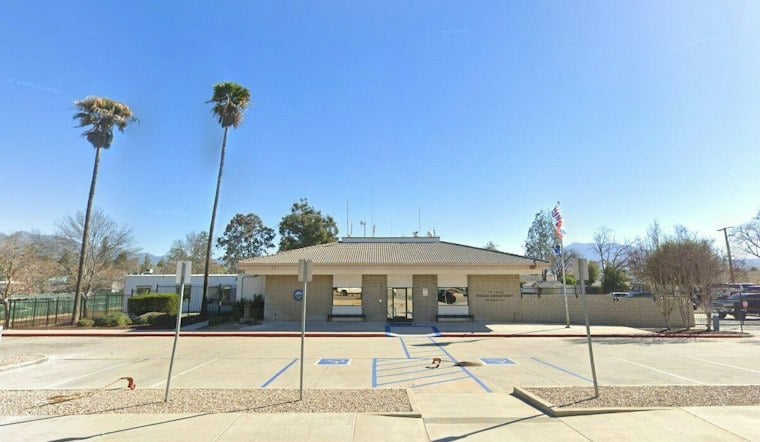
Nancy Melara’s federal lawsuit names the City of Beaumont and former police corporal Miguel Macias as defendants in the U.S. District Court for the Central District of California. The complaint seeks compensatory and punitive damages and brings claims under the Fourth and Fourteenth Amendments, California civil-rights protections, negligence law and state gender-violence statutes, according to MyNewsLA.com. The allegations have not been adjudicated.
What the complaint alleges
The complaint says Melara first encountered Macias in 2010 after reporting a sexual battery and alleges that he later used information from that police-related contact to communicate with her personally. It describes unwanted sexual communications and alleged coercive encounters, as well as later threats after contact resumed in 2024 when Melara sought a character-reference letter. The filing also alleges that other Beaumont police employees knew about Macias’ conduct and failed to intervene, and that Melara contacted the FBI. Those claims are allegations in the lawsuit, not findings by a court, as reported by MyNewsLA.com.
Macias was dismissed from the Beaumont Police Department in July, according to Patch. The available reporting identified no federal or Riverside County criminal charges and no scheduled court date. The city, department and Macias had not publicly responded in the reports cited here.
How California’s certification system fits
The lawsuit and a state certification proceeding would be separate matters. California’s Senate Bill 2 certification and decertification system took effect Jan. 1, 2022, and applies to specified peace officers and officers employed by agencies participating in the state POST program, according to the California Commission on Peace Officer Standards and Training. POST’s Peace Officers Standards and Accountability Division receives and investigates allegations of serious misconduct, while California law separately requires each law-enforcement agency to establish a process for investigating complaints against officers, the POST disciplinary guidelines and California Department of Justice explain.
POST’s guidelines also say agencies must complete misconduct investigations even when an officer resigns and may share disciplinary records with agencies conducting later background investigations. The state materials authorize suspension or revocation of certification for specified misconduct, but the records cited here do not establish that Macias has faced a POST action or show how often California has taken certification action specifically for sexual misconduct.
Documented examples show different tracks
A public POST decision illustrates one possible state outcome, but not the outcome of Melara’s case. The agency revoked San Diego police Officer Anthony W. Hair’s certification on July 23, 2024, after proceedings involving reasonable grounds related to dishonesty and sexual-assault allegations arising from an Aug. 14, 2023, incident involving a female detainee, according to POST’s statement of findings.
A separate federal criminal case demonstrates a different accountability path. The U.S. Department of Justice said a federal jury convicted former Sanger police officer J. DeShawn Torrence in January 2025 on eight civil-rights deprivation counts involving four women he encountered during official duties; the case resulted in five consecutive life sentences. That was a criminal prosecution ending in a conviction, unlike Melara’s unresolved civil lawsuit, and it should not be treated as evidence of a statewide trend, according to the Justice Department.
The next significant developments in Melara’s case would include responses from the defendants and any ruling on the claims. Until then, the complaint documents Melara’s allegations and requested remedies; it does not establish that the alleged conduct occurred or determine whether the city or former officer is legally liable.




