

























































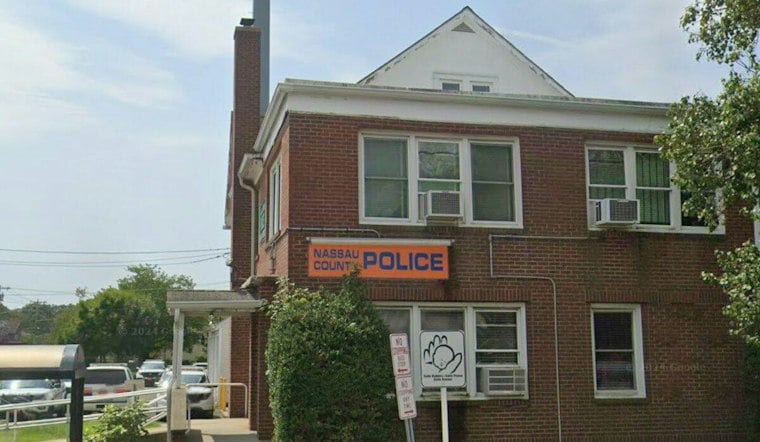
Nassau County has paid Roger Basile $6.3 million to resolve a federal civil-rights case stemming from his 2018 arrest and alleged beating inside the Seventh Precinct in Seaford. The payment, made in July, followed a jury verdict, an appeal and years of litigation, Newsday reported.
The case began on Oct. 11, 2018, after Basile’s wife called 911 during a domestic argument and reported that he had driven away with her purse. Police stopped him in Westbury and took him to the precinct, where Basile said he was assaulted while in custody, according to Newsday’s account.
What the jury decided
Detectives Jesse Perkins and Robert Lashinsky were named as defendants and denied beating Basile. Court filings described their position as being that Basile caused his own injuries by striking his head against a wall, according to Daily Voice.
A federal jury awarded Basile $4.5 million in compensatory damages in October 2023. The jurors did not find that either Perkins or Lashinsky specifically struck him; instead, they found that an unidentified Nassau County officer or detective committed a battery while Basile was in custody, according to trial materials described by Daily Voice. The final payment rose to $6.3 million after $1.8 million in interest, and an appeals court upheld the verdict in March, according to Newsday.
That result differed from Nassau County’s Internal Affairs conclusion, which classified the excessive-force allegations as “undetermined.” The investigation nevertheless recommended surveillance cameras in squad holding cells, according to Daily Voice. The available record does not establish from the materials cited here whether that specific recommendation was implemented.
A significant cost, but no complete police-payout ranking
The $6.3 million award is substantial, but the county record identified for this report does not provide a police-specific list of settlements and judgments since 2018. That means the payment cannot reliably be ranked against every Nassau County police-related payout.
Nassau County’s preliminary official statement says the county self-insures for most risks and annually appropriates money to pay judgments and settlements. It reports approximately $375.7 million in recorded claims and litigation liabilities as of the cited financial-statement date, a broad liability figure that includes more than police-misconduct cases and is not a direct measure of Basile-related exposure, according to the county statement.
A separate Nassau County preliminary official statement says the county established a Litigation Fund in 2015 to cover the cost of judgments and settlements, while also noting that the county self-insures for most risks. Those mechanisms help explain how a judgment such as Basile’s becomes a county fiscal obligation, but they do not identify which department or policy decisions ultimately drove the alleged conduct, according to the county’s 2025 statement.
The broader liability picture
Basile’s payment arrived during a period of other major Nassau County litigation costs. Earlier this year, the county paid $10 million to Joseph Jackson after his murder conviction was overturned following 23 years in prison, according to Newsday. Jackson’s case involved a wrongful-conviction claim rather than an in-custody beating, so it is a separate example of county liability—not evidence that similar claims are occurring at a particular rate.
The central unresolved question in the Basile case is therefore narrower than the size of the check: the jury found that an unidentified county officer or detective battered him, while the named detectives denied doing so and Internal Affairs deemed the allegation undetermined. The settlement closes the litigation financially, but the public record described here does not identify the individual the jury found responsible.





