

























































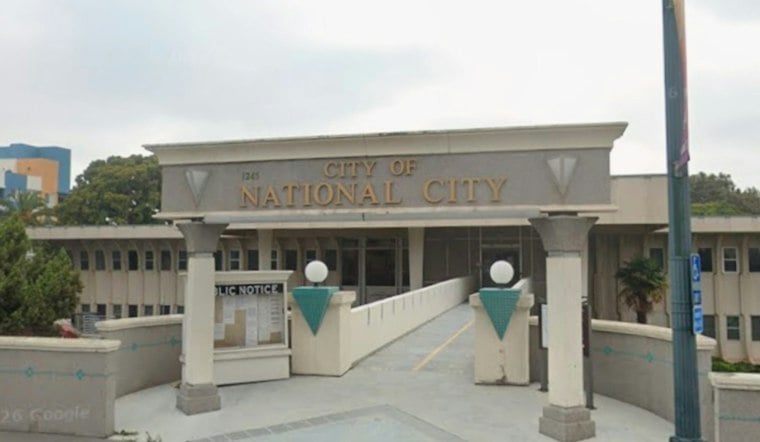
National City's new short-term rental ordinance takes effect next week, capping the number of Airbnb and Vrbo units allowed citywide at 180 and prohibiting operators with criminal records related to prostitution or other serious crimes from renting out their properties. The law comes after city officials say unsupervised rental properties became scenes of shootings, stabbings, drug use, and even human trafficking.
According to 10News, the National City Council passed the ordinance unanimously in September 2025, and it will not grandfather in any existing short-term rentals — every operator must apply fresh, on a first-come, first-served basis. Councilmember Jose Rodriguez, who advocated for the crackdown, said unsupervised Airbnb and Vrbo properties had become locations for criminal activity, according to the same report. One property near Civic Center Drive was the scene of a recent shooting, the station reported.
A woman who lives near that Civic Center Drive property told 10News she had never once seen the rental's owner check on it in person, despite having security cameras installed. She said the owner should be inspecting the property visually regardless of camera coverage, and described the scene at times as heavy partying, with women coming in and out of cars half-nude, the station's report notes.
Permits, Fines, and Round-the-Clock Oversight
Under the ordinance, short-term rental operators must obtain permits, keep noise under control between 9 p.m. and 6 a.m. local time, and maintain around-the-clock oversight of their properties — meaning someone must be on-site or available 24 hours a day to handle issues, per the same account. Violating the permit terms can bring a fine of up to $1,500 and permit revocation.
The city is allocating 45 short-term rental units to each of its four council districts, and the permit-application portal will launch on the city's website next week, the outlet reports. Deckard Technologies, a firm based in San Diego, will process the applications on the city's behalf. National City will also post a short-term rentals webpage with contact information and a link to the ordinance, and that page will display the application portal link once it goes live, according to the report. Airbnb and Vrbo have not responded to 10News's requests for comment on the new law.
Ownership Rules Go Beyond San Diego County Norms
The permit structure taking effect next week builds on ownership and residency restrictions detailed in December 2025 reporting from inewsource. That reporting found the ordinance limits unhosted rentals — those where the owner doesn't live on-site or next door — to a maximum of 90 days per calendar year, and caps operators to just one unhosted property citywide. Owners or their designated agents must also reside in National City itself or within a quarter-mile of the short-term-rental property, inewsource reported.
City staff also barred operators with prior convictions for prostitution or other serious crimes, according to an August 2025 City of National City staff report. That same staff report set the annual permit fee at $250, roughly matching baseline costs in neighboring South Bay cities like Chula Vista and Vista. If a permit gets revoked for ordinance violations, the city imposes a mandatory one-year cooling-off period before that operator can reapply.
Before Chapter 6.30 passed, National City was one of the last cities in San Diego County with zero short-term rental regulations, permits, or fees at all — despite having more than 100 active listings on platforms like Airbnb and Vrbo, per inewsource's reporting. National City Community Development Director Martin Reeder said the city's small planning staff lacks the administrative bandwidth to process applications beyond the 180-unit cap, though he anticipated the volume might stay manageable given the one-property limit on unhosted operators.
Regional Comparison and a Fiscal Backdrop
Chula Vista, National City's largest South Bay neighbor, enacted its own short-term rental ordinance in 2021 under Chapter 5.68, setting a 275-day primary residency requirement, a $250 initial permit fee, a two-permit limit per host, and a 90-day annual cap on non-primary whole-home rentals, according to research compiled by Josh Taylor. South Bay cities have increasingly aligned their residency and occupancy rules in recent years, that comparison notes.
National City applies a 10% Transient Occupancy Tax to short-term rental bookings, which city staff estimated last year could generate up to $3.3 million annually if all 180 allowed units rented at $500 a night, year-round. But staff also noted that capping unhosted rentals at 90 days a year could cut that potential tax revenue by as much as 75%. The tradeoff lands at a tense moment for city finances: Hoodline previously reported that National City faced financial strain after the council rejected a business-tax overhaul, even as the city adopted an $89.1 million general fund budget in June.
Under California's Short-Term Rental Facilitator Act, which took effect January 1, 2026, local governments with qualifying ordinances can require booking platforms like Airbnb and Vrbo to directly report listing addresses and local tax registration identifiers to municipal code enforcement, according to research from California Short-Term Rental Laws. That state tool gives cities a way to support local tax and licensing enforcement.




