

























































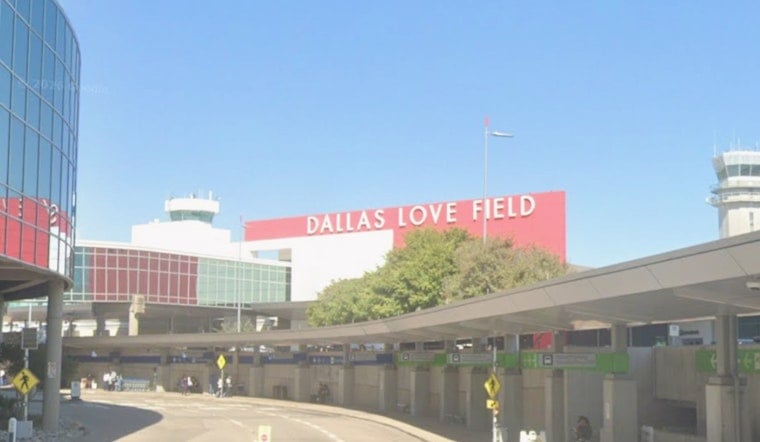
NetJets, the private aviation giant owned by Berkshire Hathaway, is planning a more than 100,000-square-foot campus at Dallas Love Field, with demolition of six existing hangars and a terminal building set to begin in November 2026. The project at 7515 Lemmon Avenue will unfold in three phases and is expected to wrap up by May 2028, bringing a new terminal, hangar and offices to one of the airport's busiest private aviation corridors.
The plans were first detailed by The Dallas Morning News, which reported that demolition alone is estimated to cost around $50 million, while total construction costs for the campus are projected to run between $35 million and $70 million. Filings registered with the Texas Department of Licensing and Regulation in July and August 2026 identify Signature Flight Support LLC as the landowner for the site, with Dallas-based Corgan Associates, Inc. serving as the architectural firm of record. Those TDLR filings, which the agency notes are subject to change without notice, specify structural details for a planned Terminal J and Hangar E.
What The Three Phases Will Bring
The first phase of the project centers on demolishing six hangars and an existing terminal building at the site, which currently functions as Signature Aviation's Terminal 2 fixed-base operator facility, according to the same report. The second phase includes construction of a 14,000-square-foot private passenger terminal alongside renovations to parking, landscaping and utility lines. The final phase calls for an 80,000-square-foot aircraft maintenance hangar plus 20,489 square feet of warehouse, shop and office space.
Once finished, the full campus will exceed 100,000 square feet, combining a terminal, hangar and office space in a single leasehold along the airport's eastern perimeter, per the same account. The site sits within Love Field's existing private aviation footprint, where 7515 Lemmon Avenue is one of several FBO facilities lining that side of the airfield, according to AirNav.
A Company Built On Firsts
NetJets traces its roots to 1964, when it was founded as Executive Jet Airways — described as the world's first private jet charter and aircraft management system. Berkshire Hathaway acquired the company in 1998, and it now operates a fleet of more than 800 aircraft, flying an average of over 1,400 flights per day, the article notes.
The Dallas expansion follows a similar pattern NetJets has pursued elsewhere. In November 2024, the company and Signature Aviation broke ground on a comparable custom, exclusive-use campus with a private terminal, service hub and hangars at Harry Reid International Airport in Las Vegas, a project reported by Business Air News to open in 2027.
Crowded Skies Along Lemmon Avenue
NetJets isn't the only operator racing to expand at Love Field. In March 2026, Business Jet opened 70,000 square feet of hangar space at the airport, and in December 2025, New York-based Sky Harbour Group won Dallas City Council approval for ground leases to build private Home Base Operator campuses at Love Field, Dallas Executive Airport and Fort Worth Meacham — part of what Dallas Innovates describes as one of the fastest-growing business aviation markets in the country.
That surge in private aviation investment is happening because commercial growth at Love Field is capped by law. Under the federal Wright Amendment Reform Act of 2006, commercial passenger operations at the airport are legally restricted to a maximum of 20 gates, a limit set during the legislative compromise that ended long-distance flight bans, according to the U.S. House Committee on Transportation and Infrastructure. Southwest Airlines, which calls Love Field its home base, controls 18 of those 20 gates after the Dallas City Council unanimously approved a 12-year lease extension in May 2025 that keeps the carrier in place through at least 2040, per WFAA.
A $2.5 Billion Backdrop — And A Safety Shadow
NetJets' private buildout is arriving alongside the airport's own massive public overhaul. Love Field is in the midst of the Love Field Expansion Airport Program, a $2.5 billion, 14-project modernization of its commercial terminal, baggage handling and parking facilities, with design work scheduled to begin this year, as Hoodline reported in its piece on Love Field's gate limits. The airport generates more than $5.6 billion in local economic activity, supports roughly 28,000 jobs and served over 17.5 million passengers last year.
The expansion also comes amid heightened scrutiny of NetJets' fleet safety. A NetJets-operated Cessna Citation Latitude crashed short of a runway on a Texas highway in Laredo in June 2026, marking the first passenger-fatal jet accident in the company's decades-long operating history. Preliminary NTSB findings indicated both engines suffered fuel pressure warnings and flamed out, Hoodline reported in its coverage of the NTSB's preliminary findings.
Regional competition for corporate and private flyers is also intensifying beyond Dallas proper. In neighboring Collin County, McKinney National Airport is building a $79 million passenger terminal set to open in November 2026, with Avelo Airlines launching nonstop service to five U.S. destinations as the airfield transitions from a general aviation strip into a regional commercial airport, according to Community Impact.




