

























































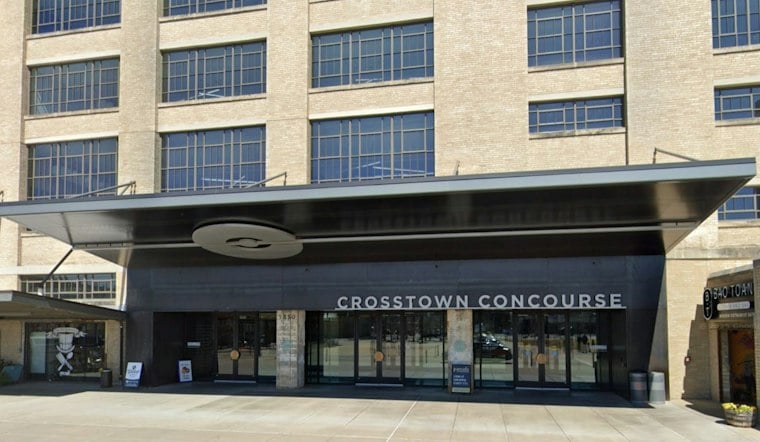
Dave Soldier will step onto the stage at the Green Room at Crosstown Arts on Friday at 7:30 p.m., leading an ensemble through selections from The LeWitt Etudes: Memphis, a performance built entirely on verbal instructions instead of written notes. The co-founder of The Kropotkins has made music with elephants and bonobos, collaborated with Kurt Vonnegut, Marshall Allen, and Johannes Kepler, and played alongside Bo Diddley and John Cale. This time, he is bringing that restless curiosity back to a city that shaped his musical vocabulary decades ago.
Soldier is not just a touring musician with an eclectic resume. As reported by the Memphis Flyer, he was born David Sulzer and holds a day job as a neuroscientist and professor at Columbia University Medical Center, where his research has explored synaptic mechanisms tied to Parkinson's disease, autism, and drug addiction, according to the Wikipedia entry on David Sulzer. That scientific rigor extends into his musical life; in April 2021 he published Music, Math, and Mind: The Physics and Neuroscience of Music through Columbia University Press, examining the physical properties of sound and mathematical structures across global musical traditions, per Columbia University.
A Career Built on Unlikely Collaborators
The Memphis Flyer's profile traces some of Soldier's stranger tours of duty, including backing John Cale on Heartbreak Hotel at the Pyramid during Elvis: The Tribute Concert in October 1994, a broadcast watched by about 80 million television viewers. That same trip put him in the room for oddities like Michael Jackson's flat limo tire, Billy Ray Cyrus handing him a toddler-aged Miley to hold, and Priscilla Presley giving him, Aaron Neville, and Eddie Rabbitt a private tour of Graceland. Jerry Lee Lewis also performed at that concert, and Soldier described him as scarier than any punk rocker.
Soldier's musical roots trace back to Carbondale, Illinois, where he grew up listening to Isaac Hayes and other Memphis music before eventually joining Bo Diddley's band in Gainesville, Florida. He has said that R&B, soul, and the blues are part of the language he grew up with. That grounding eventually led him to Memphis itself, where he discovered the recordings of Sid Hemphill, whose instrumentation included banjo, bass drum, and snare, after first encountering the music at the Smithsonian in Washington, D.C.
The Kropotkins and a Deep Memphis Connection
Soldier co-founded the avant-garage group The Kropotkins with Jonathan Kane in 1994, a project whose music carries a distinctly Memphis-centric flavor. The band released four studio albums between 1996 and 2014, including its self-titled 1996 debut on Koch Records and 2014's Portents of Love on Mulatta Records, according to Discogs. Moe Tucker was once a member of the group, and Soldier met Memphis vocalist Lorette Velvette at Sun Studio, beginning their work together in the mid-1990s. Velvette, who also released the solo compilation Don't Crowd Your Mind on the French label Mono-Tone in 2019 according to her own biography, will join Soldier onstage Friday.
The Kropotkins made a pilgrimage to Otha Turner's farm in the mid-1990s, part of Soldier's ongoing pull toward North Mississippi hill country, Memphis, and Chicago blues traditions. He has said he wants those sounds present in Friday's performance. Even far from home, in Stuttgart, Germany, Soldier once encountered a Japanese street band playing Bill Monroe-style bluegrass, an experience that speaks to his fascination with music crossing cultural lines.
An Ensemble Spanning Blues Roots and Jazz Pedigree
Friday's lineup, assembled by Memphis musician Alex Greene, mixes regional blues lineage with veteran jazz and avant-garde credentials. Soldier will perform alongside Greene, Ra-Kalam Bob Moses, Garry Burnside, Yella P, Sean Murphy, Art Edmaiston, Chad Fowler, and the Otha Turner Boys, with Soldier himself playing violin. Moses brings serious jazz history to the stage: born in 1948 and a former professor at the New England Conservatory, he performed on Pat Metheny's 1976 debut album Bright Size Life alongside bassist Jaco Pastorius, according to KCUR. Moses moved to Memphis in 2021.
Greene himself played on an earlier interpretation of the LeWitt Etudes, which was recorded in New York and released on Mahakala Music. That earlier version paired Soldier with jazz drummer William Hooker on a nine-track studio album released October 28, 2022, featuring musicians including cornetist Kirk Knuffke and bassists Luke Stewart and Ken Filiano at Dolan Studios, per Discogs. Friday's Memphis performance adapts that same concept for a new, differently rooted group of players.
Instructions Instead of Notes
The LeWitt Etudes take their name and method from conceptual artist Sol LeWitt, who pioneered instruction-based art in the late 1960s by producing written guidelines and diagrams for wall drawings executed by others rather than by the artist himself, according to the Modern Art Museum of Fort Worth. Soldier's musical version borrows that same logic: LeWitt supplied instructions for drawings that could be realized in innumerable ways, and Soldier's etudes are designed similarly, open to musicians from any tradition and any level of training, requiring no notes to read.
Instead, the players receive instructions that determine what happens next in real time, turning every participant into both improviser and composer, as Soldier has put it. He wants musicians to surprise one another and has said he wants collaborators to derail his plan rather than simply follow it. He has compared musicians in this setting to songbirds, each contributing their own voice to a larger, unscripted pattern. Soldier has said that musicians from different backgrounds all want to make the best music they can, a philosophy that underlies why blues players and jazz veterans can share the same stage without a single written score between them.
Soldier also pushes back against certain descriptions of his work. He objects to the word weird, which he has described as a nervous way to describe something brilliant and unique, and he says he does not particularly like the word experimental either. Those word choices matter to him because they shape how audiences approach music that asks them to listen differently than they might at a typical bar gig.
A Room Built for Listening
The setting reinforces that intent. The Green Room at Crosstown Arts operates as an acoustically treated, 2,500-square-foot listening space with a capacity of 80 seated or 130 standing guests, designed specifically to minimize the noise and distractions of a standard bar room, according to The Vendry. It is a fitting home for a performance built around close, real-time listening rather than a predetermined setlist.
Soldier's Memphis return arrives amid an active stretch of work; in July 2026 he released the classical orchestral project Vipers at the Onyx on Bright Shiny Things, featuring violinist Curtis Stewart performing Soldier's completion of jazz legend Stuff Smith's unfinished violin concerto, according to The Strad. Whether audiences at the Green Room hear blues, jazz, or something built fresh in the moment, Friday's show promises no two versions of the same piece will sound alike.



