

























































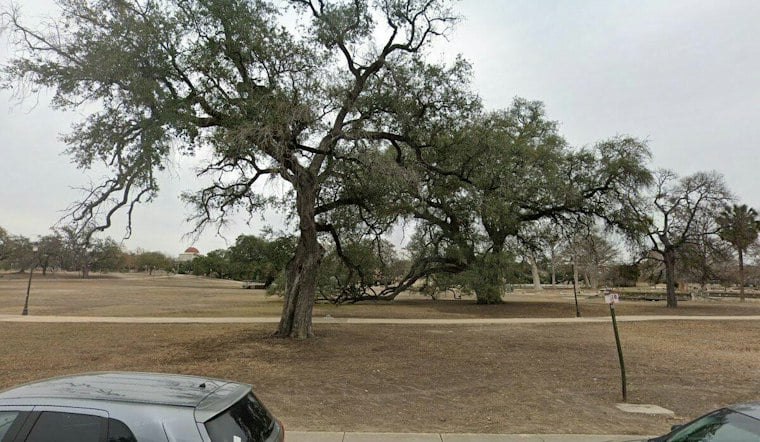
A newly formed conservancy is stepping in to fix what the city hasn't gotten around to at San Pedro Springs Park, the 40-acre Alta Vista neighborhood green space regarded as the nation's second-oldest park. The San Pedro Springs Park Conservancy, created by private citizens in 2026, is asking San Antonio for $1.8 million from the city's 2027 bond program to rehabilitate neglected corners of the park and spotlight a history that stretches back thousands of years.
The conservancy was formed to raise money for park improvements and ensure long-term care, according to the San Antonio Express-News. Its chair, Christina Wright, a former president of the Alta Vista Neighborhood Association, said the group is needed to provide the sustained effort and dedication the park requires. Wright also said the conservancy wants people to think of San Pedro Springs Park as Texas's oldest park, per the same report.
Topping the group's to-do list is reviving the park's springs, which have not flowed since 2022, and repairing a pump for the park's public pool. The conservancy also plans to add interpretive signage and is considering commissioning an oral history of the site, the Express-News reports.
A History Stretching Back 12,000 Years
The park's name traces to 1709, when Spanish explorers dubbed the waters San Pedro Springs and later established a presidio and mission there, per the same account. King Philip V of Spain designated the surrounding land as public property in 1729, making San Pedro Springs Park the nation's second-oldest park after Boston Common. But human activity at the springs predates Spanish arrival by millennia: artifacts from Paleo-Indian cultures show people gathered here as far back as 12,000 years ago, and the Indigenous Payaya people established a village called Yanaguana, meaning place of refreshing waters, at the site, according to the National Trust for Historic Preservation.
The park has cycled through some unusual uses since then. U.S. troops occupied the grounds at one point, and the Army used it as a camel stable during an experiment and as a holding place for Union soldiers captured during the Civil War, the Express-News reports. San Antonio banned military use and livestock from the park in 1853, then leased it to businessmen who ran bars, restaurants, entertainment ventures, artificial lakes and a zoo there.
Much of that Victorian-era transformation traces to Swiss landscape designer John Jacob Duerler, who leased the park starting in 1864 and introduced stone terraces, dance pavilions, artificial lakes and swans, according to the U.S. National Park Service. That groundwork eventually led to the establishment of San Antonio's first municipal zoo at the site in 1910. The park was listed on the National Register of Historic Places in 1979, after earning Recorded Texas Historic Landmark status in 1965, per the same source.
Civic Institutions Built Into the Park Grounds
The park added a pool, tennis courts, a library and a community theater in the early 1920s, laying the foundation for what remains a cultural hub today. The San Pedro Playhouse opened in 1929 as the nation's first municipally built community theater, its facade designed to replicate San Antonio's 1858 Old Market House, according to the San Antonio Report. The San Pedro Branch Library sits along the park's eastern edge, per the City of San Antonio.
Today the park also features footpaths, a playground and a skate park, the Express-News reports. Conservancy board member Asia Ciaravino also serves as president and CEO of the San Pedro Playhouse, one of several ties linking the park's cultural institutions to its new stewardship group.
Recent Repairs and What Residents Have Asked For
A $1.8 million renovation completed in 2022 added a loop trail, planted 183 new trees, repaired acequia walls and removed ball fields, according to Texas Public Radio. The 2022 city bond separately included $1.5 million for park updates, and San Antonio residents suggested a lengthy list of further upgrades during public discussions about that bond, per the Express-News. City council member Sukh Kaur's office has pledged $1.75 million for updates to the park's pool and bathhouse, the paper reports.
The conservancy plans to develop a new master plan and fundraising goals this fall. Its board includes architectural designer Luis Miguel Martinez, attorneys Ryan Reed and Rob Barnett, former Associated General Contractors executive vice president Doug McMurry, Friends of San Pedro Park founder Hector Cardenas, architects Rebecca Comeaux and Bruce Buescher, and engineers Jacob Berger and Taylor Allen.
VIA Signs On as First Corporate Sponsor
VIA Metropolitan Transit has become the conservancy's first corporate donor, pledging $25,000 annually over the next three years, according to the Express-News. VIA owns a bus maintenance yard and offices abutting the park and is building the Rapid Green Line, an advanced rapid transit corridor running along San Pedro Avenue next to the park grounds.
San Antonio also has the Brackenridge Park Conservancy, according to the Brackenridge Park Conservancy. Whether the new San Pedro Springs group can match that track record may depend on how quickly the city's 2027 bond process moves, and on whether the aquifer cooperates enough to bring the park's namesake springs back to life.





