

























































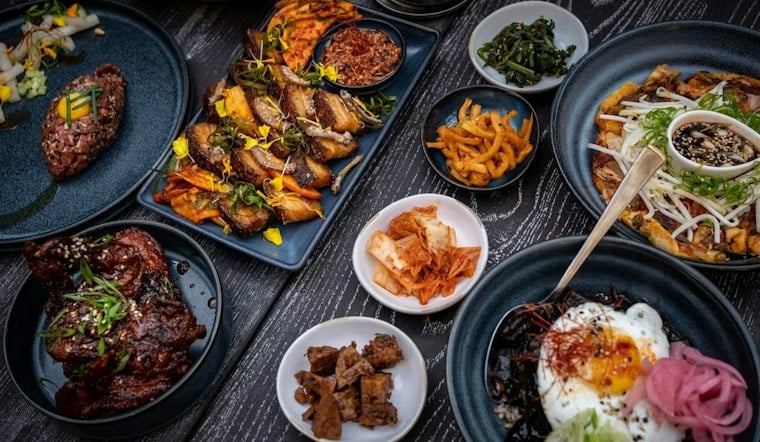
Joseph Park once weighed 310 pounds and says a doctor warned him he might not make it to age 50 if he kept living the way he was. Now he owns a Korean rice bowl restaurant on Whitney Avenue in New Haven, and by his manager's count, it sold 1,000 bowls in its opening week alone this September.
The restaurant, called Bibim, opened this month at the former address of Tiger Daddy, a sushi and hot pot spot that closed and vacated 54 Whitney Avenue, according to Yale Daily News. That address sits directly next door to Park's existing bb.q Chicken franchise at 56 Whitney Avenue, a location detailed on the chain's own ordering platform. Park decided to try a different restaurant concept once he learned Tiger Daddy was preparing to close, giving him a chance to expand his footprint on the same block he already knew well.
A Weight Loss Story Behind the Menu
Park told the student paper that he suffered from severe health issues related to his weight and that his own transformation, losing more than 100 pounds in a single year, inspired him to open Bibim. He said the experience pushed him to promote Korean cuisine to people who might not otherwise be familiar with it, and he hopes bibimbap in particular can provide a sense of comfort to Asian students far from home. Park based Bibim's prices in part on conversations he had with students who frequented his bb.q Chicken counter next door.
Bibim's build-your-own bowls come with a complimentary side of soup that changes from day to day, and the menu's six sauces, according to Park, were developed through trial and error before landing on their final lineup. The restaurant's signature bowl runs $14.95 before tax, and Bibim offers a 10 percent student discount, a notable price point in a neighborhood where students told the paper they often ended up paying more than $20 for a meal.
Mixing Rice the Old Way
Bibimbap translates literally to “mixed rice,” and the dish's roots run deep. Historical references trace back to 19th-century Joseon Dynasty texts, including the 1849 book Dongkuksaesigi, which called the dish “goldongban” and described the practice of mixing leftover pantry ingredients with rice at the end of the lunar year, according to National Geographic. Traditional bibimbap incorporates white, red or blue or black, yellow and green ingredients, and Bibim leans on that same structure for its bowls, which pair rice with vegetables, a protein, and often an egg.
That color pattern reflects Obangsaek, the traditional Korean five-color spectrum that pairs white, black, green or blue, red and yellow with natural elements and organ health, according to KCulture.com. Modern nutrition research ties those same five ingredient color groups to distinct phytochemical benefits, giving Park's health-driven pitch a cultural backbone beyond his own personal story.
Early Reactions on Whitney Avenue
Bibim offers both traditional bibimbap and fully customizable rice and salad bowls, and early customers have responded well to the flexibility. Student Jenny Trang said she enjoyed the customizable nature of Bibim's bowls, while Thais Burgess said she was pleasantly surprised after trying a custom bowl of her own, per the Yale Daily News report.
The opening lands on a stretch of Whitney Avenue that has increasingly become a magnet for international dining near Yale's campus. The corridor sits within the Whitney-Audubon Retail & Arts District, managed under The Shops at Yale, which already features neighboring Asian eateries such as Taste of Jiang Nan, Pokémoto and Steamed. Just down the block, Habesha Ethiopian Restaurant & Bar opened at 46 Whitney Avenue in October 2024, a sign of the corridor's broader shift toward global casual dining, as reported by the Hartford Business Journal.
According to the City of New Haven's Bike New Haven page, the Whitney Avenue Corridor initiative includes planned downtown bicycle accommodations connected to the Yale Ave bike lane.
Riding a Broader Korean Food Wave
Bibim's arrival also fits into a much larger national pattern. Park's bb.q Chicken franchise belongs to a global chain founded in South Korea in 1995 under parent company Genesis BBQ, which now operates more than 3,500 locations across over 30 countries, according to a release carried by PR Newswire. A 2025 survey from South Korea's Ministry of Agriculture, Food and Rural Affairs found the United States accounts for 23.8% of all overseas Korean foodservice locations worldwide, making North America the industry's primary growth market.
Korean cuisine expanded roughly 10% year-over-year in the U.S. by late 2025, placing it among the fastest-growing ethnic dining categories nationwide, according to Yobo Spirits. General consumer awareness of Korean food in the U.S. rose 41% between mid-2025 and mid-2026, per food industry market research covered by Vending Times, a jump fueled by surging interest in Korean media and pop culture. Yale's own campus offers a built-in audience for that shift, with Asian students making up about 19.8% of undergraduates and 16.6% of the total student body, according to data compiled by College Factual.
Whether Bibim can hold its $14.95 price point and 10 percent student discount as urban food-service costs continue to climb remains an open question, as does how the fast-casual concept will fare against the Whitney Avenue corridor's growing roster of Asian dining options. For now, Park's transformation from a man once warned he might not see 50 to the owner of two thriving storefronts on the same New Haven block gives the new restaurant an origin story as distinctive as its menu.





