

























































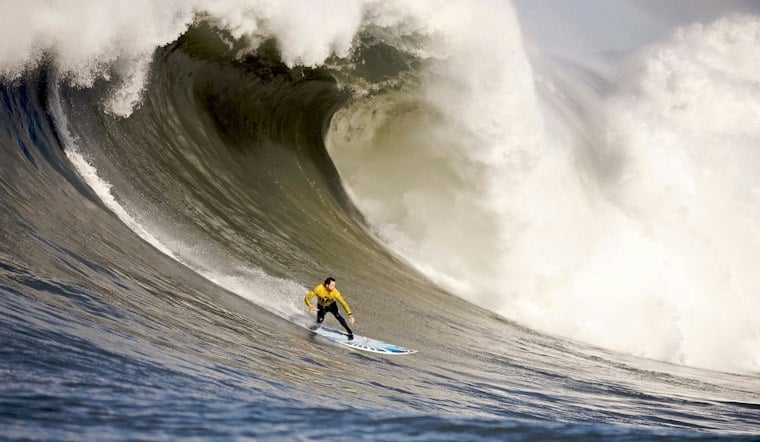
A boat wake in the Pacific Northwest produced hollow, six-foot barrels that one veteran novelty-wave surfer is calling the best he's ever ridden. Ben Gravy, a New Jersey surfer known for chasing unconventional breaks, surfed a ferry wave with sets reaching six feet, walls, tubes and hollow sections forming as the vessel's wake rolled toward shore.
Gravy called it the biggest and best ferry wave he had ever seen, according to the Miami Herald. He wrote that the mission had been pursuing the biggest and best ferry wave in history, and said the trip ended at the right place and the exact right time. Gravy also compared the wave directly to Kelly Slater's artificial Surf Ranch in Lemoore, California, a facility that cost an estimated $30 million to build, with individual waves running an estimated $425 to $575 or more, according to SURFER Magazine.
Gravy said he spent a small fortune chasing the ferry swell, but noted the stunt still cost less than a session at Slater's pool. He described conditions on the day as three to five feet with light winds, which he called perfect, and said the spot would have gone good to epic on Surfline. By his own account, the wave was the best he had ever seen, and he added that he felt he was only scratching the surface of what the break could produce.
Years of Planning Before the Swell Lined Up
The session wasn't luck. Surfer Jacob “Zeke” Szekely, a La Jolla, California-based pro known for progressive aerial surfing, teamed up with Gravy for the Pacific Northwest ferry-wave mission. The Inertia describes persistence and logistical difficulties on the mission.
It wasn't the pair's first ferry hunt together. In May 2026, the same duo teamed up to surf the wake of the Cape May–Lewes Ferry in New Jersey, which they claimed at the time as the biggest ferry wave on record, according to SURFER Magazine's coverage of the East Coast session. The Pacific Northwest trip extended a partnership built on hunting heavy vessel wakes across the continent.
The Physics Behind a Boat-Made Barrel
Ferry surfing depends on a large vessel displacing water and its wake reaching shallow water with the right underwater contour, and the resulting wave is shaped by light wind, the correct tide, and a ferry moving at the proper speed. The wave's shape depended on shallow-water bathymetry, which helps explain why the timing and location Szekely scouted mattered so much.
The Inertia notes uncertainty about the Pacific Northwest site. Novelty breaks like this one tend to remain closely guarded within the surf community.
A Career Built on Chasing Waves No One Else Wants
Gravy is a surfer known for chasing unconventional breaks.
That kind of stunt-surfing résumé has translated into commercial backing. East Coast surf apparel brand Jetty signed Graeff as a brand ambassador, reflecting the growing viability of novelty wave chasing as a full-time content career.
Open Questions Around Wake Surfing Near Ferry Lanes
Surfing behind large commercial vessels isn't without broader concerns. Marine and computational fluid dynamics research shows that ferry wakes can alter local sediment transport, increase water turbidity, and create unexpected hazards for nearshore watercraft when generated close to shallow shorelines, according to a study published in the Journal of Water Resource and Protection.





