

























































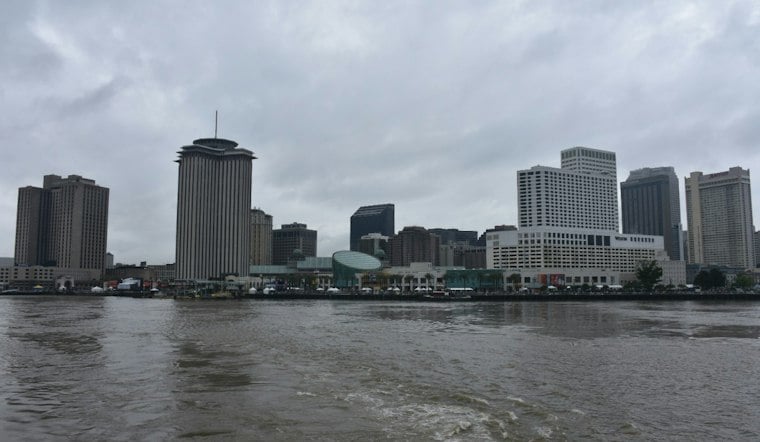
New Orleans is moving forward with a $3 million study to figure out what it would take to protect the region from a 200-year storm, a far higher bar than the 100-year level the current levee system was built to withstand. The region's flood protection authority board approved cost-sharing agreements Thursday, splitting the price of the study between state agencies and the U.S. Army Corps of Engineers, clearing what officials describe as a near-final hurdle before work can begin.
The study is expected to start within months, likely in late 2026 or early 2027, and the Army Corps of Engineers has three years to complete it, though it could wrap up sooner, according to NOLA.com. Congress has already provided $500,000 to initiate the study this year, but additional funding is still needed to see it through, and not all of it is in place yet. The cost is set to be split 50-50 between the federal government and the state.
Ricky Boyett said the cost-sharing agreements represent the last step before the study can actually start, per the same account. Jeff Williams described the effort as an investment worth making in order to understand what the next generation of the region's flood risk reduction system needs to look like, the outlet reported.
Why 100-Year Protection No Longer Feels Like Enough
A 100-year storm carries a 1% chance of happening in any given year, while a 200-year storm carries roughly a 0.5% chance — a lower annual probability, but a far more destructive event if it hits. The current levee system, which includes earthen levees, floodgates, and the massive pumps that serve the city's outfall canals, was rebuilt after Hurricane Katrina's catastrophic failures in 2005 and is now valued at about $14.5 billion, according to the Bureau of Governmental Research. Pre-Katrina levees were poorly constructed and prone to collapse, while the rebuilt system was engineered to hold up even if overtopped.
The study will focus specifically on increasing levee-system resilience on the east bank of the Mississippi River. It will not examine increasing levee protection on the west bank, since Congress has not allocated funding for that separate study, NOLA.com reported. The Army Corps of Engineers previously studied what it would take to simply maintain 100-year protection through 2073, and now expects to recommend building up the region's earthen levees, though how high they'll need to go has not yet been determined.
The Great Wall of Louisiana and What Comes Next
One example of the scale involved: the Lake Borgne Storm Surge Barrier, a 1.8-mile structure nicknamed the Great Wall of Louisiana, sits at the intersection of the Gulf Intracoastal Waterway and the Mississippi River Gulf Outlet and cost $1.3 billion to build. It will eventually need rebuilding or elevation, with possible work timelines cited as far out as 2050, 2100, or 2200, per NOLA.com's reporting. Hurricane Katrina itself produced what amounted to a 250-year storm surge on the east side of New Orleans and St. Bernard Parish, a stark reminder of how far beyond current design standards a major hurricane can push.
Even if the study recommends pursuing 200-year resilience, Congress would still need to approve additional construction funding, after which the Army Corps of Engineers would have to develop a full engineering and design plan. Officials cited by the outlet said 200-year levee protection is years away at best, and that construction alone could take years once funding and design work are finalized.
A Region Built on Sinking, Shrinking Ground
New Orleans faces a deeper structural problem than any single storm: much of the city sits on filled-in swamp and compacting soil, and the levees themselves are sinking fast, according to NOLA.com. Rick Luettich said New Orleans faces what he called an existential situation requiring constant reevaluation, adding that higher levees are a start but not a permanent solution for the city. He also said protecting lives ultimately requires evacuating people before catastrophic storms hit, underscoring that the levee system is primarily designed to protect property rather than guarantee safety.
That sinking ground sits inside a much larger regional crisis. Louisiana's coast lost 540 square miles of land between 1984 and 2025, according to U.S. Geological Survey data cited in the same report, a pace of roughly one football field of land vanishing every 84 minutes. Marshes around New Orleans once provided a natural buffer against storm surge, but that erosion has stripped away much of that protection over time.
The scale of the region's long-term exposure is even starker when viewed over a longer timeframe. Southern Louisiana is projected to face 3 to 7 meters of sea-level rise and lose three-quarters of its remaining coastal wetlands, changes that could push the shoreline as much as 100 kilometers inland and strand cities including New Orleans and Baton Rouge, according to The Guardian. Louisiana has lost 2,000 square miles of land to coastal erosion since the 1930s, with another 3,000 square miles projected to disappear over the next 50 years — a separate measurement from the more recent 1984-2025 figure. The same Guardian report noted that 99% of New Orleans' population already faces major risk of severe flooding, and that ongoing sea-level rise and wetland loss could leave the area surrounded by the Gulf of Mexico before the end of the century.
Billions of dollars have already been spent fortifying New Orleans with the network of levees, floodgates and pumps built after Katrina, the Guardian reported. The governance structure overseeing that system was itself reorganized in the wake of the 2005 levee failures, consolidating local boards into regional flood protection authorities, according to the Bureau of Governmental Research. Climate change has intensified hurricanes more broadly, adding urgency to a study that officials say is necessary but will take years to translate into new construction on the ground.





