

























































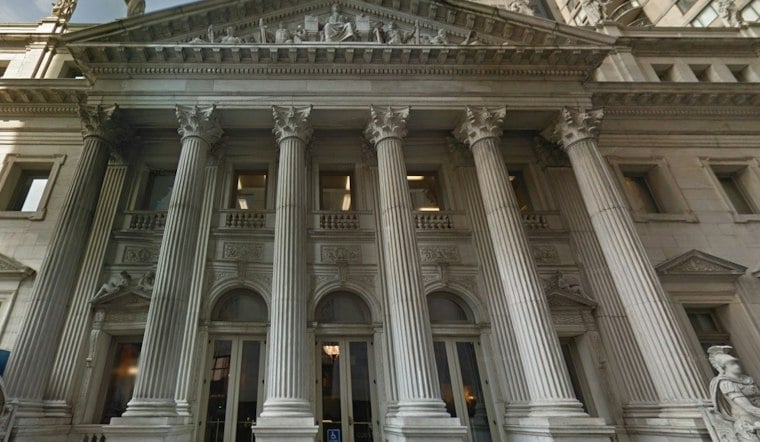
New York’s Appellate Division, First Department, has cleared the way for the Art Institute of Chicago to retain physical custody of Egon Schiele’s 1916 drawing Russian War Prisoner, vacating orders that required the museum to surrender it and setting aside the related seizure warrant. The unanimous ruling did not decide who owns the drawing or whether it was looted during the Nazi era. New York’s official court report identifies the proceeding as an Article 78 challenge to the use of a criminal-property statute.
A custody ruling, not a title ruling
The judges held that Penal Law § 450.10 could not provide the procedure for resolving a sharply contested ownership claim. That leaves the museum with the work in Chicago, but does not establish that the Art Institute has good title. The court’s decision instead draws a line between temporary or investigative custody and the separate civil question of ownership, a distinction also emphasized in CBS News Chicago’s account.
The dispute centers on the collection of Fritz Grünbaum, a Jewish Austrian cabaret artist and collector who was arrested by the Gestapo in 1938 and died at Dachau in 1941, according to the appellate opinion. Prosecutors and Grünbaum’s heirs have argued that his collection was taken during the Nazi persecution. The Art Institute disputes that account and says Grünbaum’s sister-in-law, Mathilde Lukacs, lawfully possessed and sold the drawing in Switzerland in the 1950s; the appellate opinion states that Otto Kallir sold the work to David Kimball in 1957, Kimball later sold it to Leo Askew, and the Art Institute purchased it from the Chicago gallery B.C. Holland in 1966.
A dispute with a complicated legal history
The unresolved title question has a relevant but limited precedent. In a separate 2018 New York case involving two Schiele paintings held by dealer Richard Nagy, a state court ruled for Grünbaum’s heirs and found that Grünbaum had never lost title to those works, The Art Newspaper reported. That ruling concerned different works and does not determine ownership of Russian War Prisoner.
Another frequently cited New York Schiele case also involved a different legal setting. In 1999, the state Court of Appeals considered a grand-jury subpoena for two paintings temporarily loaned from Vienna’s Leopold Foundation to the Museum of Modern Art. That dispute concerned New York’s immunity-from-seizure protections for loaned art, rather than a warrant directed at a work held in a museum’s own collection, according to the Court of Appeals opinion.
What provenance research can—and cannot—show
The Art Institute says provenance research reconstructs an object’s ownership history through archival documents, physical examination, auction catalogs, scholarly literature and consultation with archives and researchers. It gives particular attention to gaps or inconclusive ownership records between 1933 and 1945. Those research practices can clarify an object’s history, but they are not themselves a judicial determination of title, as the museum explains in its provenance-research materials.
The broader museum field has created public mechanisms for documenting claims and their outcomes. The Association of Art Museum Directors maintains a registry of formal Nazi-era cultural-property claims involving member museums, including restitutions and settlements recorded since June 4, 1998. The American Alliance of Museums says its Nazi-Era Provenance Internet Portal operated from 2003 through 2024.
For now, the appellate ruling changes the route by which the work can be pursued, not the answer to the underlying ownership question. Russian War Prisoner remains at the Art Institute while the competing accounts of its wartime history and postwar transfers remain unresolved.





