

























































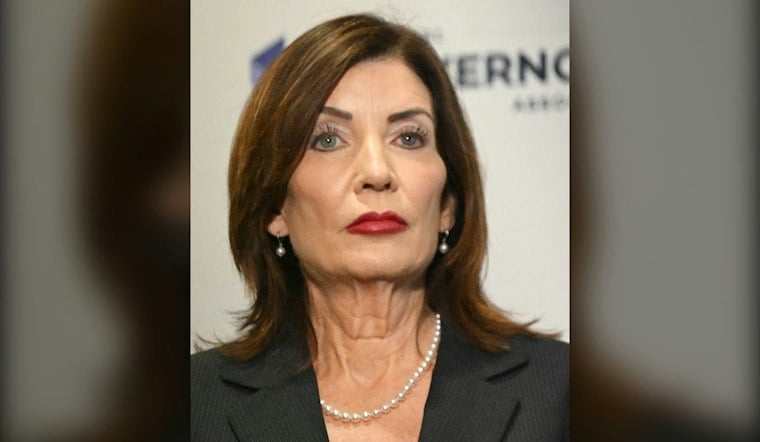
New York is pushing ahead with one of the first state-level frontier artificial intelligence safety laws, with Gov. Kathy Hochul speaking publicly about the effort to get ahead of AI regulation. The centerpiece is the Responsible AI Safety and Education Act, a law that will force major AI developers to answer to New York regulators starting in January.
The RAISE Act does not take effect until January, according to Politico. Once it kicks in, frontier AI developers who want to make their products available to New Yorkers will have to register with the state and pay into a newly created government agency tasked with regulating AI, according to reporting from New York Focus. New York passed the law last year, making it one of the first states in the country with a frontier AI safety statute on the books, per the same outlet.
Hochul has spoken publicly about the effort, according to Politico's reporting.
What Companies Will Actually Have to Do
Beyond registration and paying into the new regulatory agency, the law requires developers to make their safety plans public, with room for redactions, and to actually follow through on those plans, New York Focus reports. Assemblymember Alex Bores, who worked on the legislation, described it in those terms while discussing the bill's design.
The law also sets a threshold for when companies must report problems to the state. Under the final version of the RAISE Act, disclosure is required only when an incident caused an injury or death, or is about to cause a serious injury or death imminently, the outlet's report notes. Some provisions that advocates had pushed for did not make it into the final bill — third-party audits were dropped before lawmakers passed it, and a proposed ban on releasing models that fail a company's own internal safety tests was also left out, according to the same account.
Bores said the bill's early drafting involved coordination with the state's top prosecutor. “I circulated it with others, including Attorney General Tish James's office and outside advocates, and we introduced it in March,” he said, per New York Focus.
A Broader Wave of State Action
New York's law is arriving amid what Politico describes as an escalation in calls for tougher AI oversight since July. Nationally, states had enacted 109 AI laws and 28 data center laws as of July 1, 2026, according to a Tech Policy Press analysis. That same report found 29 states had passed AI legislation by that date this year, down from 39 states at the same point in 2025 — a pullback the outlet ties to a shift in legislative focus toward child safety, data centers and consumer protection.
Bores has argued that this state-by-state approach is necessary precisely because Congress can't keep pace. “The federal government moves slowly. In 2023, it passed something like 27 laws total. States move much quicker,” he told New York Focus. The IAPP's tracking of the issue similarly concludes that states are not waiting for federal action, and notes that the generative AI boom has shifted legislative attention toward commercial AI guardrails, often folded into consumer protection statutes.
Not every New York effort has succeeded. Sen. Kristen Gonzalez had pushed for a separate measure, the New York AI Act, which would have required third-party audits of high-risk AI systems to prevent algorithmic discrimination, according to State Affairs Pro. That bill passed the Assembly but died in the Senate, the outlet reported, even as it would have built on chatbot protections already included in New York's 2026 budget bill. Separately, Hochul has proposed the Stop Online Predators Act, which would restrict AI companion “friends” aimed at minors, according to News10.
A Federal Collision Course
New York's push is unfolding against a federal backdrop. The Trump administration issued an executive order in December 2025 creating an AI Litigation Task Force charged with challenging state AI laws generally, according to Tech Policy Press's reporting. The move signals a potential fight over whether states retain the authority to regulate frontier AI at all, even as New York, California and other states continue advancing their own frameworks.
Hochul has spoken publicly about the state's approach to AI regulation. For now, New York's law is part of a broader effort by states to set guardrails on the AI industry while Washington and the courts sort out how much room states actually have to act.





