

























































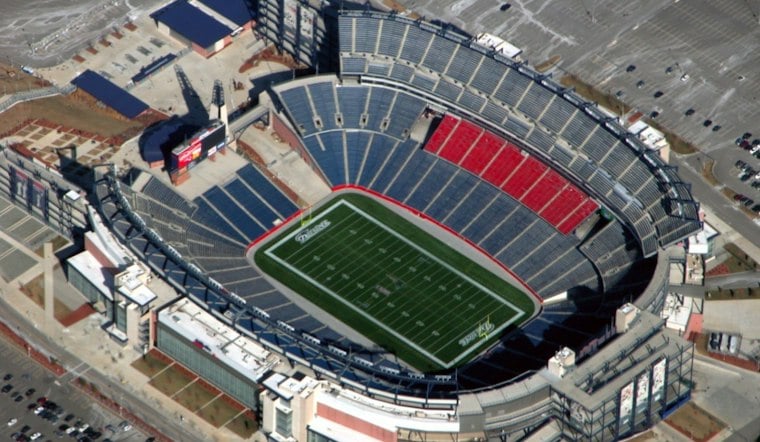
Opposing kickers walking onto the field at Gillette Stadium for a field goal attempt saw something New England's own kickers never did: a videoboard showing a reverse-angle view with a second, offset pair of yellow uprights. That optical trick, used during the Bill Belichick era, is now banned leaguewide after the NFL sent all 32 teams a memo on September 7 rewriting the rules for what can appear on stadium screens during kicks.
A Viral Post Cracked The Case
The revelation traces back to Ryan Paganetti, a former NFL analytics staffer who worked for the Eagles, Jaguars and Raiders, according to the New York Post. Paganetti studied a decade of Patriots broadcasts and found dozens of examples of the videoboard illusion, ultimately calling the tactic a perfect encapsulation of the Patriots dynasty. His post detailing the scoreboard's reverse view and its second, offset set of yellow uprights had drawn 17.2 million views as of last weekend, per the same report.
Under the league's previous rule, videoboards were required to show a static image and were prohibited from displaying flashing, video or moving images during kicks. Belichick and the Patriots operated within those rules during the period the trick was used, per ESPN reporting cited by the Post. Notably, Patriots kickers faced no issues on any of the 52 New England kicks Paganetti studied, while opposing kickers dealt with the reverse-angle display before their field goal and extra-point attempts.
How The Trick Reportedly Began
The tactic's origins trace back to a routine request. According to NBC Sports, the setup emerged during Bill Belichick's tenure when kicker Stephen Gostkowski, a former Patriots kicker, asked for a static image during his own attempts because live videoboard footage distracted him. Coaches obliged, switching to static graphics for Patriots kicks while keeping live All-22 views running during opponents' attempts. Paganetti also noted that video-board orange streamers could appear to point opposite the physical uprights in windy conditions, adding another layer to the illusion opposing kickers faced.
The numbers behind the tactic are striking. Visiting kickers at Gillette Stadium converted just 76.6% of their field goal attempts across Bill Belichick's 23-year New England Patriots tenure, the lowest visiting field goal percentage and the widest home-versus-away kicking gap in the league over that span, according to CBS Sports. Belichick, an eight-time Super Bowl-winning coach, led the Patriots for 23 years before the tactic came to light.
Rival Teams Took Notice
New England wasn't the only team studying stadium optics as a competitive edge. The Big Lead reported that Paganetti, during his time with the Philadelphia Eagles, saw Philadelphia consider copying the videoboard trick — but the team found that Lincoln Financial Field's screen locations made the illusion ineffective. NBC Sports has also reported that similar videoboard tactics during opponents' field goal attempts have surfaced at other NFL venues, suggesting the search for legal home-field edges is not unique to Foxborough.
CBS Sports was careful to draw a distinction: the Patriots' reverse-angle display fully complied with league rules when it was used, a contrast to New England's actual rules violations in Spygate in 2007 and Deflategate in 2015. The tactic exposed by Paganetti was gamesmanship within the letter of the law, not the kind of rule-breaking that drew league sanctions in the past.
What The New Memo Actually Changes
Under the league's new mandate, teams must use the same All-22 angle or static image for both kicking teams. The September 7 memo requires all 32 clubs to use identical displays.
Football Nation reported that the memo functions as a stadium-operations directive rather than a change to the official playing rules — meaning a violation will trigger club administrative discipline rather than an in-game penalty, replay or re-kick.
With the videoboard loophole now closed, NFL teams will need more creative ways to find an edge through stadium technology going forward.





