

























































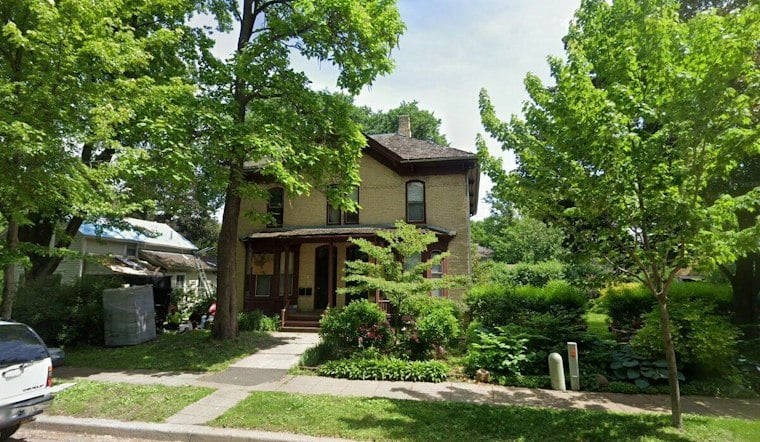
Renters on Nicollet Island in Minneapolis, some of whom have lived in their Victorian-era homes for more than 40 years, are racing to pool enough money to buy the six historic buildings they call home before an outside buyer beats them to it. Their landlord announced plans in April to sell all six properties, and tenants fear an outside buyer could offer as much as $20 million and push them out.
A Cooperative Forms to Fight Displacement
The renters started meeting weekly in the spring and formally incorporated as the Nicollet Island Cooperative in July, according to the Minnesota Star Tribune. The cooperative includes both renters and neighboring homeowners on the island, and it is now assembling a competitive bid for all six buildings while seeking assistance from Local Initiatives Support Corporation, the same nonprofit that helped finance a similar tenant purchase in Minneapolis back in 2019. Ian Simpson, who has rented one of the units since 2016, said potential buyers could offer $20 million and displace residents, per the same account.
The six buildings sit on the north side of Nicollet Island and were built in the late 1800s. Together they hold 22 mixed-income households, including five income-restricted units that cannot be rented to anyone earning more than 50% of the area median income — $52,600 for a two-person household. Residents told the paper that rents across the buildings range from $937 to $1,964 a month, and the tenants themselves include artists, service workers and retirees.
A Landlord Realigning Its Portfolio
The buildings are owned by Twin Cities Housing Development Corporation, which has a 1,140-unit portfolio, according to the Star Tribune. The organization's portfolio is roughly 70 percent project-based Section 8 family housing, and executive director Amanda Novak said the nonprofit is realigning toward that kind of income-restricted housing, framing the sale as a mission decision. TCHDC declined to renew the cooperative's last lease in 2013, and the Nicollet Island homes grew less affordable as Low-Income Housing Tax Credit requirements phased out over time, the Star Tribune reported.
TCHDC is asking about $500,000 for each property and may sell the buildings individually or as a bundle, according to the same report. Buyers are not required to maintain the properties as affordable housing, and TCHDC has said it is considering all potential bids, though renters have asked it to give their offer first consideration. Terry Tauger, president of the Nicollet Island Cooperative, said the city has a moral and financial obligation to transfer the property to residents, and he hopes local government will enforce contract provisions favoring the cooperative — pointing to 1980s ground leases that cite maintaining affordability for mixed-income residents as an original intent.
Public Land, Private Homes, and a Tangled History
The land beneath the homes complicates any sale. The Minneapolis Park and Recreation Board owns the ground under private residences across Nicollet Island, a structure the city arranged through a long-term ground lease worked out in the 1980s after purchasing the buildings in the 1980s when they needed restoration, per the Star Tribune's reporting. Most of the island was listed on the National Register of Historic Places in 1971 as part of the Saint Anthony Falls Historic District, according to the City of Minneapolis. The Cultural Landscape Foundation says land was transferred to the Park Board in 1978 and that most of the island's land is Park Board-owned and leased.
A city loan agreement tied to the properties requires the units to be kept affordable and amounts to nearly $2 million; TCHDC intends to repay that loan after selling the buildings, a step that may release the affordability restrictions entirely, the Star Tribune reported. Twin Cities Housing Development Corporation originally acquired the Nicollet Island houses with a neighborhood-based development corporation and leased the restored buildings to a tenant cooperative. Renters actually tried to buy the buildings once before, in the mid-2000s, but failed to secure financing ahead of the Great Recession.
Echoes of an Earlier Tenant Buyout
Cooperative organizers are pointing to a 2019 precedent just a few miles away, when Minneapolis tenants organized to purchase and repair five apartment buildings in the Corcoran neighborhood. Local Initiatives Support Corporation and the City of Minneapolis financed that purchase, with Land Bank Twin Cities acting as the interim buyer, according to the Star Tribune. Separately, LISC Twin Cities has described issuing a $4.98 million loan alongside $3.45 million in zero-interest municipal financing in May 2020 to help Land Bank Twin Cities acquire the Corcoran buildings, a deal that LISC Twin Cities says capped a five-year organizing campaign by low-income renters against a landlord whose rental licenses had been revoked.
Gretchen Nicholls, a senior program officer at Local Initiatives Support Corporation, said shared ownership gives people more control over their housing conditions, though she noted it is also more complicated because owners must work with one another. Margaret Lund, a Nicollet Island homeowner and national expert on shared ownership, said the limited-equity cooperative model is best suited for low- and moderate-income people who need stable housing. Under that structure, members buy in together, share upkeep and make group decisions, while cash-out amounts are limited so market appreciation stays collective, keeping rent increases tied to actual expenses rather than the market. Lund added that losing housing is devastating and disruptive.
A Stalled City Law Looms Over the Fight
The cooperative is also pushing the Minneapolis City Council to revisit its stalled Tenant Opportunity to Purchase Act, which would give renters a first right of refusal to buy their building whenever a landlord decides to sell. The East Bank Neighborhoods Partnership and Grove Street Flats have each issued letters supporting the cooperative's effort, according to the Star Tribune. Council Member Jeremiah Ellison reintroduced a version of TOPA in 2024, and the measure has faced opposition from commercial real estate groups. Renter advocates organized under the Housing Justice League planned to attend an October 28 city council committee meeting to push for its formal enactment, per the Minnesota Spokesman-Recorder.
Other cities offer a glimpse of what a fuller policy could look like: Washington, D.C., has had a TOPA law since the 1980s.





