

























































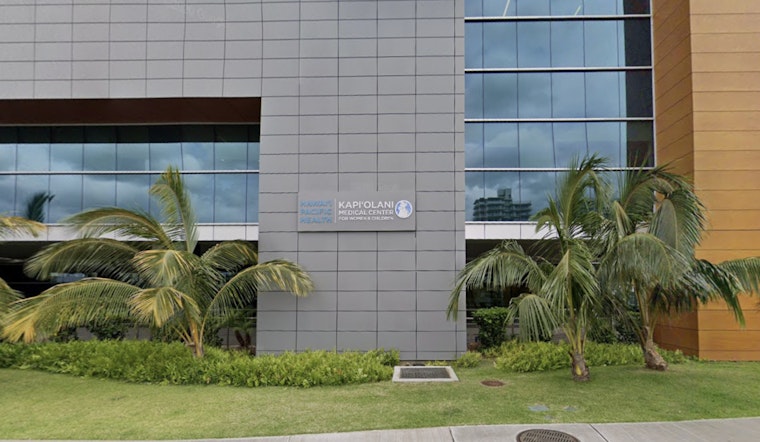
A Honolulu pediatric neurologist accused by nine women of performing unnecessary breast exams over a span of years continues to see patients with a valid medical license in good standing. Dr. Gregory Yim, who keeps an office at Kapiʻolani Medical Center for Women & Children and was reportedly taking appointments at Windward Pediatrics in Kāneʻohe, has not been charged with a crime, and he has denied wrongdoing.
The allegations, which span from 2015 to 2022, are detailed in two pending lawsuits, according to Honolulu Civil Beat. The first lawsuit was filed in 2023, and a trial date has been set for April 2027. The suits allege that nine women experienced sexual violations and emotional anguish, with claims that Yim conducted breast exams without proper draping or gloves and, in some cases, without explaining why the exams were necessary at all.
One woman says she underwent roughly 50 breast exams over six and a half years. Another patient reportedly underwent 14 breast exams over two years. The American Cancer Society recommends just one breast exam per year for an average-health adult woman. Among the accusers is a patient who was 17 years old at the time Yim allegedly conducted a breast exam on her.
Weight-Loss Prescriptions Tied to the Exams
Several plaintiffs say Yim prescribed Adderall to them for weight loss and diagnosed some of them with attention deficit disorder. Adderall is approved to treat ADD, ADHD, and narcolepsy, but the FDA has not approved it for weight loss. One patient reportedly lost 32 pounds while under his care. Kelli Ponce said Yim was effectively selling weight-loss treatment, per the outlet's reporting, while Crystal Glendon said Yim established what she called a nefarious level of trust with patients.
Attorney Thomas Cook, representing Yim, said the allegations were denied in court and would be addressed there. Elizabeth Pendo, cited in the same report, said informed consent requires truthful information necessary for a medical decision — a standard the lawsuits claim Yim failed to meet by allegedly not explaining the reasons for breast or body exams.
A Regulatory System Built on Screening, Not Speed
Despite the allegations, the Hawaiʻi Medical Board has taken no action against Yim. Four intake reports about him went to Hawaiʻi's Regulated Industries Complaints Office, known as RICO, but none rose to the level of an official complaint for the board to review, according to DCCA spokesman William Nhieu. The board closed all four requests without investigation, per Nhieu.
RICO, a division of the Department of Commerce and Consumer Affairs, screens thousands of inquiries a year through its Consumer Resource Center and forwards matters for investigation only when preliminary evidence establishes a probable licensing violation, according to the Hawaiʻi Department of Commerce and Consumer Affairs. The office oversees 52 industries and roughly 170,000 licensees statewide. DCCA has said the board cannot suspend a license based only on allegations, media reports, or a civil lawsuit.
Hawaiʻi law does allow the medical board to suspend a license when a physician poses an immediate and unreasonable threat to public safety, and under Hawaiʻi Revised Statutes § 453-8 and § 436B-19, the board holds statutory authority to revoke, suspend, or condition a license for professional misconduct or sexual boundary violations, per the Hawaiʻi Department of Commerce and Consumer Affairs. If the board does issue an emergency suspension, it must hold a hearing within 20 days of that notice. The Federation of State Medical Boards, in 2020 guidance, recommended that state boards retain authority to issue emergency suspensions before completing formal investigations when patient safety is threatened, and it defined physician sexual misconduct to include intimate examinations conducted without clinical justification, explanation, or informed consent.
An Acute Shortage Complicates the Picture
Hawaiʻi has just seven pediatric neurologists statewide, only three of them full-time, amid an estimated 37.3% shortage in the specialty. The state as a whole faces a shortage of 833 full-time equivalent physicians once island geography is factored in, leaving only 3,647 licensed doctors actively providing patient care, according to the University of Hawaiʻi John A. Burns School of Medicine's December 2025 Physician Workforce Report. Hawaiʻi ranked 44th out of 51 states on overall healthcare factors, and a 2017 assessment from the Doctors & Sex Abuse Project gave the state a score of 47 out of 100.
Kapiʻolani Medical Center for Women & Children, where Yim keeps office space, has said it takes allegations of sexual assault very seriously. The hospital operates as Hawaiʻi's only full-service pediatric specialty hospital and the primary clinical training site for child neurology residents. Windward Pediatrics, the Kāneʻohe practice where Yim was reportedly taking appointments, is now under new management and ownership.
How Other States Handle Similar Complaints
The Hawaiʻi Medical Board has 11 members, three of them women. Other states take different approaches to physician oversight. Nevada's medical board is required by law to investigate lawsuits against doctors that result in a judgment or settlement, and Ohio requires physicians renewing licenses to disclose litigation and malpractice claims. Ohio's board received nearly 7,000 complaints last year, with 160 involving sexual misconduct — about 2% of the board's total incidents. The Texas Medical Board describes lawsuits as a detection system for recurring patterns of unacceptable health care.
By comparison, a separate Hawaiʻi case shows how discipline can play out when it does happen: Dr. William McKenzie was fined $750 in 2024 for failing to disclose a malpractice claim, and he still holds an active medical license. A national study published in the Journal of the American Board of Family Medicine in October 2024 found that reported sexual misconduct accounted for nearly 9% of board certification revocations among family physicians between 2016 and 2022, with 89% of the victims being female patients and 84% of the misconduct occurring in clinical settings.
Under Hawaiʻi Senate Bill 2601, enacted in 2024, the state opened a two-year civil revival window running through June 30, 2026, letting adult victims of sexual abuse occurring after June 2012 file civil lawsuits regardless of prior statutes of limitations. That window has allowed the lawsuits against Yim to move forward in civil court even as the criminal statute of limitations for fourth-degree sexual assault — just two years — has long since expired. For now, the case against Yim remains confined to the civil courts, with no licensing action taken and a trial still more than a year away.



