

























































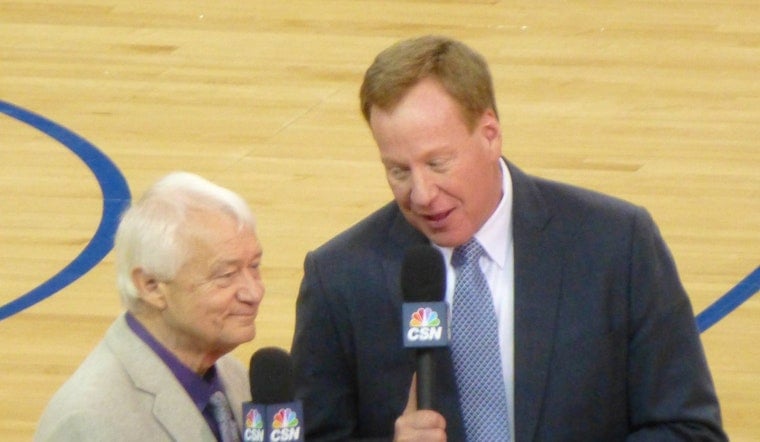
A federal appeals court has shut the door on Grant Napear's yearslong legal fight over the tweet that ended his decades-long run as the Sacramento Kings' play-by-play voice. The 9th U.S. Circuit Court of Appeals ruled that Bonneville International Corp. acted within its rights when it fired Napear in 2020 after he responded to a question about the Black Lives Matter movement with the phrase, “ALL LIVES MATTER … EVERY SINGLE ONE!!!”
The three-judge panel, sitting in San Francisco, upheld U.S. District Judge Dale Drozd's earlier dismissal of Napear's lawsuit without a trial, according to the New York Post. Judges Bridget Bade, Danielle Forrest and Lawrence VanDyke, all appointed by President Donald Trump, pointed to Napear's public-figure status and the specific language of his employment contract in reaching their conclusion. Drozd, for his part, was appointed by former President Barack Obama.
The Exchange That Ended a 31-Year Broadcasting Run
The dispute traces back to Sunday, May 31, 2020, six days after the murder of George Floyd in Minneapolis, when former Kings center DeMarcus Cousins asked Napear on Twitter, “What's your take on BLM?” according to Metropolitan News-Enterprise. Napear replied with his “All Lives Matter” message, a response that landed amid nationwide civil unrest and street demonstrations. Bonneville suspended him the day after the post, then fired him the following day, ending his 31 years calling Kings games and his tenure as a KHTK radio host, per the same account.
Napear had published roughly 38,500 tweets before that reply, and the post itself was not made on-air, during work hours, or as part of his radio show, per the Post's reporting. The Ninth Circuit panel nonetheless found that his social media activity was inextricably linked to his professional identity because he posted using the handle @GrantNapearshow — the same name as his radio program, which he had used throughout his tenure at KHTK, the court noted, according to Metropolitan News-Enterprise.
Contract Language and California's Political-Speech Law
California Labor Code Sections 1101 and 1102, first enacted in 1937, bar employers from dictating employees' political activities or coercing political compliance through threat of discharge, according to Metropolitan News-Enterprise. Those laws trace back to the New Deal era, when they were designed to stop corporate pressure on worker voting. But the appeals court said California law does not appear to prevent employers from limiting political expression when it affects their reputation, and Napear's own contract required him to maintain, in the court's words, a high standard of care and level of responsibility on social media because his posts could affect Bonneville's public image, the Post reported.
Bonneville International is a wholly owned subsidiary of Deseret Management Corporation, the for-profit operating arm of The Church of Jesus Christ of Latter-day Saints, according to Forbes. Deseret Management also runs publishing and insurance ventures for the church, per that outlet's reporting.
Cousins Feud, Player Backlash and a Prior Sterling Controversy
The exchange with Cousins did not emerge from a vacuum. Napear had repeatedly criticized the former Kings center during his Sacramento tenure, once calling him a “dark cloud over this franchise” in 2017 and later “the rudest, crudest, most vile player” in 2019, according to Barrett Media. Cousins had played six seasons in Sacramento before being traded in 2017.
After Napear's post went public, former Kings players Matt Barnes and Chris Webber condemned him, with Barnes calling him a “closet racist” and Webber criticizing his past relationship with Black players, according to Yardbarker. The Post's reporting also notes Napear had previously faced controversy for defending former L.A. Clippers owner Donald Sterling, and that he called former Kings player Doug Christie a coward for not defending him after the 2020 firing.
Napear's Defense and What Comes Next
In a June 1, 2020 interview with the Sacramento Bee, published before his termination, Napear apologized and said he was “not as educated on BLM as I thought I was,” claiming he had not realized “All Lives Matter” was viewed as counter to the Black Lives Matter movement, according to Metropolitan News-Enterprise. He maintained his response reflected how he was raised rather than any malicious intent.
Napear's attorney, Matthew Ruggles, argued the tweet was Napear's personal expression unrelated to his job duties and said the issue should have gone to a jury rather than being dismissed, per the Post's account. Ruggles said he will seek a rehearing before the full appeals court and, if that fails, will ask the U.S. Supreme Court to take up the case.
Napear spent the five years after his firing podcasting before returning to Sacramento terrestrial radio last August as a daily host on Fox Sports Radio, according to the Post. That comeback proved short-lived: Hoodline previously reported that Fox Sports KSAC yanked his show off the air just 30 minutes before broadcast time in May, forcing him back onto digital podcast platforms months before the Ninth Circuit's ruling.
The case echoes an earlier dispute involving broadcaster Mike Bacsik, who was fired by a Dallas radio station in 2010 following a disparaging post about Mexicans, according to the Post's reporting, illustrating that Napear's firing was not the first time a sports broadcaster's social media activity has cost them their job.


