

























































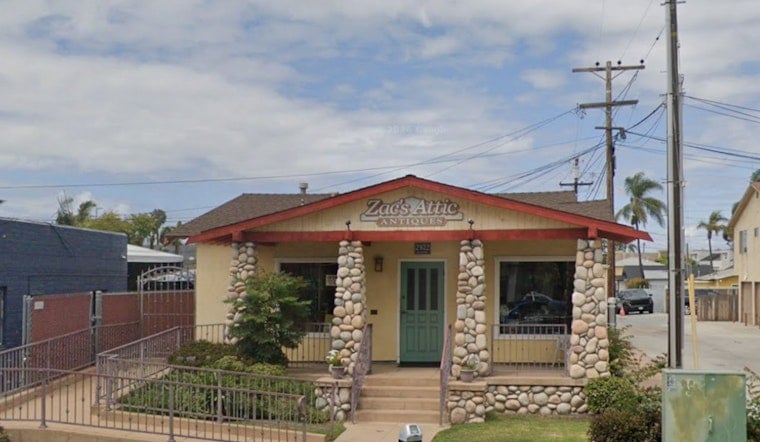
On a stretch of Adams Avenue in Normal Heights once packed with as many as two dozen antique shops, only one still has its doors open. Zac’s Attic, run by owner Dave McPheeters since 1999, is now the last antique store standing on what locals have long called Antique Row.
The shop sits at 2922 Adams Avenue, a corridor between North Park and Kensington that earned its nickname decades ago when antique dealers dominated the block, according to There San Diego. When McPheeters opened Zac’s Attic in 1999, six to eight antique stores were still operating nearby, and three more closed that same year, according to San Diego Magazine. In the 1970s and 1980s, the strip had supported as many as 24 antique shops, per the same account.
McPheeters told the magazine that Antique Row rents ran between one and two dollars per square foot per month back then, an affordability that has since evaporated for many tenants along the corridor. His own survival strategy has been different: rather than leasing, McPheeters bought the property that houses Zac’s Attic, a 1920s craftsman home, meaning he answers to no landlord who might raise the rent. He has said he likes to do things the old way, a philosophy that extends to how he built and kept his business.
A Lifelong Collector Turned Shopkeeper
McPheeters started collecting antiques as a teenager, and he worked at an antique shop in Old Town in the late 1960s, long before opening his own store. A graduate of Herbert Hoover High School in City Heights, he eventually expanded his business to three antique stores at one point, though Zac’s Attic is the one that has endured. He also liquidates estates and lectures for church groups and women’s organizations, teaching younger customers how to evaluate what they find.
Inside the shop, McPheeters advises customers on clothing size, color, texture, stitching, tags, and fabrics, and keeps clean t-shirts behind the counter so shoppers can try on vintage pieces without direct contact with the garments. The inventory ranges from Waterford crystal, uranium glass, and Depression-era glass to vintage Tommy Bahama shirts, tiki memorabilia, vintage photographs, and small trinkets, per San Diego Magazine. Depression-era glass in particular was mass-produced during a period when few people could afford fine china, a detail that speaks to the layered history packed into the shop’s shelves.
Zac’s Attic has no website, no email, and no social media presence, an anomaly in an era when most retailers court customers online. McPheeters attends San Diego’s Tiki Oasis and says he loves what he does, adding that he lacks enough calendar years left to liquidate his own collected possessions. He plans to remain at Zac’s Attic until retirement.
Facing Down the Rise of E-Commerce
The pressures reshaping Adams Avenue mirror a national shift in how people shop. Online sales accounted for just 6.5 percent of total retail sales in 2016; by the first quarter of 2026, that figure had climbed to 16.9 percent, according to San Diego Magazine. Tanya McAnear, who owns Bad Madge & Co. in South Park, told the magazine that brick-and-mortar retail is a difficult business, a sentiment that captures why so many of McPheeters’ former neighbors along the strip shut their doors.
Facing declining sidewalk foot traffic as surrounding antique stores closed, Zac’s Attic adjusted by opening only on weekends, according to WhatNow. McPheeters also maintains secondary pursuits in real estate and trade shows, the outlet reports. Beyond antique stores, Adams Avenue once supported 11 bookstores along with thrift and upholstery shops, but the corridor has gradually shifted toward third-wave coffee shops, craft breweries, and modern eateries as e-commerce competition and changing consumer habits pushed out specialty retail.
A Countywide Pattern of Closures
Zac’s Attic’s solitary survival fits into a broader regional retreat from brick-and-mortar antique venues across San Diego County. The 35-year-old Solana Beach Antique Mall, which had housed roughly 100 vendors in a former roller rink on Cedros Avenue, closed permanently in March 2017 as rising commercial real estate rents squeezed large multi-vendor spaces, according to the San Diego Reader.
In April 2018, the 18,000-square-foot Ocean Beach Antique Mall on Newport Avenue closed to make way for a Target Express store, displacing more than 100 vendors despite an unsuccessful community boycott, the Reader reported. North County lost another major venue in August 2019, when the 22,000-square-foot Carlsbad Arts and Antique Mall closed across two buildings so the site, a former military Quonset hut property, could be redeveloped into State Street Commons. The contraction reached rural East County too, with the closure of the Ramona Antique Fair on Main Street after more than a quarter-century as a local landmark.
Nearby, the Antique Row Cafe at 3002 Adams Avenue still bears the name of the strip’s peak era, when up to 25 antique stores lined the corridor, per the San Diego Reader. The diner remains open even as the antique shops that gave the street its identity have all but vanished — a detail Hoodline noted years ago when highlighting the cafe’s own ties to Antique Row.
Foot Traffic Now Comes From Festivals, Not Shops
Normal Heights has found a new identity as a cultural destination rather than a retail strip. The neighborhood hosts the annual Adams Avenue Street Fair each September, billed as Southern California’s largest free music festival, along with the acoustic music festival Adams Avenue Unplugged, according to Redfin. Those events now draw the kind of crowds that antique shops once relied on for foot traffic.
McPheeters, meanwhile, has built institutional roots of his own in the neighborhood’s commercial life, having served on the Board of Directors of the Adams Avenue Business Association as First Vice President, according to the association’s own records. For now, Zac’s Attic remains the last name standing on a street that once counted its antique dealers by the dozen, kept alive less by the market around it than by one owner’s decision, decades ago, to buy rather than rent.





