

























































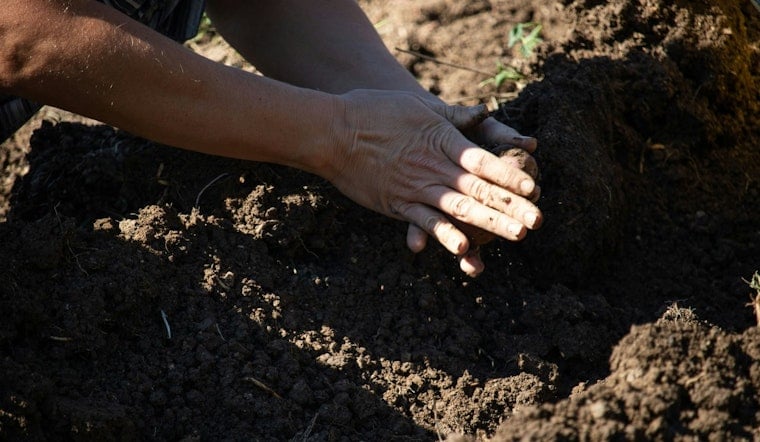
A 23-square-mile stretch of drained peatland in North Carolina's Inner Banks is being rewetted in one of the region's most ambitious climate restoration efforts, with investors and scientists working to block decades-old drainage ditches near Belhaven and stop roughly 130,000 tons of carbon dioxide from escaping into the atmosphere every year. The land, once part of a failed farming venture, sits atop peat deposits up to 15 feet deep that have been drying out and emitting greenhouse gases for years.
The project is led by Colorado-based Pantheon Regeneration, which is working to restore its North Carolina property by blocking the ditches that drained water from the accumulated peat, according to the Associated Press. Those ditches, dug decades ago for the abandoned farming operation, stretch some 50 miles across the property, part of a vast network of North Carolina canals that extends 11,000 miles and drains peatlands before the water empties into coastal estuaries. The company plans to restore and preserve a million acres of peatland from Virginia to northern Florida over the next decade, and it intends to fund that work by selling carbon credits to technology companies and other corporations, with the proceeds going toward further restoration and preservation.
That corporate financing is already flowing. In December 2025, Microsoft's Climate Innovation Fund made a strategic investment in Pantheon Regeneration to help scale its Pocosin Ecological Reserve I project, according to Pantheon Regeneration. The 14,500-acre site was originally known as Carolina Ranch, where the Duke University Wetland Center established a 10,000-acre carbon farm pilot project in December 2018 before Pantheon Regeneration acquired the land in 2024. The property had been extensively ditched and drained for agricultural operations that ultimately failed, according to the Duke center.
Why Drained Bogs Are a Climate and Fire Hazard
Peatlands cover just 3% of the global land surface but store about one-third of Earth's carbon dioxide, according to the Associated Press. When drained, that stored carbon doesn't stay put: degraded peatlands account for about 6% of annual global greenhouse gas emissions, per the same reporting, and Duke Wetland Center research published in 2022 and 2023 found that rewetting drained pocosin peatlands to their natural bog state prevents 8 to 10 metric tons of carbon dioxide per acre per year from entering the atmosphere. Drained pocosin soils continuously emit carbon through microbial oxidation as water tables drop, a process the Duke center has documented in its research.
Dried-out peat carries another risk: fire. Saturated peatlands are nearly fireproof, but dry peatlands can burn underground for weeks or months, the Associated Press reports. That danger extends well beyond one North Carolina property — an analysis reported by PBS North Carolina in April 2023 estimated that if just 25% of drained peatlands in Virginia, North Carolina, South Carolina and Georgia caught fire in a single year, the emissions would equal 18% of the annual U.S. carbon reduction goal, since dried organic peat can ignite easily and smolder underground for long stretches.
Duke Scientists and Federal Agencies Join the Effort
Curtis Richardson, an ecology professor at Duke University, and Neal Flanagan, a research scientist at Duke University, have both been involved in examining the site — Richardson was seen holding peat soil near Belhaven in May 2026, while Flanagan worked near a solar panel powering a carbon-emissions sensor on the property around the same time, according to the Associated Press. North Carolina's peatlands are considered among the most threatened in the world, the AP reports, and the restoration effort aims to regenerate native habitat while curbing climate-warming carbon dioxide emissions.
The rewetting work also has federal backing. Official state environmental filings show the U.S. Fish and Wildlife Service, using federal Inflation Reduction Act funding, collaborated with Pantheon Regeneration to install six water control structures, or weirs, along shared boundary canals including the Evans, County Line and Ichabod canals, according to the North Carolina Department of Environmental Quality. Those structures raise water levels to simultaneously restore private peatlands and the neighboring Pocosin Lakes National Wildlife Refuge, the state filings show. Beyond blocking ditches, Pantheon Regeneration plans to replant native grasses, flowers and other plants and cull invasive species as part of restoring the property.
A Global Pattern of Vanishing Bogs
North Carolina's struggle mirrors a global one. Pocosin wetlands historically covered nearly 2.47 million acres across the southeastern U.S. coastal plain, but roughly 60% of those bogs have been drained for agriculture, forestry or development since European settlement in the early 18th century, according to the American Carbon Registry. Worldwide, the picture varies by region: boreal peatlands remain about 90% intact but face pressure from thawing permafrost, intense fires, mining and critical minerals exploration, while tropical peatlands have seen about 45% disturbed and temperate peatlands have been dewatered by two-thirds, per the Associated Press.
Peatlands do more than store carbon — they help control flooding, store about 10% of global fresh water, and provide habitat for many species, the AP notes. A 2023 Duke University study calculated that rewetting and restoring all drained, unused pocosin peatlands across the southeastern coastal plain could fulfill approximately 2.4% of the United States' total national target for carbon neutrality, according to Duke Magazine. Separate video reporting from July 2026 indicates that rewetting pocosin peatlands also delivers water security benefits, recharging freshwater aquifers, preventing coastal saltwater intrusion, and filtering agricultural runoff and PFAS forever chemicals, according to reporting posted on YouTube.
New Standards Aim to Unlock More Carbon Credits
Turning restored peat into tradable carbon credits requires formal measurement standards. The American Carbon Registry published the first standardized carbon crediting methodology for pocosin wetland restoration in October 2017, developed in partnership with The Nature Conservancy and TerraCarbon to measure belowground carbon retention and emission reductions. In August 2026, the Applied Ecological Institute opened a public comment period for its new Pocosin Peat Bog Restoration Protocol, Version 1.0, establishing an updated carbon credit measurement standard ahead of planned crediting later this year, according to the Applied Ecological Institute.
Those evolving protocols are meant to streamline verification and attract more private capital into projects like the one near Belhaven. Whether that translates into durable, long-term carbon offset credits — and whether rewetting can hold back escalating coastal saltwater intrusion as sea levels rise — remains to be seen as the restoration work continues across the Inner Banks.



