

























































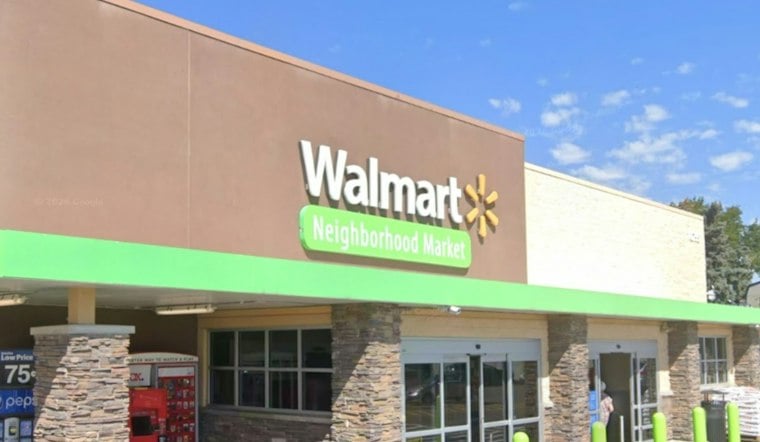
No delivery drone has dropped a package on a Colorado doorstep yet, but the suburb of Northglenn isn't waiting around to find out what that will look like. City officials have released proposed regulations governing how drones can operate within town limits, aiming to have a rulebook ready before Walmart and its delivery partner, Wing, actually launch service from a store on North Washington Street.
A City Bracing for Liftoff
Northglenn, a northern suburb of nearly 40,000 people, says it wants to be the first city in Colorado to adopt formal regulations for drone deliveries, according to The Denver Post. Walmart has approached the city about flying merchandise out of its Walmart Neighborhood Market at 10755 N. Washington St. using drones operated by Wing, the drone-delivery arm owned by Alphabet. Mayor Meredith Leighty said Northglenn wants a standard in place by the time any formal drone-delivery application actually lands on a desk, per the Post's reporting.
The Northglenn City Council could finalize the proposed rules as early as October, the Post reports. Under the draft regulations, drone launch sites would need to sit at least 200 feet from homes and schools, be screened or fenced off from public rights-of-way, and operate only between 7 a.m. and 10 p.m. Noise at the property line would be capped at 65 decibels, and the rules would explicitly prohibit drones from conducting surveillance of private places. Operators would also need to renew special-use permits annually. City planning and development director Becky Smith said the required buffers could still change before the rules are finalized, according to the Post.
Why Northglenn Can Only Do So Much
There's a catch built into the whole effort: once a drone actually takes off, Northglenn's authority stops. The Post reports that Northglenn cannot regulate drones once they're airborne, because the Federal Aviation Administration holds full regulatory authority over delivery drones the moment they leave the ground. That's also why the city decided against a full moratorium — its land-use powers only reach ground operations like launch pads and parking lots, not what happens once a drone is in flight.
Colorado lawmakers, for their part, failed to enact statewide rules for unmanned aircraft systems this year, the Post notes, leaving individual cities to sort out their own approaches. Not every nearby city is racing toward regulation the way Northglenn is. Parker and Castle Rock, which Walmart and Wing also approached about drone deliveries, instead imposed a moratorium on the service in July, according to the Post. Thornton, where Walmart and Amazon have both made inquiries and where Amazon already runs an 855,000-square-foot fulfillment center, says it's still in the investigative stage and hasn't received any formal drone-delivery applications.
What Wing's Drones Actually Do
The mechanics of a Wing delivery are more understated than the debate around them might suggest. The drones weigh less than 20 pounds, carry payloads up to 5 pounds, and are built from styrofoam and carbon fiber, according to details cited by the Post. They fly autonomously while monitored by human controllers, using sensors to identify shapes and objects for navigation, and typically cruise between 150 and 400 feet above the ground before hovering around 25 feet over a delivery site and lowering packages by tether onto a driveway or walkway. Wing operates within a six-mile radius of its launch pad, which in Northglenn's case would be the Walmart store's parking lot.
Not everything qualifies for drone delivery. Prescription medicine and alcohol are off-limits under the current setup, meaning Walmart can't send a six-pack of Bud Light by air, the Post reports. A related Wing operation planned for a Walmart in Denver, North Carolina, is billed as covering “last-minute needs” like cold medicine or forgotten dinner ingredients, according to lincolntimesnews.com.
Privacy Concerns Meet Corporate Assurances
Privacy has been the sharpest point of friction as these proposals move through public meetings, both in Colorado and beyond. Wing has said its drones provide no live video feed to controllers, and in the North Carolina case, the same lincolntimesnews.com report quotes a Wings spokesperson saying there will be no “live video feeds” from the drones as they carry out deliveries. The drones would be guided by FAA-certified pilots, per the outlet's account of a Lincoln County Planning Board meeting.
That North Carolina proposal offers a preview of how these fights tend to play out. At a June 1 public hearing, county planning staff member Jeremiah Combs presented the plan, and the Planning Board recommended approval by a 6-2 vote. The Board of Commissioners ultimately approved Walmart's application by a 3-1 vote at a June 15 meeting, allowing the company to convert a 30-by-128-foot section of a parking lot into a loading, takeoff, landing and storage zone for drones flying light packages within a six-mile zone at roughly 150 to 200 feet above ground level. Even with that approval in hand, the Denver, North Carolina, store still needed permits before installation and had no target launch date, the outlet noted.
A Fast-Growing — and Occasionally Bumpy — Industry
The push into Colorado suburbs is part of a much larger national buildout. Delivery drones already operate in Michigan, Florida, Texas and Arizona, and the global drone-delivery sector is projected to grow from $5 billion in 2026 to nearly $21 billion by 2034, with North America accounting for 35 percent of the global market in 2025, according to the Post's reporting. Amazon has announced plans to expand its Prime Air deliveries to 500 towns and cities by the end of 2026, while Walmart announced its one-millionth drone delivery in May. Walmart executive Ryan Irsik said customers increasingly expect near-same-day or next-day delivery and are willing to pay a premium for it, the Post reports.
The technology hasn't been entirely trouble-free elsewhere. A delivery drone struck the side of an apartment building in Richardson, Texas, in February, and two Amazon Prime Air drones struck a crane in Arizona before that same month, causing substantial damage and a fire but no injuries, according to the Post. A Wing spokesperson, Josh Bucci, said the company was not aware of any collisions or mishaps involving its own drone fleet.
For now, no drone is dropping off groceries or cold medicine at a Colorado front door — delivery by air remains, for the moment, a plan on paper. But with driverless Waymo cars already rolling through Denver streets since September, Northglenn's push to get ahead of drone regulation suggests the city expects the skies to fill in eventually, whether the rules are finished by October or not.


