

























































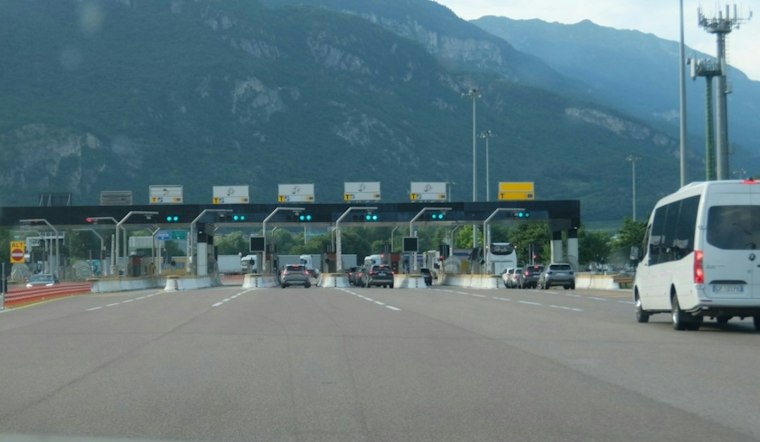
A tractor-trailer traveling the 70 mph speed limit slammed into the back of a Toyota SUV that had slowed to just 15 mph while merging between toll lanes, killing two people and injuring three others in a crash that federal investigators say never should have happened. Now, more than two years after that pre-dawn wreck at an Ohio Turnpike toll plaza, the National Transportation Safety Board is calling for cash-payment toll lanes to be eliminated at highway toll plazas across the country.
The crash happened around 5:30 a.m. on August 15, 2024, at the Swanton Township Toll Plaza on Interstate 80 near Swanton, Ohio, according to CNN. The SUV had been traveling in the left of two high-speed toll lanes before its driver began slowing and merging into the right high-speed lane, apparently preparing to cross an empty median to reach the manual toll lanes on the other side. As the vehicle dropped to 15 mph mid-merge, the tractor-trailer behind it, moving at the posted 70 mph limit, struck the SUV's rear end. The NTSB found the truck driver did not have enough time to react to the sudden lane incursion and rapid deceleration.
The impact sent the tractor-trailer into a concrete barrier, and both vehicles overturned. Two SUV passengers were killed, while a third passenger and both drivers suffered serious injuries, per the same CNN report cited above, which also notes from WISN that the SUV's driver was wearing the only seat belt among everyone involved. Investigators determined the SUV driver was likely experiencing a loss of situation awareness due to fatigue.
Why the NTSB Blames the Toll Plaza's Design
The NTSB's central finding is stark: the crash would have been avoided entirely if the Swanton Township Toll Plaza had been configured for fully electronic tolling, and it could have been avoided with clearer presentation of toll-payment options, according to a report described by Yahoo News. At the time of the crash, the plaza's high-speed lanes were equipped with transponder readers that could deduct tolls automatically from vehicles with in-car passes, along with license-tag readers that could bill vehicles without transponders either online or through a mailed invoice. Signs at the plaza indicated the high-speed lanes were only for vehicles carrying an E-ZPass transponder, while slower manual lanes elsewhere were marked for 10 mph.
That mix of speeds and payment methods, the board found, created an inherent safety risk for vehicles changing lanes at high speed to reach a cash-payment option. The NTSB has said hybrid toll plazas that combine high-speed and slow-speed lanes are still safer than entirely manual setups, but the agency's review of the Swanton plaza suggested the danger went well beyond a single driver's mistake.
A Pattern of Near-Misses Long Before the Crash
The NTSB's video review found unsafe merging and weaving near the plaza was occurring more than twice per hour on average in the weeks before the crash, and that this was a problem extending well beyond the SUV driver's actions that morning, the Yahoo report notes. Investigators counted more than 1,000 drivers making similar last-minute lane changes in just the three weeks before the crash. A separate accounting cited by Yahoo found 1,099 excursions across the striped gore area during 21 days of camera footage, an average of 52 per day.
In the traffic backup that followed the initial crash, two additional wrecks broke out involving at least eight vehicles combined, underscoring how quickly a single incident cascaded through the plaza's lanes. Yahoo also reported that within the first two months after a new tolling system began, 257,000 drivers on the northwest Ohio Turnpike either missed tolls entirely or had E-ZPass transponders fail to register — a volume that hints at how often drivers were confused about payment options.
Federal Recommendations Target Four Ohio Plazas
Based on those findings, the NTSB has recommended fully electronic tolling and clearer presentation of payment options to the Federal Highway Administration, the state of Ohio, and an association representing toll owners and operators, per CNN's report. More specifically, Yahoo reported the board recommended permanently closing the low-speed toll lanes at the Westgate, Swanton Township, Newton Falls and Eastgate plazas in favor of fully electronic high-speed tolling. The board concluded that eliminating slow-speed toll booths altogether would reduce the lane changes that led to the fatal crash and the wrecks that followed in its wake.
A broader look at toll-plaza safety backs up the board's concerns. A 2025 study found that higher average vehicle speeds were associated with an increased likelihood of crashes at toll plazas, according to research published on ScienceDirect. A related analysis of a toll plaza on India's National Highway 44, which used drone-collected vehicle trajectory data, found that gradual lane increases and frequent lane changing significantly raised the chances of traffic conflicts and collisions — a dynamic that mirrors what investigators described happening near Swanton.
What remains unclear is how Ohio officials or the Ohio Turnpike's operator will respond to the NTSB's recommendations, or when — if ever — the four named plazas might see their manual lanes closed for good. Separate lawsuits have reportedly been filed by the truck driver involved in the crash and by an Ohio State Highway Patrol trooper, though the outcomes of those legal actions were not detailed in available reporting.





