

























































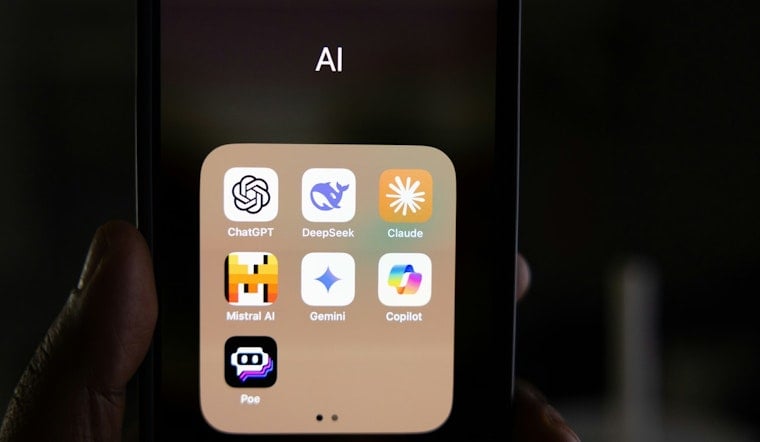
New York City Public Schools is banning students through 8th grade from using artificial intelligence tools for the coming school year, a sweeping restriction that Mayor Zohran Mamdani's office is calling the most expansive AI prohibition in the country. Mamdani announced the temporary moratorium at a news conference in New York City, with students set to return to the classroom next week.
The policy, first detailed by the Chicago Tribune, covers all software that uses student-facing generative AI and bars elementary and middle schoolers from using those tools in class. Companion chatbots are prohibited across every grade level, from kindergarten through 12th grade, regardless of age. High schoolers are not covered by the outright ban, but they will only get access to a handful of AI platforms through pilot programs that operate under educator supervision, according to the newspaper's reporting.
Alongside the AI restrictions, the city is rolling out new screen time recommendations for students. Kids in grades three through five would be limited to 30 minutes of screen time a day, while those in grades six through eight would get 45 minutes daily, per the Tribune's reporting. New York City also plans to establish twice-yearly AI literacy classes for all public high school students, and city education officials say they will conduct a wide review of all technology tools used across the school system, eliminating any deemed not essential to learning.
A Policy Built On Months Of Warnings
The moratorium does not arrive out of nowhere. The city's teachers had been sounding alarms about AI-assisted cheating and unclear classroom rules for months, and in May 2026 the New York State United Teachers board, representing more than 700,000 educators including those in NYC, adopted a formal resolution backing bans on student-facing AI in early grades and prohibitions on chatbots for minors under 16, according to Chalkbeat reporting cited by Hoodline.
Michael Mulgrew, head of the city's teachers union, praised the new screen time limits but said the broader AI policy still leaves many questions unanswered. He also said the education department should be more aggressive in demanding that any products it purchases come equipped with AI safeguards, according to the Tribune's account.
Teachers themselves are not shut out of AI entirely. Under the new rules, they will be allowed to use AI for instructional planning and operational tasks, even as they remain barred from using AI tools to grade student assignments, according to the same reporting. That distinction, between administrative use and student-facing tools, is expected to be one of the trickier lines for schools to police as the policy takes effect this fall.
The State And National Backdrop
New York City's move builds on state-level momentum. New York approved a ban on students' cellphone use in schools in 2025, a bell-to-bell prohibition on smartphones and internet-enabled personal devices that Governor Kathy Hochul signed into law and that took effect for the 2025-2026 academic year, according to the Government Law Center at Albany Law School. That earlier crackdown on personal devices set the stage for the city's newer restrictions on AI software itself.
Nationally, at least 37 states already have official AI guidance that schools can use as a blueprint, per the Tribune's reporting, underscoring how far behind the policy curve many districts remain. That gap tracks with a late-2025 survey from the EdWeek Research Center, which found nearly half of U.S. teachers and district leaders reported having no official AI policy at their school or district at all.
The stakes for inaction are becoming clearer by the season. An August 2026 report from Common Sense Media's Youth AI Safety Institute found that 70% of U.S. teenagers ages 13 to 17 use AI tools for schoolwork, with 63% using platforms to get direct answers to assignments, according to Hoodline's earlier coverage of the findings.
A District Already Reversing Course Once Before
This is not the district's first swing on AI policy. New York City Department of Education officials reversed an initial January 2023 ban on ChatGPT across school devices back in May 2023, choosing at the time to encourage AI literacy and providing educators with resource toolkits, per Business Insider. The new moratorium marks a sharp reversal from that earlier embrace.
More recently, Chancellor Kamar Samuels had already been tightening the reins. He issued a preliminary traffic-light AI guidance framework in March 2026 and froze all new education software purchases in July 2026 to re-evaluate vendor contracts, Chalkbeat reported. Just days before the September AI announcement, Mamdani canceled a $3.5 million monthly T-Mobile wireless contract that had powered 350,000 public school Chromebooks, citing contract inefficiency amid a broader overhaul of district technology spending.
The scale of the new ban is difficult to overstate. New York City Public Schools serves over 900,000 students across nearly 1,600 schools, and the Pre-K through 8th-grade moratorium directly affects nearly 600,000 students, or roughly two-thirds of the district's total enrollment, according to figures reported by CBS News. Under the updated guidelines, individual digital screens are also prohibited for students from 2-K through second grade, ABC News reported, reinforcing that the youngest students face the strictest limits of all.
For now, the moratorium is a one-year policy, meaning the current rules are set to be revisited before the following school year begins. Mamdani, a Democrat, spoke earlier at the New York State Financial Control Board meeting in New York on August 12, part of a broader pattern of scrutiny over how the city funds and manages its school technology. Whether the ban gets extended, loosened, or tightened further will likely depend on how the review of technology tools now underway shapes up over the coming year.





