

























































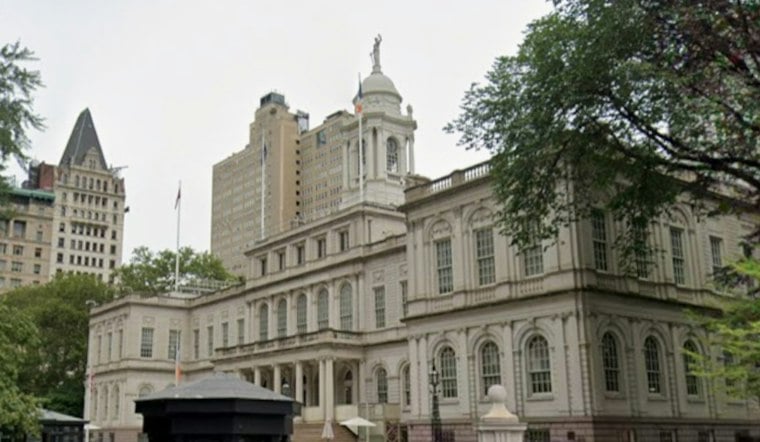
New York City retail tenants could soon get the right to stay in their storefronts for up to a year after their lease expires, under a bill that got its first public hearing at City Hall on Wednesday. The proposal, known as Intro 90 or the Storefront Business Bill of Rights, would also cap rent hikes during that extension period and require landlords to give tenants advance notice before a lease runs out.
The New York City Council's Committee on Small Business held the hearing on the bill, which was introduced in January 2026 by Manhattan Council Member Gale Brewer along with nine co-sponsors, according to Bisnow. The committee can now either send the bill back to its sponsors for changes or vote to advance it to the full Council. Separately, city records identify the legislation as Int 0090-2026, according to New York City Council records.
Under the bill, retail tenants in ground-floor and second-floor spaces would get a one-time lease extension if they cannot reach a renewal deal with their landlord. Landlords would have to give written notice of renewal or nonrenewal 120 days before a lease expires, and if a tenant with a lease longer than one year still has no renewal agreement 30 days before expiration, they would automatically qualify for a one-year extension. Rent increases during that extension would be capped somewhere between 7% and 10%, and landlords who already have a new tenant lined up could shorten the mandatory extension to 90 days if they notify the current occupant. The bill would also require landlords to hand over two years of past cost information and two years of projected future costs, plus mandate written leases and model leasing agreements in multiple languages.
Brewer Says Chain Store Pressure Is Squeezing Small Tenants
Brewer said the extension requirement is necessary for tenants facing steep rent increases, adding that the pressure from chain stores on small independent retailers is intense, per the same Bisnow report. Tenants who believe a landlord has violated the bill could sue for up to 3% of a property's assessed value plus damages and attorney fees.
The current push echoes an earlier version of the bill first introduced in April 2021 by then-Manhattan Borough President Gale Brewer and Council Member Helen Rosenthal, which similarly proposed 120-day renewal notices and one-year extension options but stalled in committee for years without a public hearing, according to Patch.
City Officials Signal Tentative Support
At the hearing, New York City Department of Small Business Services Chief of Staff Haris Khan testified that Mayor Zohran Mamdani's administration tentatively supports the bill's goals of enhancing lease transparency and commercial affordability, according to The Real Deal. The Manhattan Chamber of Commerce largely supports Intro 90, the Bisnow report notes, though not every advocate is fully on board. Manhattan Chamber of Commerce president Jessica Walker said the mandatory extension could make it harder for landlords to refinance, and she has voiced concerns about the one-year lease-extension provision specifically, opposing the mandatory renewal terms even as she otherwise backs the bill's broader goals.
Real estate professionals echoed those refinancing worries. Around 35% to 40% of landlords have mortgage covenants requiring minimum rent, according to Walker, and Cushman & Wakefield vice chair Steven Soutendijk said replacing a tenant involves marketing costs, broker payments, lease negotiations, and vacancy risk that mandatory extensions could complicate. Cushman & Wakefield's Joanne Podell said she supports protecting small businesses and improving transparency but worries some provisions of Intro 90 would have the opposite effect.
Real Estate Board Warns of Market Uncertainty
In formal written testimony submitted ahead of the hearing, Real Estate Board of New York Executive Vice President Zachary Steinberg stated that mandatory lease extensions create market uncertainty and could compel landlords to avoid renting to newer or riskier small businesses, according to REBNY. A legacy-business proposal by Council Member Virginia Maloney, also considered at the same hearing, would create a Legacy Business Registry and Preservation Fund.
The debate over lease protections lands differently across the city's business districts.
Vacancy and Rent Data Frame the Debate
The backdrop to the hearing is a retail market that Bisnow describes as tight but uneven. New York's prime retail corridors had an 11.6% average availability rate at the end of the second quarter, their lowest since 2017, with 164 available storefronts in those corridors at the time. Asking rents have risen in most Manhattan areas even though they remain around 30% below pre-pandemic peaks, per the outlet's reporting.
Francesca Bruce said tenants are squeezed between declining business and exploding rents, noting that most businesses in East Williamsburg's Grand Street Business Improvement District rent their space rather than own it. That district has a vacancy rate higher than the citywide average, Bruce said, underscoring the stakes for small retailers even outside Manhattan's core.
A Decades-Long Fight Over Commercial Rent Rules
The debate over Intro 90 sits atop a much longer history of attempts to regulate commercial leases in New York.
Starting in 1986, advocates spent more than three decades pushing for the Small Business Jobs Survival Act, which sought mandatory 10-year lease renewals and binding price arbitration but repeatedly stalled amid intense real estate opposition, according to Jackson Lewis.
The city has also considered tools for monitoring the retail landscape, including a July 2019 bill tracking storefront vacancies, according to the Commercial Observer. Whether Intro 90 survives in its current form, gets amended, or eventually faces legal preemption challenges remains an open question as the Committee on Small Business weighs its next move.





