

























































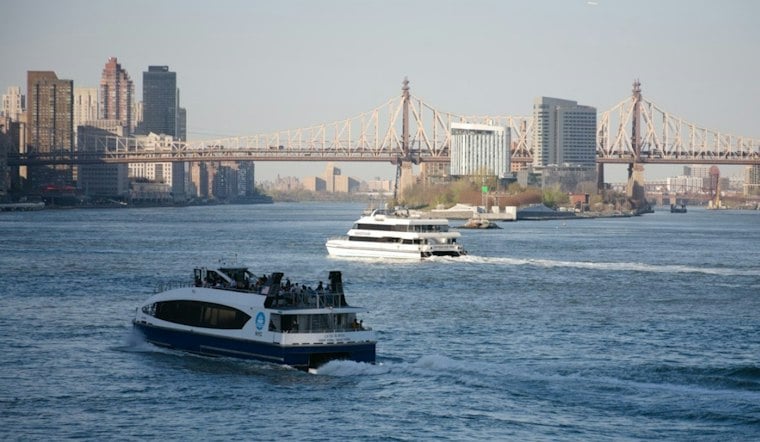
New York City Ferry riders could soon be paying more to cross the harbor, with a one-way fare increase from $4.50 to $5 on the table for a vote Wednesday. The proposal, which would also expand a discounted fare program to include middle schoolers, marks the system's third price hike since it launched in 2017.
The New York City Economic Development Corporation board is set to vote on the fare changes at its meeting on Wednesday, September 30, according to News12 New York. If approved, the new rates would take effect October 19, per the same report. Beyond the single-ride bump, the 10-trip pass would rise from $29 to $30, and the discounted fare — currently available to high school students, seniors, low-income New Yorkers, and people with disabilities — would tick up five cents to $1.50, News12 New York reports.
That discount program is also getting bigger. As Patch reports, the proposed changes would expand the $1.50 discounted fare to cover NYC middle school students for the first time, building on a benefit that until now applied only to high schoolers, seniors, low-income residents, and riders with disabilities.
A Nine-Year Climb From $2.75 to $5
The single-ride fare has moved steadily upward since NYC Ferry debuted in 2017 at $2.75, deliberately pegged to match the MTA subway fare at the time. According to Time Out, fares climbed to $4.00 in September 2022, then $4.50 in September 2024, with the proposed $5.00 fare representing the next step in that progression. Time Out also notes the increases trace back to Mayor Eric Adams's “NYC Ferry Forward” plan, launched in 2022 to improve the system's financial sustainability and cut public subsidies.
Those subsidy cuts appear to be working, at least by the city's own accounting. NYCEDC's Fiscal Year 2025 Financial Transparency Report found the per-rider ferry subsidy had dropped to $8.33, a 35 percent decrease from its 2020 peak — a figure the agency says gives NYC Ferry the lowest per-passenger subsidy of any major public passenger ferry system in the country.
Day-to-day operations, meanwhile, aren't run by the city directly. NYCEDC contracts vessel maintenance and maritime operations to Hornblower Group under a five-year agreement that began October 1, 2023, and runs through September 30, 2028, though NYCEDC retains exclusive authority to set fares and collects ticket revenue itself.
Ridership Keeps Climbing Despite the Price Tag
Rising fares haven't slowed the boats down. NYC Ferry celebrated its 50 millionth cumulative passenger in January 2026, capping a year that saw a record 7.4 million trips across calendar year 2024. The system now serves 25 landings across six routes spanning all five boroughs.
Frequent riders and multi-day visitors have reason to feel less pinched by the changes. The $15 two-day unlimited pass, first introduced as a pilot in late 2025, would become a permanent fixture at the same price under the proposal — still good for 48 hours of unlimited travel across all six routes, per Time Out's reporting. For commuters buying in bulk, the 10-trip pass works out to about $3 per ride even after the increase, and discount program riders would pay just $1.50 a trip.
No OMNY, No Free Transfers
One persistent gap for ferry riders is integration with the rest of the city's transit network. Unlike MTA subways and local buses, which raised their base fare to $3.00 in January 2026 and now offer weekly OMNY fare capping, NYC Ferry operates entirely outside the MetroCard and OMNY systems, with no free transfers to subways or buses, according to Wikipedia. Urban planning advocates have pushed for folding the ferry into OMNY to create one unified fare structure, though that hasn't happened yet.
The contrast with the city's other harbor ferry is stark. The Staten Island Ferry, run by the New York City Department of Transportation, has remained completely free since 1997 and still carries nearly 17 million riders a year across New York Harbor — a fare-free model NYC Ferry has never followed.
A Redesigned System Ahead of the Vote
The fare proposal follows a broader operational overhaul. In December 2025, NYCEDC rolled out a systemwide route redesign under its Ferry Optimization Plan, altering schedules and combining routes after collecting input from more than 15,000 public survey respondents. NYCEDC has said 88 percent of those surveyed indicated they would maintain or increase their ferry usage under the optimized map, suggesting the agency believes riders will tolerate both the new routes and the new prices.
The student discount program that's now set for expansion has existed since September 1, 2024, when it first opened to enrolled high schoolers who could buy reduced-rate weekday tickets for school commutes through their NYC Student Account portal, relying on annual discount codes issued by the city's Department of Education. Wednesday's board vote will determine whether that same discounted tier — and the broader fare structure — moves forward as proposed.




