

























































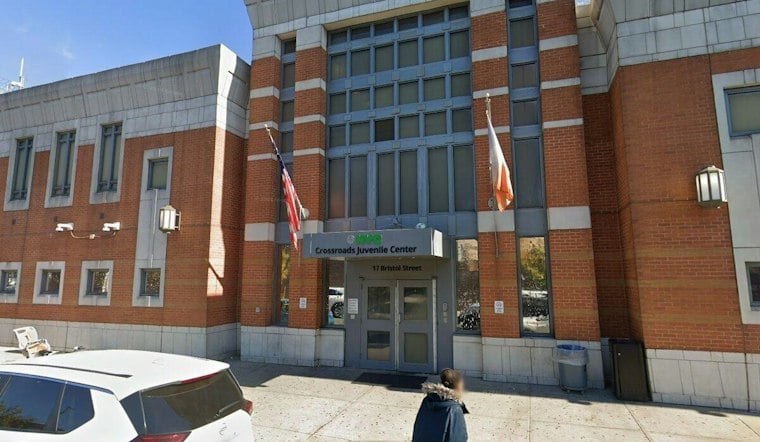
New York City will formally unveil a plan Tuesday aimed at reducing the number of teenagers packed into its two juvenile detention centers, where populations have swelled well beyond legal capacity and violence has been climbing for years. The combined average daily population at Crossroads Juvenile Center in Brownsville and Horizon Juvenile Center in the South Bronx hit 374 teens in June, according to city officials, even though the two facilities are supposed to house no more than 259 people combined.
The plan, reported by Gothamist, includes expanded access to community-based programs meant to reduce the number of young people held at both facilities, per the mayor's office. The city is increasing funding for therapy addressing substance use, family conflict and truancy, along with support for teens returning to school or finding jobs. New York is also boosting funding for organizations that support 14- to 20-year-olds involved in the court system, and the Department of Probation is launching a community monitoring program to supervise and support young people living at home while their cases are pending in court.
The crowding has been building for years. The combined average daily population rose from about 160 young people in 2022 to more than 300 in 2025, per the same outlet's reporting. Crossroads and Horizon house teens accused of serious crimes, and the surge in population coincided with a rise in violence: ACS reported 185 youth-on-youth assaults and altercations between April and June of this year, up from 128 during the same stretch in 2025.
Longer Stays, Not More Arrests, Drive the Crunch
Performance data for the first four months of Fiscal Year 2026 showed juvenile detention admissions fell slightly, from 833 to 802 compared with the same period a year earlier, according to figures published on NYC.gov. The average daily population rose during the same period, a pattern that points to longer stays as complex felony cases move slowly through youth court parts.
What the Official Records Show
ACS says the current population is concentrated among youths facing the most serious allegations: more than 73% of those in the two secure detention facilities are detained because of a murder or murder-related charge. The agency also says the secure-detention census has risen even as the total number of 16- and 17-year-olds in New York City custody has significantly decreased over the last 10 years, according to ACS testimony to the City Council.
The change in New York followed the Raise the Age law, which the NYC Mayor's Office of Criminal Justice says was passed in April 2017 and took effect in October 2018. National figures also require caution: the federal Office of Juvenile Justice and Delinquency Prevention reported that youth in residential placement increased from 24,900 in 2021 to 29,300 in 2023, but that broader measure is not directly comparable with New York City's secure-detention census.
Young people are spending longer periods behind bars, even as the number of young people entering juvenile detention has started to go down over the last year. That decline hasn't been enough to offset the effect of teens spending longer and longer periods behind bars.
Sleeping in Classrooms and Plastic Tubs
The crowding has also affected where teens sleep and how they move through the facilities. Reports have described young people sleeping in classrooms, hallways and other common spaces, where temporary arrangements may lack private bathrooms. ACS says teens without their own rooms receive a plastic bin for their belongings and retain access to programming, though they may spend much of the day being escorted around the building.
Sworn testimony from a Bellevue Mental Health Services therapist described the common areas as unsafe and unsuitable for youth placed on temporary cots, according to City Limits. New York State law requires each teen in secure detention to have a private bedroom, but the state Office of Children and Family Services declined in July to extend a waiver that had allowed the city to avoid that requirement.
ACS Points to a Changing Population
ACS attributes the longer stays to a growing share of detained teens with complex or serious cases, and the agency says changing violence rates reflect changes in the overall juvenile detention population, according to an ACS spokesperson. The agency says it is strengthening security practices, using enhanced behavior management, and expanding clinical services. ACS also added another bathroom at Horizon and plans to add one at Crossroads as well.
Rebecca Jones Gaston, appointed ACS commissioner in April, said the ultimate goal is to provide trauma-informed supports and opportunities to help young people thrive. Under the new plan, ACS intends to hire more staff, renovate existing facilities, improve security measures, and increase opportunities for education and job training. The city is also expediting updates to the detention buildings and expanding programming at both Crossroads and Horizon. Teens in detention can move to less secure facilities if they demonstrate good behavior and receive a judge's permission, and court officials will now meet regularly with city officials to address legal-system delays and resolve cases more quickly.
Advocates Say Help Is Overdue
The Legal Aid Society, which has long advocated for reforms to juvenile detention, said its young clients are stuck in itinerant status for months at a time as they wait for beds, hearings, or transfers. Dawne Mitchell of the Legal Aid Society called the mayor's office plan an important and welcome step forward. But Lisa Freeman said officials should have acted sooner to address what she described as inhumane conditions in juvenile detention, and she pointed to lengthy plea bargain negotiations and a limited supply of community-based programs as key factors dragging out how long teens remain locked up.
The Legal Aid Society says it is seeking safe and humane conditions for youth in custody, along with meaningful access to alternatives to detention. A longer-term national comparison remains difficult because the available measures differ, but an August 2025 report by the Prison Policy Initiative found that youth confinement nationwide declined by more than 70% over 25 years, falling to roughly 31,900 youth in 2023.
A Legal Reform With Unintended Consequences
The policy history dates to New York's Raise the Age legislation. According to the NYC Mayor's Office of Criminal Justice, the state passed the law in April 2017, ending the automatic prosecution of 16- and 17-year-olds as adults; it took effect in October 2018 and moved those youths from Rikers Island into age-appropriate facilities. A Department of Investigation report released in October 2024 examined how the law and the 2019 bail reforms changed the juvenile detention population, staffing needs and security challenges, as detailed in an earlier Hoodline report on the crisis.
Security lapses have compounded the problem. Federal prosecutors charged five youth development specialists at Crossroads in June 2024 with accepting more than $50,000 in cash bribes to smuggle marijuana, razor blades and other contraband to detained youth, according to The Chief. The case also highlighted security concerns at Crossroads.
The stakes extend beyond overcrowding numbers. An NYC Administration for Children's Services report for Fiscal Year 2026 recorded 228 allegations of child abuse and neglect across the city's secure detention centers, with 58 of those allegations, or 25%, indicated upon investigation. The City Council passed a local law in November 2025 extending the lookback window under the Gender-Motivated Violence Act, according to the law firm Levy Konigsberg.



