

























































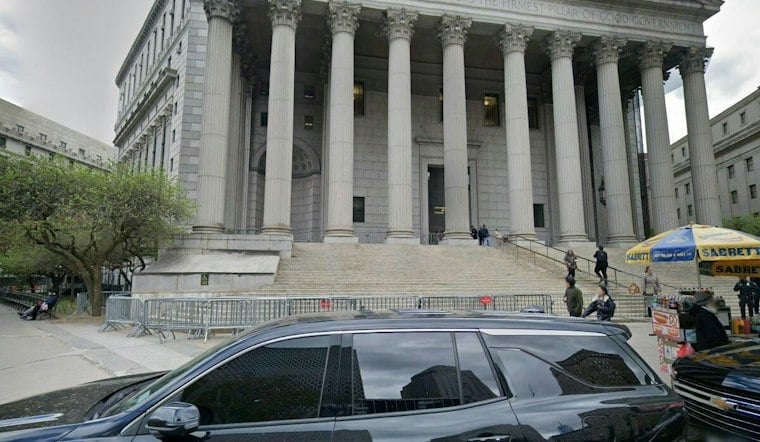
A Black NYPD lieutenant is suing the city and a department captain, alleging that race influenced access to overtime in his Strategic Response Group command and that he faced retaliation after raising concerns. Lt. Keith Hockaday’s lawsuit, filed in Manhattan state Supreme Court, claims he was subjected to disciplinary charges, lost vacation days and was repeatedly transferred after objecting to arrest-driven pressure and reporting alleged disparities in overtime assignments, Gothamist reported.
The allegations have not been adjudicated. Hockaday is seeking a jury trial and damages, while the NYPD declined to comment on the pending case, according to Gothamist. The lawsuit names the city and the captain who supervised him as defendants; it does not, by itself, establish that overtime or discipline in the unit was distributed unlawfully.
A dispute over discretion, discipline and arrest expectations
Hockaday says his captain pushed him to improve the unit’s arrest numbers and threatened a poor evaluation or transfer when he did not apply enough pressure to officers. He also alleges that non-Black lieutenants received overtime opportunities that were not offered to him. After he reported the alleged assignment disparities to the NYPD’s Office of Equal Employment Opportunity in February 2025, the suit says, the department referred the information to Internal Affairs and later brought charges connected to overtime Hockaday worked while supervising arrests. Gothamist reported that he paid $1,888.02 in restitution and forfeited 35 vacation days.
The suit further alleges that Hockaday’s assignments changed several times after his complaint: from an SRG unit in Brooklyn to one in the Bronx, then to Queens and eventually to the 70th Precinct. Those transfers, the discipline and the alleged denial of promotion are presented in the complaint as retaliation. The city and the named captain will have an opportunity to contest those claims in court.
The financial system behind the allegation
The dispute concerns a benefit that is both costly to the city and often dependent on supervisory decisions. The New York City Comptroller’s Office says NYPD uniformed overtime reached $960 million in fiscal year 2025, the highest level on record in nominal dollars. Citywide overtime rose from $1.66 billion in fiscal 2015 to $2.71 billion in fiscal 2025, with the NYPD accounting for approximately 40% of annual overtime costs, according to the Comptroller’s Office.
Public reporting requirements provide aggregate visibility but do not resolve the specific question in Hockaday’s case. Under New York City law, the NYPD says its quarterly overtime reports must show spending by patrol borough and operational bureau, as well as categories such as protests, planned events, arrests and training and officer rank, the department’s reporting page says. The Comptroller’s Office also reported that a January 2025 NYPD overtime plan introduced thresholds, documentation requirements and compliance roles but did not establish enforceable fatigue and scheduling protections.
That distinction matters: department-wide spending reports can show where money is going, but they do not demonstrate whether a particular supervisor offered assignments differently to Black and non-Black lieutenants. The NYPD separately publishes workforce data by race, gender and rank or title through its Personnel Demographics Dashboard; those figures likewise cannot establish what occurred in Hockaday’s command.
What the case could clarify
The lawsuit may test whether the alleged arrest pressure, overtime decisions and subsequent discipline were connected and whether they were motivated by race or retaliation. It also raises a broader oversight question: how much documentation exists for discretionary overtime assignments within specialized units, and whether existing department-wide reporting can detect unequal access at the command level. Those questions remain unresolved unless the parties produce records or a court makes factual findings.



