

























































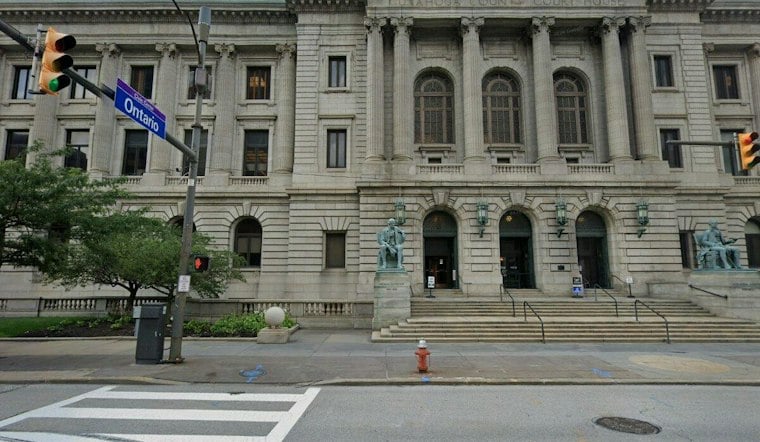
Cuyahoga County Prosecutor Michael O'Malley has picked another fight with County Executive Chris Ronayne, this time over who actually controls the office of the clerk of courts. O'Malley sent a letter to Ohio Attorney General Andy Wilson questioning whether Ronayne has the authority to appoint, discipline and remove Clerk of Courts Nailah Byrd, arguing the position answers to the judiciary rather than the executive branch.
The dispute, first reported by Cleveland.com, centers on Ronayne's administration interpreting county rules to mean that all county officers besides council and the prosecutor are appointed by the executive. O'Malley disagrees when it comes to the clerk, contending the office was created under state law governing courts rather than county government, and that Ohio law and prior attorney general opinions bar county governments from interfering with court administration.
Byrd has held the clerk of courts job since 2015. In 2023, Ronayne gave her a second title, deputy chief of staff over safety and justice, putting her in charge of long-term planning for the jail, the sheriff's department and the medical examiner's office. Three months after handing her that added workload, Ronayne eliminated the chief of safety deputy clerk position, according to the report.
Staffing Complaints and Independence Concerns
O'Malley said Ronayne's hiring freeze prevented the clerk's office from filling vacancies, leaving it short-staffed at a time when it needed to serve both the Common Pleas Court and the Eighth District Court of Appeals, as reported by cleveland.com. He said the resulting shortages made it harder for the office to keep up with its court-facing duties.
Beyond staffing, O'Malley raised a more pointed concern: that the clerk's reporting relationship with the executive threatens her independence, and that the executive could theoretically remove the clerk for following the court's direction rather than the administration's wishes. He said Byrd has increasingly served as a public voice for the executive's initiatives, a dynamic he argues is incompatible with the clerk functioning as an arm of the court.
O'Malley also pointed to the makeup of a four-member committee tasked with designing and planning a new county jail, which under Ohio law includes the clerk alongside judges and the sheriff, as noted by cleveland.com. He said justice system partners were placed on that committee specifically to help control design and planning decisions, and argued the clerk-control question is timely given what officials have observed with what he called the 153 committee.
A Fight That Predates This Year
This isn't the first time O'Malley has asked the attorney general to referee a turf battle with Ronayne. He previously sought state intervention over a separate dispute involving the roles of the county prosecutor and law director. In that earlier matter, Attorney General Dave Yost concluded that the prosecutor retains certain legal duties assigned by state law and that those duties could not be transferred to the county law director through an agreement between offices, as reported by the Ohio Attorney General. Cuyahoga County has since pursued a charter amendment, set for the ballot on November 3, 2026, meant to spell out the respective roles of the prosecutor and law director, per a report from cleveland.com.
The clerk of courts question has also come up before. In 2013, then-administrative judge Nancy Fuerst proposed a charter amendment that would have let judges, rather than the county executive, appoint the clerk. The county's charter review commission approved a modified version requiring judicial approval of the executive's pick, but that proposal never reached voters. The county will get another chance to revisit the issue during next year's charter review process.
Ballot Language Left the Clerk Unmentioned
Part of the ambiguity traces back to how Cuyahoga County's charter form of government was written when voters approved it. The ballot language called for an elected executive, an 11-member council and a prosecutor, and it stated that other county officers would be appointed by the executive and serve at the executive's pleasure with council approval. Those other officers include the medical examiner, the director of public works and the county treasurer. But the ballot language never expressly mentioned the clerk of courts, which O'Malley argues leaves the office in a different legal category entirely.
The attorney general's office confirmed it is reviewing O'Malley's request for an opinion but said no decision has been made on whether to accept or deny it, according to cleveland.com. O'Malley acknowledged it's too early to say what impact a formal opinion might have, but he said he believes there is a valid legal question worth the office's review, and he hopes to get guidance before next year's charter review begins.
Ronayne's office pushed back hard on the letter. A spokesperson, Kelly Woodard, said the administration is focused on serving Cuyahoga County and improving residents' lives, and Ronayne's office dismissed O'Malley's letter as an attempt to undermine the county's charter form of government altogether. O'Malley has previously advocated for dissolving the charter and returning to a government led by three county commissioners, a position that colors how his latest challenge is being received inside the administration.




