

























































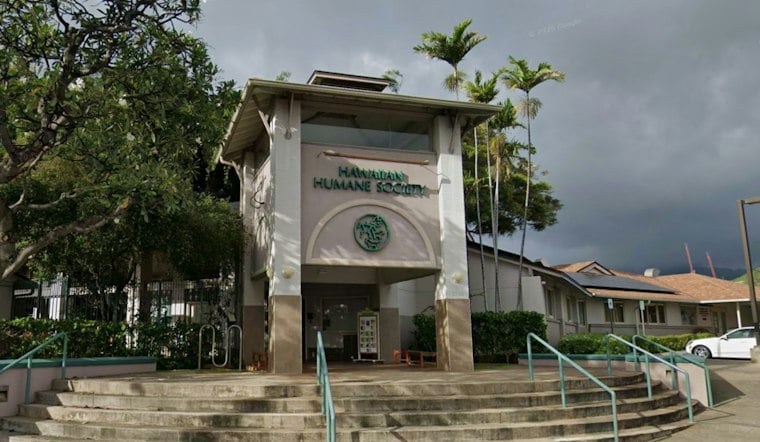
Every pet at the Hawaiian Humane Society's two Oʻahu campuses can be adopted free of charge through Sunday, part of an emergency push to clear kennel space for animals displaced by Hurricane Lowell on Kauaʻi. The fee waiver covers dogs, cats and other adoptable animals of any age at both the Mōʻiliʻili Campus in Honolulu and the Kosasa Family Campus in ʻEwa Beach, plus select Petco adoption sites.
The shelter has named the three-day push the “Kōkua for Kauaʻi Flash Adoption Special,” running from Friday, September 11 through Sunday, September 13, according to the Hawaiian Humane Society. VCA Animal Hospitals fully sponsored the promotion, covering the cost the shelter would otherwise recoup through adoption fees. As reported by Hawaii News Now, the goal is to free up resources so the shelter can help the Kauaʻi Humane Society, with officials planning to bring some pets from Kauaʻi to Oʻahu and a Hawaiian Humane Society team already sent to assist on the ground.
A Costly Undertaking Behind Every Adoption
Housing and caring for each adoptable animal costs the Hawaiian Humane Society an average of $560, a figure that covers medical evaluations, spay or neuter surgery, microchipping and vaccinations, per the same organization. That expense is what VCA's sponsorship is absorbing across the board this weekend, rather than passing it on to adopters. The shelter also points to research showing that waiving fees does not reduce long-term pet retention or make adopting families any less likely to provide veterinary care compared with paid adoptions.
The Kosasa Family Campus, a 27,000-square-foot facility that opened in May 2023 on five acres donated by D.R. Horton Hawaiʻi, was built with capacity to care for more than 10,000 animals annually. Between that West Oʻahu site and the historic Mōʻiliʻili Campus in Honolulu, the shelter now has the physical footprint to absorb an influx of Kauaʻi animals ahead of any inter-island transfers.
Kauaʻi's Only Open-Intake Shelter Under Strain
The pressure on Oʻahu traces back to Kauaʻi, where the Kauaʻi Humane Society is the island's only open-intake animal shelter, an independent 501(c)(3) nonprofit with a live-release rate of around 96%, according to Sniffspot. Hurricane Lowell passed west of Kauaʻi on September 8 as a Category 1 storm packing 80 mph wind gusts, knocking out power to nearly all of the island's 73,000 residents and leaving debris and closed roads in its wake, the Associated Press reported.
In the storm's aftermath, the Kauaʻi Humane Society disclosed that its daily shelter operational budget averages $10,000, and that its Puhi facility remained closed to the public while generators, staff and volunteers kept feeding and kennel sanitation going through the outages. The nonprofit has served the island for nearly 75 years, according to Hawaii News Now, and relocated to its current Puhi site along Kaumualiʻi Highway in 2000 after more than five decades operating out of Hanapepe.
Statewide Storm Recovery Continues
Hurricane Lowell's damage has rippled across the state well beyond animal shelters. Hoodline previously reported that the Office of Hawaiian Affairs authorized $362,800 in emergency aid for Native Hawaiian families on Kauaʻi, Niʻihau and West Oʻahu after the storm knocked out power to roughly 90% of Kauaʻi households. The storm has also been tied to a fatality, with a 74-year-old Kalaheo man found dead at the Nomilu Fishpond, and to school closures and road flooding on Maui.
Under Hawaiʻi Revised Statutes § 127A-19, county emergency management agencies are required to identify and operate emergency shelter facilities capable of accommodating both human evacuees and pet animals during declared disasters, according to the Animal Legal & Historical Center. Inter-island animal transport has been used before during Hawaiʻi emergencies, including airlifts after the August 2023 Maui wildfires that moved shelter animals to Oʻahu and mainland partner organizations, per Seattle Humane.
How many animals will ultimately be flown from Kauaʻi to Oʻahu, whether mainland rescue flights will be needed if Oʻahu shelters fill up, and how soon power and normal operations return to the Puhi facility all remain open questions as recovery continues.


