

























































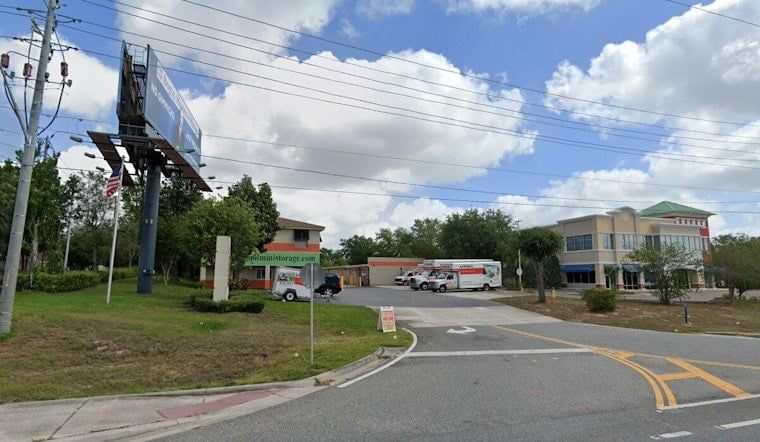
Oakland town commissioners gave preliminary approval on August 25 to a sprawling new commercial development at the northwest corner of State Road 50 and Catherine Ross Road, but not without airing sharp concerns about whether the project looks and feels like Oakland at all. The 84,200-square-foot complex, still informally called Oakland Town Center, would bring 11 single-story commercial buildings with restaurants, retail spaces, offices, wellness studios and clinics to a 14.80-acre site the commission voted to rezone from commercial general to planned unit development.
The commission also approved a development agreement with the property owner and signed off on a preliminary subdivision plan with conditions, according to West Orange Times & Observer. Developer Alex Reece told the paper the project will feel different from the highway, with fountains, pedestrian walkways and landscaping designed to set it apart from typical State Road 50 retail. Reece said the goal is to create a Winter Park and Winter Garden feeling, and added that developers do not want to cannibalize or take over Oakland's own town center. The development team has described the project's broader goal as becoming an oasis for the town, per the same report.
Jobs and Revenue Projections Draw Mayor's Support
Mayor Shane Taylor said he was excited about the project, according to the outlet's reporting, and the numbers help explain why. The development is expected to generate around $40 million per year and create 450 to 550 jobs, and it is expected to be completed in a single phase. Taylor also requested specific restrictions on what could move in, asking that automotive retail, daycare, pre-K and kindergarten schools be kept out of the plaza, and telling the paper he did not want an AutoZone or similar automotive retailer in the development.
The development agreement approved by the commission also prohibits vape and tobacco shops as well as marijuana dispensaries. Florida law gives municipalities explicit authority to ban dispensing facilities outright rather than regulate them under standard pharmacy rules, a legal backdrop confirmed under Florida Statute § 381.986(11)(b). Taylor was sworn in as mayor in March 2024 after winning 64.5% of the vote to succeed 20-year Mayor Kathy Stark, pledging at the time to maintain Oakland's small-town character while managing commercial growth, according to Vox Populi.
Commissioners Say Design Falls Short of Oakland's Look
Not everyone on the dais was sold on the aesthetics. Commissioner Kris Keller said the development looks too industrial and modern and argued it should better match Oakland's historic aesthetic, the town's own meeting record shows. Vice Mayor Michael Satterfield went further, saying the project simply does not have an Oakland look or feel. Commissioner Joseph McMullen was absent from the August 25 meeting where those critiques were raised.
Much of the design pushback centered on fenestration, the technical term for how much of a building's exterior is windows and glass. Oakland's land development code and Urban Corridor design district standards require 60% fenestration on commercial buildings, but the developers came in an average of 20.8% below that threshold, though their pedestrian-band frontages reportedly provide between 54% and 65% transparency. The town set a similar precedent in March 2024, when the commission approved a planned development agreement for the Harvest District at 15551 State Road 50 that required brick exterior elements specifically to preserve the town's historic character, according to prior reporting from the West Orange Times & Observer.
Signage Fight Centers on Winters Landing Neighborhood
Signage emerged as another flashpoint. Town rules limit a project to one identification sign of 48 square feet or less, but developers requested three ground-mounted project signs instead, along with two 98-square-foot multi-tenant monuments and a larger, 20-foot-9-inch monument proposed for the Catherine Ross Road and State Road 50 intersection. Developers said that monument would let residents and commuters see which tenants occupy the plaza without having to turn onto State Road 50 itself.
Keller specifically raised concerns about the Catherine Ross Road monument because of its proximity to the neighboring Winters Landing subdivision, a community of 58 single-family homes built between 2005 and 2006 with some recent valuations exceeding $800,000. Keller and Commissioner Yumeko Motley separately worried that naming the project Oakland Town Center could overshadow the town's own Main Street Overlay District, a walkable downtown planning framework the town began public hearings on in May 2026 for Tubb Street between State Road 50 and the West Orange Trail. Developers agreed to propose new development names at the next ordinance hearing and said they would formulate new renderings for the commission to review.
Access Points and What Comes Next
The development will have five access points in total: two from South Starr Street, one from State Road 50, and two from Catherine Ross Road, which the Town of Oakland opened as a new municipal connector linking Oakland Avenue directly to State Road 50 earlier this year. Plans also call for a retaining wall along State Road 50 and Catherine Ross Road that will vary in height from almost nothing to 6 to 10 feet.
The project site is part of a 50-acre parcel. The push for more commercial space along the corridor comes as Oakland's population grew 38.5% between 2010 and 2020, from 2,538 to 3,516 residents across its 2.5-square-mile footprint, per U.S. Census Bureau records, fueling regional demand that a September 2025 analysis from the Jared Jones Real Estate Team tied to rapid growth in Winter Garden, Windermere, Clermont and Horizon West. According to the Florida Office of Economic and Demographic Research, its 2025 population report provides estimates for Florida’s counties and incorporated cities as of April 1, 2025. The commission approved the first reading of the rezoning ordinance on August 25 and scheduled a second ordinance hearing for September 9, when developers are expected to return with revised names, renderings and signage plans.





