

























































A 29-year-old pedestrian walking along the east shoulder of County Road 200A near Northeast 110th Street in Ocala was struck and killed shortly after 8 a.m. Wednesday, and the driver who hit him didn't stick around. He came back about an hour later, and that's when Marion County deputies took him into custody.
The vehicle involved was identified as a northbound silver Ford Explorer, according to Ocala-News.com, which cited a preliminary Florida Highway Patrol crash investigation. Florida Highway Patrol says the pedestrian was struck and pronounced dead at the scene. As 352today reported, the vehicle that struck the pedestrian fled the scene before returning roughly an hour later, and the returned vehicle showed visible damage consistent with the incident, per that report.
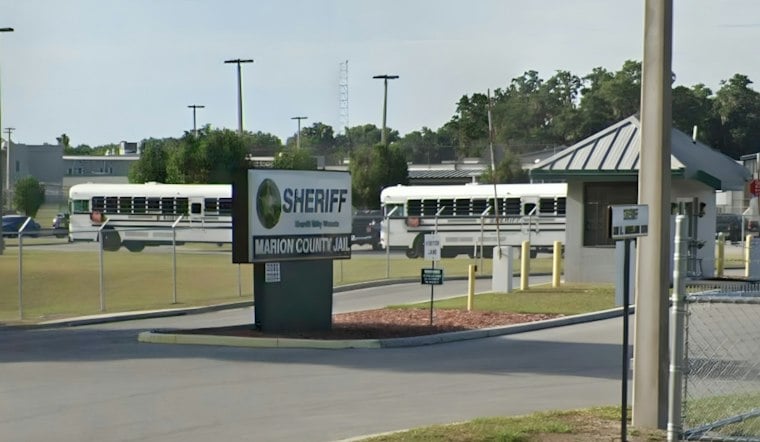
The driver, identified as 29-year-old Marion County resident Matthew Boardman, reportedly admitted to being behind the wheel and to leaving the scene, according to the same account. He was charged with leaving the scene of a crash involving death and was booked into the Marion County Jail. Authorities identified and notified the deceased pedestrian's next of kin, per 352today's report.
What the Hit-and-Run Charge Actually Requires
Florida law treats fleeing a fatal crash as a serious felony on its own, separate from any question of who caused the collision. Under Florida Statute 316.027(2)(c), leaving the scene of a crash involving death is a first-degree felony carrying up to 30 years in state prison, a $10,000 fine, and a mandatory driver's license revocation of at least three years.
Florida's Aaron Cohen Life Protection Act, enacted in 2014 and named after a South Florida cyclist killed by a hit-and-run driver in 2012, adds a mandatory minimum of four years in prison for anyone convicted of fleeing a fatal collision, according to the Florida Department of Highway Safety and Motor Vehicles. That floor exists specifically to prevent judges from handing down probation-only sentences in these cases.
Notably, prosecutors don't need to prove Boardman caused the crash to secure a conviction on the fleeing charge. Under Florida Supreme Court precedent from the State v. Dumas case, they need only show he was involved, knew or should have known someone was hurt, and willfully left without rendering aid or identifying himself, according to the Sammis Law Firm. What caused the vehicle to be on the shoulder in the first place, and whether speed or distraction played a role, remains unaddressed in what's been reported so far.
A County Already Leading the State in Traffic Deaths
This crash lands in a county already grappling with the worst traffic fatality numbers in Florida. State crash data compiled in August 2026 showed Marion County had the highest overall vehicle fatality rate of any of Florida's 67 counties, logging 53 vehicular deaths, including six pedestrians, through mid-August, per the same Ocala-News.com dashboard reporting.
The pattern isn't new. Marion County recorded 21 pedestrian fatalities in 2024 alone, a rate the Ocala Gazette notes stands well above neighboring Lake County's eight pedestrian deaths in the same period. Statewide, roughly a quarter of all traffic crashes in Florida involve a hit-and-run driver, amounting to more than 104,000 such collisions annually, according to FLHSMV data. Pedestrians and bicyclists make up 76 percent of hit-and-run fatalities statewide, and over 81 percent of those fatal crashes happen during dusk, dawn, or dark conditions, the agency reports.
Local officials have tried to respond. In August 2025, the City of Ocala accepted a $47,099 state-backed police grant to fund high-visibility enforcement and targeted overtime patrols along high-risk corridors, aimed at curbing pedestrian and cyclist deaths, the Ocala Gazette reported at the time. County Road 200A itself has a troubled history — in November 2023, a driver was killed near Northeast 63rd Street after a vehicle struck a mailbox, fence, and trailer before coming to a stop, according to a Florida Highway Patrol crash report cited by ClickOrlando.


