

























































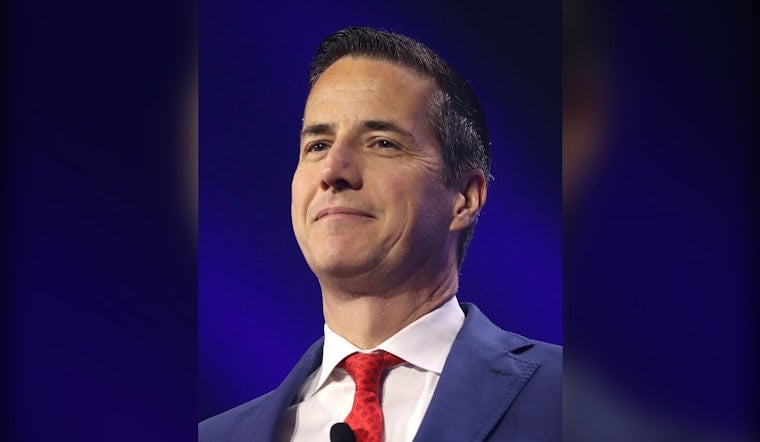
Ohio Senator Bernie Moreno wants to erase the tax breaks his own state keeps handing to data centers, and he says the tool to do it sits in Washington, not Columbus. Moreno's plan would impose a federal tax equal to 100% of any state or local tax incentive given to a data center, effectively wiping out the savings those companies were promised at the state and local level.
Moreno has not yet introduced the legislation, according to Cleveland.com, but he has also criticized data-center tax breaks. The Ohio Republican has said he does not want taxpayer dollars supporting data centers, and the newspaper's report, written by Anna Staver, lays out how his proposal would work: it would not stop Ohio or its cities, counties and townships from offering data center tax breaks in the first place, but it would neutralize the benefit by clawing it back through a federal tax.
The frustration traces back to a specific deal. In March 2026, Moreno wrote a letter to the Ohio Tax Credit Authority criticizing its $4.5 million state sales tax break for Ark Data Centers, a subsidy tied to the company's $136 million expansion in Akron and Independence. Ark received a 50% sales tax exemption on qualifying data center equipment for 10 years, and per the same report, the expansion was expected to create just 10 full-time jobs while generating between $1.1 million and $1.5 million in annual payroll.
A Sweetheart Deal, Moreno Says
Moreno did not mince words about the arithmetic. “That's not economic development. That's a sweetheart deal for Wall Street while everyday Ohioans are forced to foot the bill,” he wrote, according to the Cleveland.com report. He made those comments at the Ohio Energy Affordability Summit, an event hosted by Arnold Ventures and Club for Growth.
Ohio's sales tax structure currently exempts qualifying data centers from taxes on equipment, construction materials and power infrastructure, and the state has leaned on those breaks for years to attract billions of dollars in data center investment. The cost of that exemption has soared as the industry has grown, a trend that has already prompted action inside Ohio's own executive branch.
DeWine's Freeze Already Underway
Governor Mike DeWine paused consideration of new data center tax agreements in Ohio this year while a legislative committee reviews the industry, a move confirmed by the Ohio Governor's office. DeWine's pause came on May 27, and he later said in August that the freeze will remain in place until he leaves office, according to ENR. Even so, the Ohio Tax Credit Authority approved a $42.3 million sales tax exemption for Cologix Inc.'s $1.17 billion data center development in Delaware and Licking counties on June 1, hours before the moratorium took effect, using a grandfathering provision detailed by Signal Ohio.
The fiscal pressure behind these moves is steep. The Ohio Department of Taxation revealed that state sales tax exemptions for data centers cost Ohio $1.57 billion in calendar year 2025 alone, more than 11 times the state's original forecast of $135.8 million, following a 2024 tax loss of $554.9 million, according to CBS News. Beyond the state's own losses, those exemptions cost Ohio municipal and county governments an estimated $166.8 million in uncollected local sales tax revenue during 2024, per the same report.
Why States Can't Easily Undo Old Deals
Part of what makes a federal fix appealing to Moreno is that Ohio can't simply claw back many of its biggest commitments. State records show that former Governor John Kasich's administration signed statewide agreements between 2014 and 2018 granting Amazon, Meta and Google 100% sales tax exemptions for up to 40 years if investment thresholds reaching $8 billion are met, with each agreement potentially worth at least $600 million annually, as reported by Ohio House Democrats. Those legacy contracts are largely locked in regardless of what Columbus decides now, which is why lawmakers like Moreno are looking to federal tax policy instead of state repeal.
He is not alone in that instinct. U.S. Senator Ron Wyden, the ranking Democrat on the Senate Finance Committee, published a white paper in August proposing to eliminate federal tax write-offs for data center construction and to establish a federal gross receipts excise tax on data center operations, according to the Senate Finance Committee. The proposals address data-center taxation at the federal level.
The Grid Squeeze Behind the Backlash
Ohio's data center boom has also strained its electric grid. The state ranks fifth in the nation with more than 200 data centers, and utility AEP Ohio reported contracted data center power capacity reached 17,861 megawatts in 2026, far exceeding the utility's historical peak demand of 8,000 to 10,500 megawatts, a gap Hoodline previously reported is fueling scrutiny of utility spending and residential rate hikes. Ohio is one of 36 to 38 states offering specialized data center sales tax incentives, even as local communities nationwide delayed or blocked an estimated $150 billion in planned data center investments in 2025 over utility and taxpayer cost concerns, according to a report from Bipartisan Policy Center. According to the U.S. Department of Energy, data center load growth has tripled over the past decade and is projected to double or triple by 2028. According to Lawrence Berkeley National Laboratory, total data center electricity usage climbed from 58 TWh in 2014 to 176 TWh in 2023 and is estimated to reach between 325 and 580 TWh by 2028.
Under Ohio Revised Code Section 122.175, a data center project only needs to make a minimum capital investment of $100 million over three consecutive years and maintain an annual payroll of at least $1.5 million to qualify for state and local sales tax exemptions, a threshold that critics say sets a low bar for job creation relative to the tax savings involved. That tension, between officials who argue tax breaks bring vital infrastructure investment and residents who say the facilities create very few permanent jobs while driving up utility and grid costs, is now playing out from Akron to Washington as Moreno prepares his bill.




