

























































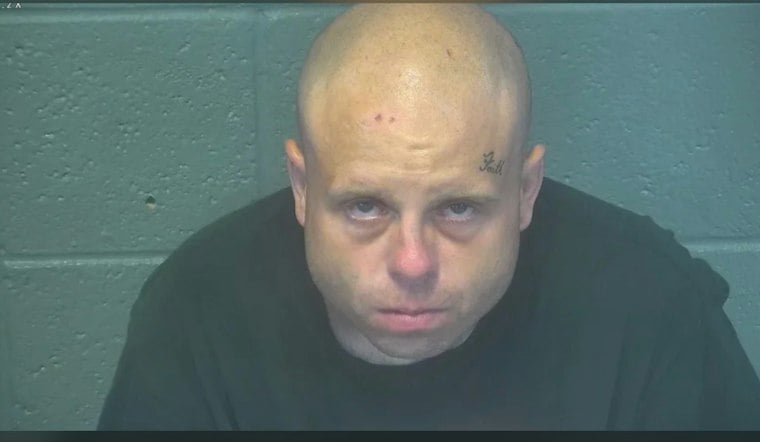
A traffic stop in southwest Oklahoma City led to a reported high-speed flight, a second encounter with police and a hospital transport after officers said the suspect claimed he had swallowed methamphetamine and fentanyl. The case also raises the public-safety issue at the center of Oklahoma City's pursuit rules: when does the danger of continuing a chase outweigh the need to make an immediate arrest?
According to KFOR, police identified the suspect as 37-year-old Aaron Wigington. Officers said the incident began near a 7-Eleven after a traffic violation and that the driver reached speeds of up to 100 mph, crossed into oncoming traffic and ran stop signs. Police ended the vehicle pursuit because of the danger to other drivers, the report said.
Police later located the vehicle and, after another reported flight, said Wigington entered a home without permission. Officers searched nearby properties and found him hiding in a box, according to KFOR. Those details are police allegations reported by the outlet, not findings of guilt.
After his arrest, Wigington told officers he had swallowed a bag containing methamphetamine and fentanyl, KFOR reported. Paramedics took him to a hospital, and he was expected to be booked after being released. The available reporting does not establish the amount swallowed, whether the packet ruptured, whether he overdosed or what charges prosecutors ultimately filed.
Why the pursuit was stopped matters
Oklahoma City tightened its vehicle-pursuit practices after a 2021 crash involving a police pursuit. On May 25, 2021, 28-year-old Star Shells was killed when a driver pursued by police collided with her at Martin Luther King Avenue and NE 16 Street; the pursuit reached 95 mph, according to Oklahoma Watch.
Effective June 7, 2022, the department's revised policy limited Code 3 speeds to 15 mph over the posted limit on city streets and 25 mph over the limit on highways, Oklahoma Watch reported. A separate account by Free Press, citing Oklahoma Watch, said the policy directs officers to self-terminate certain pursuits when factors such as dangerous driving make the chase a threat to the public or officers.
The FBI Law Enforcement Bulletin describes the same general risk-balancing principle: most pursuit policies call for termination when the danger created by a chase outweighs the need for immediate apprehension. That guidance does not independently determine whether the officers in this case complied with Oklahoma City's policy; the available account only says the pursuit was ended because of the driver's speed and danger to others.
The drug allegation fits a wider state health concern
The reported ingestion allegation also comes against a severe statewide fentanyl backdrop. The Oklahoma State Department of Health says fentanyl overdose deaths rose from 127 in 2020 to 730 in 2023 before falling to 487 in 2024, a 34% decline from the prior year. Those totals describe statewide deaths and do not show what happened medically to Wigington.
The same health department says naloxone is a safe and effective medication that reverses an opioid overdose. That is general emergency-response information, not evidence that naloxone was administered or that Wigington experienced an overdose. His medical condition, toxicology results and final booking status were not established in the available report.
What remains unresolved
The current account does not include a booking record, affidavit or charging document confirming the final allegations. It also does not establish whether the suspected drugs were recovered, whether the alleged break-in resulted in a separate charge or how prosecutors will handle the reported swallowing of the packet. Those records will be needed to distinguish the initial police account from the case's eventual court record.





