

























































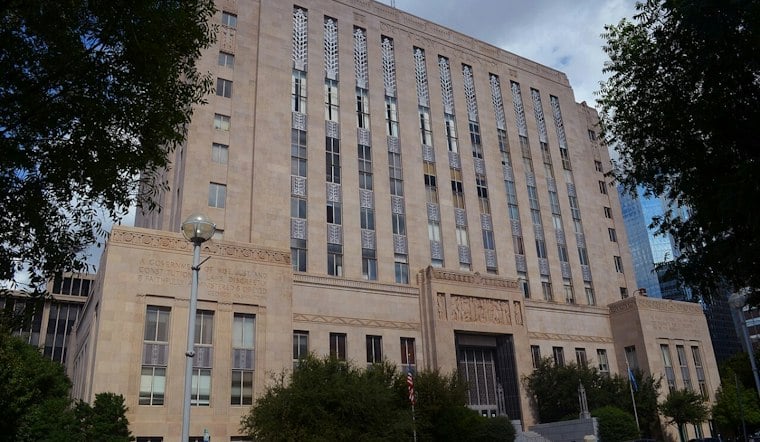
A lawsuit filed Wednesday in Oklahoma County District Court is challenging the state's abortion bans on behalf of two women who were denied care after learning their pregnancies were not survivable, along with two Oklahoma City-area OB-GYNs and a reproductive justice group. The case centers on Magon Hoffman and Sheena Hamlin, both of whom had to leave Oklahoma to end pregnancies doctors told them had no chance of resulting in a living child.
The suit was filed by the Center for Reproductive Rights, according to the Center for Reproductive Rights, and names Oklahoma County District Attorney Vicki Behenna and Attorney General Gentner Drummond among the defendants, as reported by The Oklahoman. Also named are Steven Miller, executive director of the Oklahoma State Board of Osteopathic Examiners; Keith Reed, commissioner of the Oklahoma State Department of Health; and Sandra Harrison, executive director of the Oklahoma State Board of Medical Licensure and Supervision, per the same account. The suit asks the court to declare the state's abortion bans unconstitutional as applied to pregnant Oklahomans carrying fetuses with fatal diagnoses, and contends the bans violate due process and equal protection rights under the Oklahoma Constitution, the newspaper's report states.
A Diagnosis With No Path to Survival
Hoffman learned during an anatomy scan that her daughter, whom she and her husband Lane named Lottie, had anencephaly — a condition in which a fetus develops without a skull and with little brain matter, according to the same Oklahoman report. A doctor told the couple Lottie was not compatible with life. Anencephaly occurs in roughly 1 in 4,600 U.S. births and results in near-total infant mortality shortly after birth, according to the Centers for Disease Control and Prevention.
Unable to get the abortion in Oklahoma, Hoffman traveled to New Mexico in 2022 with Lane, who waited in the car during the procedure because of pandemic restrictions in place at the time, per the Oklahoman's account. The trip cost the family about $3,000 in medical, hotel, and travel expenses, and Hoffman lost her job because of the time she took off. She later became pregnant again in 2024 and gave birth to a healthy baby girl; she is now going back to school to become a counselor specializing in reproductive issues, the outlet reports.
A Second Plaintiff, A Second Lethal Diagnosis
Sheena Hamlin also joined the lawsuit after her daughter Ellie was diagnosed with Meckel-Gruber syndrome, a rare genetic disorder marked by cystic kidney dysplasia and central nervous system malformations that carries a 100% mortality rate in utero or shortly after delivery, according to research published in PubMed Central. Had Ellie survived the pregnancy, the condition would have caused her to suffocate at birth, per the Oklahoman's reporting.
Sarah Mashburn and Elizabeth Pinard, both Oklahoma City-area OB-GYNs, joined as plaintiffs alongside Oklahoma Call for Reproductive Justice, the advocacy group that previously won a landmark case before the state's highest court. Caroline Sacerdote, an attorney involved in the case, said abortion is necessary healthcare, according to the Oklahoman's account.
The Legal Landscape Since Roe Fell
The U.S. Supreme Court overturned Roe v. Wade in 2022, and Oklahoma is now one of 13 states with a near-total abortion ban, per the Oklahoman. In March 2023, the Oklahoma Supreme Court ruled 5-4 in Oklahoma Call for Reproductive Justice v. Drummond that the state constitution protects an inherent right to abortion when necessary to preserve a pregnant woman's life, according to UCLA Law. That ruling left open whether the same protection extends to cases involving fatal fetal anomalies like anencephaly or Meckel-Gruber syndrome.
Two months later, the Oklahoma Supreme Court struck down two civil-enforcement abortion bans because their medical emergency exceptions were unconstitutionally narrow, while allowing the state's 1910 pre-Roe criminal abortion law to remain in effect, according to the Center for Reproductive Rights. Under that law, performing an abortion still carries up to five years in prison. A separate 2022 statute, SB 612, classifies performing or attempting to perform an abortion as a felony punishable by up to 10 years in prison and a $100,000 fine, with exceptions limited to life-saving medical emergencies, as detailed by Contemporary OB/GYN. Oklahoma's abortion ban allows life-preserving abortions, but doctors facing years in prison for a miscalculation have little incentive to intervene unless a patient's life is actively in danger.
When Federal Complaints Fell Short
This is not the first time Oklahoma's approach to emergency abortion care has drawn a legal challenge. In September 2023, the Center for Reproductive Rights filed an administrative complaint alleging Oklahoma Children's Hospital violated federal EMTALA law when staff refused an emergency abortion to Jaci Statton for a nonviable partial molar pregnancy until her condition severely deteriorated, according to CBS News, which reported Statton was allegedly advised to wait in a hospital parking lot until she was near death. The federal Centers for Medicare and Medicaid Services declined the following month to find an EMTALA violation against Oklahoma University Health in that case, the Center for Reproductive Rights has said, illustrating the limits of relying on federal emergency medical law to expand abortion access in ban states.
That limitation is part of why advocates have turned to state constitutional litigation instead. The new Oklahoma filing follows a broader national strategy: since 2023, the Center for Reproductive Rights has launched similar lawsuits in Texas, Idaho, and Tennessee on behalf of women denied abortions during severe pregnancy complications or fatal fetal diagnoses, according to the Associated Press.
Thousands Already Leaving the State
The scale of the problem extends well beyond the two women named in the suit. State Senate data released in January 2025 found that thousands of pregnant Oklahomans travel out of state for abortion care each year, alongside an estimated 3,274 self-managed abortions occurring within Oklahoma annually, according to prior Hoodline reporting. That pattern mirrors the journey Hoffman and Hamlin were each forced to make when Oklahoma law offered them no path to care at home.
The lawsuit lands amid continued state action on abortion policy. Oklahoma lawmakers advanced a measure in May 2026 that would make delivering abortion-inducing drugs a felony punishable by up to 10 years in prison, and abortion enforcement became a flashpoint among Republican gubernatorial candidates at a debate in March 2026. Whether Oklahoma courts will extend constitutional protection to cases involving fatal fetal diagnoses remains an open question the new lawsuit is now asking a district court to resolve.




