

























































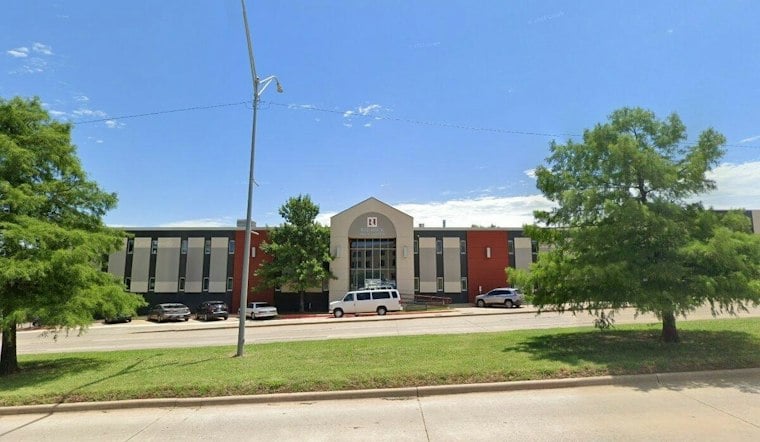
Inside Mabel Bassett Correctional Facility, Deborah Franks picks up a children's book, sits in front of a camera, and reads it aloud for her great-grandson Jaxx, who lives in California. She records one storytime at a time through a program that mails the videos and the books straight to his door.
A Program Built Around Bedtime Stories
The effort is called the OK Messages Project, and according to News On 6, it helps incarcerated parents connect with their children by sending videos of them reading books aloud. Parents choose a book from tables and buckets set up for them, record themselves reading it, and the recording — along with the book itself — gets sent home to their kids, per the same report. The program sends staff and camera crews into all seven Oklahoma prisons, the outlet notes, to help make it happen.
Denise Daniels runs the OK Messages Project today, but the idea traces back further. Its founder, an author, reportedly encountered a newspaper statistic roughly 15 years before this reporting — one indicating that around 80% of women in prison are mothers, according to a 2011 figure cited in the News On 6 report — and conceived of reading as a way to connect incarcerated parents and children, aiming to slow generational incarceration.
A Great-Grandmother's Six Years of Reading
Franks, incarcerated at Mabel Bassett, records reading videos for Jaxx and says the program has helped inmates retain connections with children and grandchildren, the station's report states. Jaxx, for his part, has scored 100% on one school assignment and 85% on another, according to the same account.
A formerly incarcerated mother featured in the report said she read to her daughter by video for six years and that the program helps incarcerated people maintain connections with family and loved ones. She added that seeing a mother read may motivate children to read and improve their reading scores and outlook, per the report. News On 6 says it plans to feature that mother and her now-adult daughter in a follow-up piece next week, as part of an ongoing series in which Celebrating the Standard spotlights Oklahomans working to make their communities better.
Why Oklahoma, and Why Now
The scale of the need in Oklahoma is significant. Roughly 135,300 children in the state have experienced parental incarceration during their upbringing, according to the OK Messages Project. That's tied to Oklahoma's standing as fourth in the nation for female incarceration per capita based on 2023 data; the state has also consistently been among the states with the highest female incarceration rates, according to Metriarch.
The same source reports that more than 60% of women in Oklahoma state prisons have a child under 18, and more than 70% of women involved in the criminal justice system have experienced intimate partner violence. The program mails physical books along with digital video recording links to approximately 1,000 children two to four times a year, timing deliveries around occasions like Mother's Day, Father's Day, and Christmas, the OK Messages Project says. Filming sessions happen across seven Oklahoma prisons, with trained volunteer camera crews coaching parents through recordings at prisons including Mabel Bassett.
Measuring the Impact
Internal metrics published by the OK Messages Project indicate that 72% of participating children improved their reading skills, 59% showed greater interest in school, and 88% strengthened their emotional bond with their incarcerated parent or caregiver. Those numbers matter given research cited by Corrections1, drawing on U.S. Department of Justice data, showing children of incarcerated parents face a five to six times higher likelihood of entering the juvenile or criminal justice system than peers with non-incarcerated parents.
Corrections1 also traces the program's roots in Oklahoma to “Redeeming the Family,” a nonprofit initiative launched by author and educator Cheri Fuller to mitigate childhood trauma through literacy and parental contact. Between 2022 and 2025, the OK Messages Project received federal U.S. Department of Justice Second Chance Act grant funding through a collaborative initiative with the Oklahoma Department of Corrections, New Hope Oklahoma, and Girl Scouts Beyond Bars.
State Reforms Target Trauma Among Incarcerated Women
Separately, an Oklahoma Department of Corrections notice describes the implementation of the evidence-based Women's Risk Needs Assessment tool, with plans to launch gender-specific probation and parole caseloads by October 2026 to address underlying trauma among female inmates, according to a notice posted on Oklahoma.gov. For families like Franks and Jaxx's, though, the more immediate connection remains a recorded voice, a chosen book, and a video that arrives in the mail.





