

























































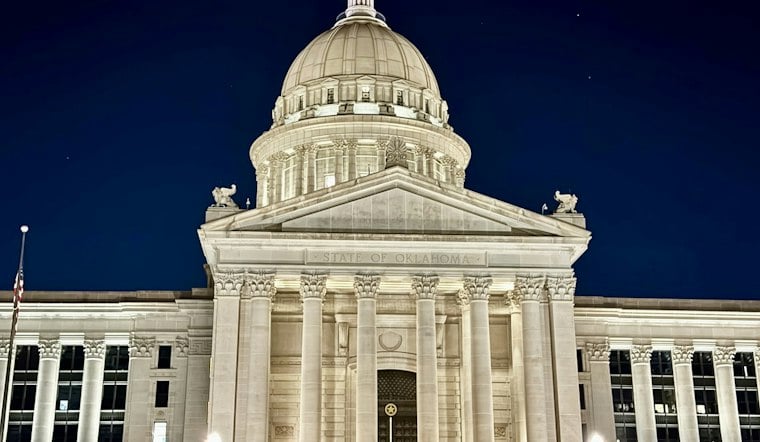
Oklahoma lawmakers examined a 75-year-old law that still lets research labs demand unclaimed dogs and cats from the state's animal shelters, even though the agency meant to run the program admits it has never actually used it. Lawmakers held an interim study on the mandatory pound seizure statute, with state Sen. Nikki Nice telling colleagues she supports either repealing or substantially changing the law.
The statute, known as Title 4, Section 394 of the Oklahoma Statutes, has been on the books since 1951, according to the Kirkpatrick Foundation. The available sources do not specify why it was written. As reported by KOKH, Nice hosted the interim study and is looking toward the next legislative session.
During Wednesday's hearing, Oklahoma Department of Agriculture, Food and Forestry official Teena Gunter said her agency has never issued a single license under the pound seizure program since it took over administration of the statute from the Oklahoma Department of Health in 2012, per the station's report. In other words, the mechanism exists on paper, but the state agency responsible for running it has zero experience actually doing so.
A Law With No Company Left
A Law With No Company Left Oklahoma is now the only state in the country with a law that mandates shelters surrender unclaimed animals to research facilities on request, the same report notes. Cynthia Armstrong told lawmakers that 18 states ban pound seizure outright, while other states allow the practice without requiring it, leaving Oklahoma in a category of its own. The article also cites separate research on pound seizure.
Under current Oklahoma law, cities can opt out of the mandate by passing their own ordinance. The available sources do not identify which municipalities have adopted such ordinances. That means the mandate's practical reach may vary by municipality.
What the Numbers From the Labs Show
Shannon Keith told the committee that the most recent facility-use figures available date to 2024, when research institutions in Oklahoma used 106 cats and 365 dogs for testing. Keith also reported that one Oklahoma testing facility was found non-compliant for failing to administer appropriate pain medication to dogs during procedures. The state has four reported facilities that use dogs and cats for testing, according to testimony cited by the station.
Nice made clear where her sympathies lie. “I cannot imagine children not seeing their dogs again because the animals were given up for testing,” she said, per the KOKH account of the hearing. She said she plans to keep examining the legislation heading into the next legislative session, positioning the interim study as a first step rather than a final answer.
Federal Rules Already Moved On
Federal policy has already shifted away from random-source animal acquisition, reducing much of the practical demand that once justified pound seizure laws. The National Institutes of Health barred grantees from using federal money to acquire cats from random-source Class B dealers starting in October 2012, then extended the same ban to dogs in October 2014, according to National Institutes of Health notices.
Federal policy discussions have also addressed Class B random-source dealer licenses. Class B dealers have been part of the broader debate over animal sourcing and laboratory research.
The regulatory momentum hasn't stopped there. The U.S. Food and Drug Administration launched a roadmap in April 2025 to phase out animal testing requirements in preclinical drug development, pushing researchers toward human-relevant methods like AI computational modeling and organoid toxicity testing, according to the U.S. Food and Drug Administration. The agency has also reported progress under that plan, while federal research policy has included support for non-animal research platforms. Modern research increasingly relies on human-relevant methods, which is part of why advocates argue Oklahoma's statute is now obsolete in practice even where it remains obsolete in law.
Why Advocates Say the Law Still Does Harm
Even a dormant law can remain a subject of debate; this article also links to the ASPCA. Advocates continue to debate the law's effects on local shelter systems.
The Kirkpatrick Foundation launched a 20-year initiative in 2012 called Safe & Humane, aiming to make Oklahoma a humane state by 2032. A comprehensive 2016 study tied to that effort also examined Oklahoma animal welfare.





