

























































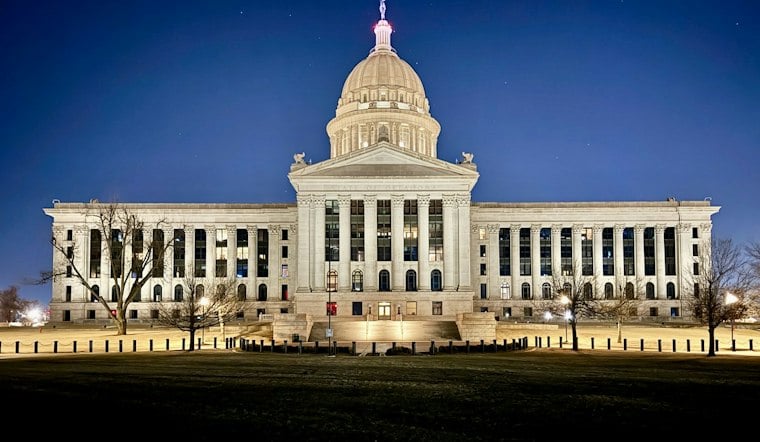
A divided federal appeals court on Wednesday cleared Oklahoma to fully enforce House Bill 1775, the state's law restricting how public school teachers can discuss race and sex in the classroom, marking the first time such a law has survived review at the federal appellate level. The U.S. Tenth Circuit Court of Appeals ruled 2-1 that a lower court order blocking parts of the law was wrong and lifted it entirely, allowing Oklahoma to enforce every part of HB 1775 while the underlying lawsuit continues.
The panel's decision in Black Emergency Response Team v. Drummond reverses a June 2024 order from U.S. District Judge Charles B. Goodwin, who had found key statutory terms in the law unconstitutionally vague and blocked Oklahoma from enforcing two K-12 provisions along with university orientation bans, according to the ACLU. Goodwin's order had left six of the law's eight prohibited K-12 concepts active even as the case worked its way up on appeal, per Legalytics.
Two judges on the panel found that the law's plain language gives teachers clear direction on what is prohibited, according to KOKH. The majority narrowly interpreted the statute as forbidding public school staff only from teaching the eight specified discriminatory concepts as factual principles, or requiring teachers to do so, rather than as a blanket ban on discussing those subjects at all.
What Teachers Can and Cannot Say
Under that narrow reading, teachers may not instruct students that any of the eight prohibited concepts is factual, the station reports. But educators can still teach about events such as the Tulsa Race Massacre, the beliefs of historical figures, and current policy debates, according to the same KOKH account. HB 1775 prohibits K-12 public school employees from teaching or requiring instruction on critical race theory or gender and sexual identities in that factual framing, and it bars public schools from teaching discriminatory concepts as established fact.
Oklahoma Attorney General Gentner Drummond, the named defendant in the case, celebrated the outcome as a full victory for state enforcement, saying every Oklahoma student deserves to be treated as an individual, not defined or divided by race or sex, per KOKH's reporting. The law, first signed by Governor Kevin Stitt on May 7, 2021, was modeled after a 2020 federal executive order barring race and sex stereotyping in federal workplaces, according to Legalytics.
A Sharp Dissent From the Bench
Not every judge on the panel agreed with the majority's fix. Tenth Circuit Judge Nancy Moritz dissented, arguing the majority attempted to “rescue an obviously vague statute” and stating she would have blocked enforcement of HB 1775 in full, the ACLU said. Civil rights attorneys involved in the case argue that the majority's narrow construction, while allowing the law to survive the constitutional vagueness challenge, actually limits how far state officials can use it to police classroom discussion.
The lawsuit challenging HB 1775 was originally filed in October 2021 by a coalition that included the Black Emergency Response Team, the Oklahoma NAACP, and the American Indian Movement Indian Territory, along with individual public school teachers and students represented by the ACLU and the Lawyers' Committee for Civil Rights Under Law, according to the ACLU's case materials. Eighteen state attorneys general, led by South Carolina, joined an amicus brief supporting Oklahoma's appeal before the Tenth Circuit, Legalytics reports, underscoring how closely other states were watching the outcome.
Higher Education Already Carved Out
Higher education was removed from the fight well before Wednesday's ruling. In June 2025, the Oklahoma Supreme Court unanimously clarified, in response to certified federal questions, that HB 1775's prohibitions apply only to mandatory college orientation programs and do not regulate classroom instruction or course curricula at the university level, according to the Oklahoma Attorney General's Office. Plaintiffs subsequently dropped their higher-education First Amendment claims in federal court.
The case is not over. The lawsuit now returns to the district court for further proceedings while the underlying claims continue, meaning the long-term constitutionality of HB 1775 remains an open legal question even with the injunction lifted, per KOKH's report.
How the Law Has Played Out on the Ground
Oklahoma has already shown a willingness to enforce HB 1775 against school districts. The Oklahoma State Board of Education voted 4-2 in July 2022 to downgrade the accreditation status of both Tulsa Public Schools and Mustang Public Schools to “accredited with warning” following complaints over teacher diversity training and student empathy exercises tied to the law, according to The Frontier. The state board's penalty was harsher than what the state education department itself had recommended.
Oklahoma's accreditation system runs on a four-tiered penalty scale — deficiency, multiple deficiencies, warning, and probation — and a warning designation puts a district at risk of losing governance authority or funding, according to StateImpact Oklahoma. Tulsa Public Schools has faced years of state oversight since that 2022 downgrade, and the district is currently weighing school closures and a salary freeze to close a $12 million budget deficit amid heightened state accreditation reviews. With the Tenth Circuit's ruling now in place and Judge Moritz's dissent on record, Oklahoma's case is likely to remain a bellwether as other states watch how far a classroom instruction law can go before the courts.





