

























































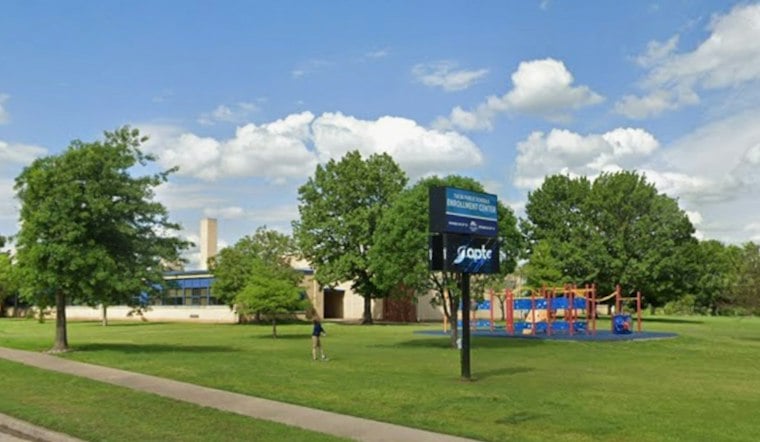
Tulsa Public Schools is weighing school closures, a district-wide salary freeze and bigger class sizes as it scrambles to erase a $12 million budget deficit before an October 19 deadline. District leaders say the options aren't final, but with schools running at an average of just 65% capacity last year, few paths forward avoid painful cuts to buildings, staffing or student services.
The proposals were laid out as part of an update on the district's finances, according to Tulsa Flyer, which reported that TPS is considering closing and consolidating small schools, freezing salaries for all employees, increasing class sizes, discontinuing transportation to magnet programs, and reducing access to counseling, tutoring, field trips, athletics and fine arts. The district has already eliminated $5.4 million in vendor-service contracts and cut nearly 100 central-office positions, but officials say those moves alone haven't closed the gap. Superintendent Dr. Ebony Johnson said the district's guiding principle remains students first, opportunity first and outcomes first, per the outlet's report.
The scale of the problem is stark: school capacity across the district ranges from 37% to 98%, and small elementary schools average around 370 enrolled students at roughly $2,000 higher per-pupil cost than larger, more resourced sites, the report notes. Those smaller schools also had 2.25 times higher suspension rates than larger elementary schools and 7% more students taught by teachers less than two years into the profession, according to the same account. Deputy Superintendent Kathy Dodd said school closures represent the opportunity for the largest amount of savings, the report states.
Staffing Ratios Draw Scrutiny
Tulsa Public Schools currently has nearly 147 full-time employees per 1,000 students, compared with fewer than 136 per 1,000 students at Broken Arrow, Moore, Oklahoma City, Owasso, Putnam City and Union, per the same account. About 90% of the district's general-fund spending goes toward employee salaries and benefits, which helps explain why staffing levels are under such close review. Chief Operations Officer Sean Berkstresser said the district must continue assessing staffing levels and align spending more closely with revenues, the outlet reported.
This isn't the district's first brush with sweeping consolidation. During a previous budget crisis in 2011, TPS executed “Project Schoolhouse” under then-Superintendent Keith Ballard, closing 14 school buildings and reconfiguring feeder patterns to capture roughly $5 million in annual operational savings, according to Public Radio Tulsa. The district also closed and consolidated neighborhood schools in West Tulsa in 2017 amid enrollment and state-funding pressures, contributing to lasting community sensitivity around any new closure proposals.
Bond Money Can't Touch the Deficit
The budget crunch comes just months after Tulsa voters approved a $609 million “Strong Schools, Strong Tulsa” bond package in April, passing all four propositions. But that bond package is separate from the district's operational budget. TPS has pledged to use the $609 million more efficiently, while the district continues to face a current shortfall.
According to Tulsa Public Schools’ finance page, the district’s annual financial report covers the fiscal year ended June 30, 2024, and its budget is made up of several funds, including the general fund.
The mismatch between voter enthusiasm for facilities and the district's day-to-day budget woes traces back to decades of enrollment decline. TPS enrollment dropped to 32,450 students in October 2025, leaving the district maintaining infrastructure built for more than 45,000 students, per the outlet's reporting. A district enrollment analysis found that 12 neighborhood elementary schools are operating below 50% capacity while most magnet schools are filling 84% or more of their available space, illustrating just how unevenly the shortfall is distributed across campuses.
Board Already Cut Central Office Before Turning to Schools
Before floating closures or salary freezes, TPS had already eliminated nearly 100 central-office positions. The district has stated that the cost-reduction options now under discussion are not set in stone, but has also acknowledged that school closures and service reductions are real possibilities amid the multimillion-dollar shortfall. Johnson said the district is trying to build a school system where every student has access to needed opportunities, instruction, people and supports, adding that the current model is not delivering the experience every student deserves.
The financial pressure sits alongside years of intense state oversight. Former Oklahoma Superintendent of Public Instruction Ryan Walters placed TPS under heightened accreditation review starting in 2023, issuing mandates for academic and financial performance under threat of a state takeover before he resigned in September 2025, according to the Oklahoma State Department of Education. Johnson was appointed to lead the district permanently in December 2023 after former Superintendent Deborah Gist resigned that August amid mounting state pressure over governance and student performance, per Ballotpedia. That scrutiny has also been the subject of Hoodline's prior reporting on the district's bond finances.
Community Meetings Run Through Mid-October
TPS will hold community information sessions from today through October 14, giving families a chance to weigh in before the district's chief financial officer presents an end-of-year financial update and enrollment projections at the September 21 board meeting. Planning sessions are set for the Wilson Teaching and Learning Center today and the Education Service Center on September 18, both from 5:30 to 6:30 p.m. Additional sessions follow at the Parent Resource Center on October 8, Bronson Brookside Library on October 6, Central Library downtown on October 12, Martin Regional Library on September 29 and Zarrow Regional Library on October 14, all at the same time.
District leaders are under a hard deadline: TPS must present a plan reducing its financial deficit by at least $12 million by October 19. Whatever combination of closures, freezes and service reductions the board ultimately adopts, the outlet's reporting makes clear that the decision will reshape which neighborhoods keep their schools and how the district staffs classrooms for years to come.





