

























































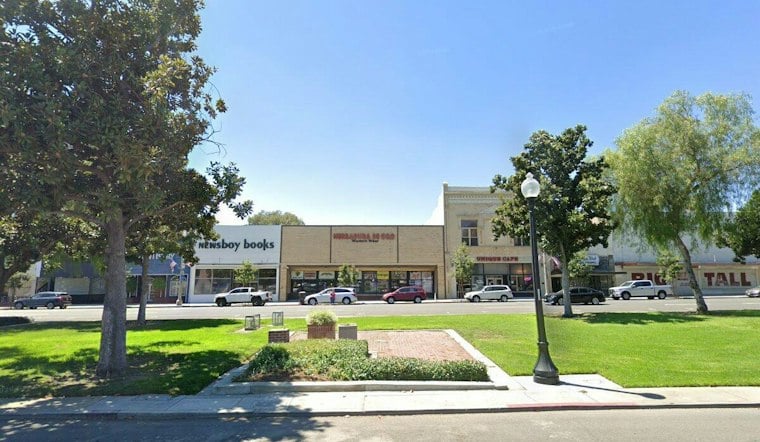
More than 1,000 classic cars are expected to roll into downtown Ontario on September 18 and 19 for the 13th Annual Route 66 Cruisin' Reunion, spreading across more than 22 city blocks in what organizers call the show's biggest community activation yet. The two-day event lands squarely inside the nationwide centennial marking 100 years since Route 66 was born, giving the Inland Empire a starring role in the celebration.
The reunion's growth this year comes as organizers describe it as their most ambitious edition to date, according to the San Bernardino Sun, which reported the show will feature over 1,000 classic cars along Ontario's historic Euclid Avenue. Regional supermarket chain Stater Bros. Markets, headquartered in neighboring San Bernardino, has signed on as the event's official presenting title sponsor, according to Go Cal Events.
Ontario's Route 66 Cruisin' Reunion is an Inland Empire car show. The event is part of the region's Route 66 car-show tradition.
A Preview Rolled Through Fontana Last Week
A taste of what's coming arrived on Spring Street in Fontana on September 4, when the city hosted a car meetup featuring vehicles from nearly every era. Bel Air car club member Michael Larese posed with his 1955 Bel Air, while fellow enthusiast Sal Rodriguez showed off a 1963 Chevrolet Impala alongside his 8-year-old son, Manny Rodrigues, per the same Sun report.
Other standouts at the Fontana gathering included Daniel Hinojosa, a Vietnam veteran with a 1939 Ford Business Coupe; Luis Molina, who brought a 1932 Ford Roadster; Jim Fisher, owner of a 1954 Hudson Hornet; and Gary D'Alessandro, who displayed a 1938 Chevrolet Sedan. Breana and Mark Yanez posed with a 1951 Chevrolet Business Coupe, rounding out a lineup the article says featured vehicles from nearly every era.
Why the Timing Matters
U.S. Route 66 was officially designated on November 11, 1926, running 2,448 miles from Chicago to Santa Monica before it was decommissioned from the federal highway system in 1985, according to the Route 66 Centennial Commission. The highway's centennial is being marked throughout 2026. California's own car culture traces back to the early 1900s and expanded further because of car-centered infrastructure and the postwar manufacturing boom, according to california.com.
Congress signed the federal Route 66 Centennial Commission Act into law on December 23, 2020, establishing a 15-member presidential commission to plan and recommend activities marking the highway's 100th anniversary throughout 2026. The historic route passes through eight states.
A Changed Legal Landscape for Cruising
This year's reunion also unfolds as a celebration of California's cruising and car culture. The event brings together classic cars and enthusiasts.
The venue itself carries its own history. The 60-foot-wide landscaped median of Euclid Avenue, where the show is staged, was added to the National Register of Historic Places in 2005, having originally been laid out in 1882 by town founders George and William Chaffey as the central boulevard of the Ontario Model Colony, according to the City of Ontario.
Regional Tourism Dollars and a New Shuttle
The Greater Ontario Convention & Visitors Bureau markets hospitality and major events across both Ontario and Rancho Cucamonga.
To help move visitors between hotels, Ontario International Airport, and downtown event hubs, regional organizers launched the Greater Ontario Area Transportation shuttle in January 2026, a free app-based transit service using hybrid and electric shuttles.
Centennial Events Ripple Across the County
Ontario's reunion is part of a wider Route 66 centennial focus across San Bernardino County.
Further east, the City of Victorville organized its own High Desert Route 66 centennial car show and block party on Seventh Street for September 12, featuring more than 110 cars, as Hoodline reported in its coverage of Victorville's 100th birthday bash. Together, the events stretch from the High Desert to the Inland Empire's core, turning the centennial year into a multi-city celebration of the road that helped define Southern California car culture.





