

























































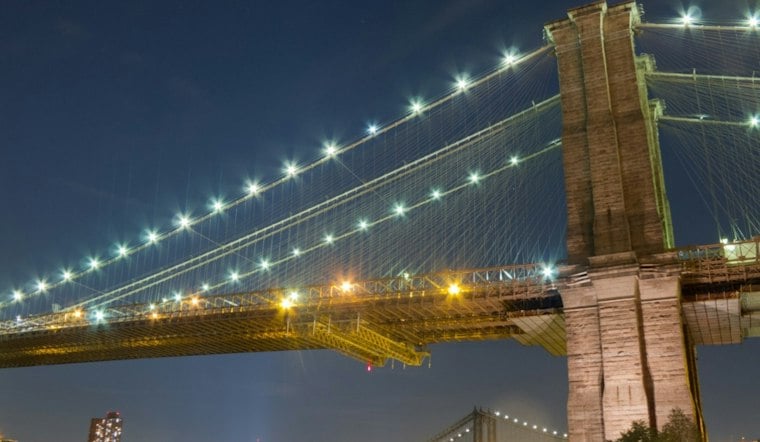
More than 1,000 New Yorkers laced up rucksacks and vests on Sunday, September 13, 2026, and set out from Cadman Plaza in Brooklyn, crossing the Brooklyn Bridge into Foley Square in Manhattan for the city's first-ever Remembrance Ruck. The walk, which kicked off at 9 a.m., was designed to honor veterans and military families while spotlighting the isolation, food insecurity, and mental health struggles many of them face after coming home.
Mayor Zohran Kwame Mamdani, who joined the walk, wrote on social media that more than 1,000 New Yorkers came together for the event and called it “an experience I will carry with me forever,” according to a post from Mayor Zohran Kwame Mamdani
. He added that too many veterans come home to isolation and food insecurity, framing the march as a call to serve veterans by delivering a life of dignity across the city's five boroughs.
The mayor's post was accompanied by images from the event, while weighted gear gives rucking its name as a military training exercise.
A March Built Around a Grim Statistic
The route ended with a resource fair at Surrogate's Court, where veterans and military families could connect with assistance for housing, healthcare, mental health, and financial benefits, according to NYC.gov. The event was organized by the NYC Department of Veterans' Services in partnership with New York Road Runners, and participants had the option to walk with a weighted rucksack or vest, or without weight at all, per the same city announcement.
The city's veterans agency designed the ruck specifically to draw attention to post-deployment losses among post-9/11 veterans, noting on its official event page that suicide has claimed significantly more post-9/11 service members and veterans than were lost during military operations, according to NYC.gov. That framing lines up with research compiled by Brown University's Costs of War Project, which estimated that 30,177 active-duty personnel and veterans of post-9/11 wars have died by suicide, compared to 7,057 military personnel killed in post-9/11 combat operations, as reported by Hearts 4 Minds.
The event fell on the weekend marking the 25th anniversary of the September 11 terrorist attacks, a milestone that also drew a separate 250-mile relay run from New York City to Washington, D.C., as Hoodline previously reported.
New York's Veteran Population and Its Needs
Roughly 122,700 military veterans live in New York City, with nearly 54 percent aged 65 or older, according to 2024 American Community Survey data reported by the Office of the New York City Comptroller. Food insecurity has also emerged as a documented problem among the newest generation of former service members: a RAND Corporation study for the New York Health Foundation found that 25 percent of recently separated veterans living in New York State experienced food insecurity in the previous year, despite high levels of education and employment, according to the New York Health Foundation's report on the 1,122-veteran survey.
Housing has also been part of the city's veterans-services work, according to the Comptroller's Office review. The article also discusses veteran homelessness statewide, with reference to an analysis by the Office of the New York State Comptroller.
A Small Agency With a Big Mandate
The NYC Department of Veterans' Services, established in 2016 as the nation's first standalone municipal-level agency for veterans, remains one of the city's smallest agencies, with an authorized Fiscal Year 2026 budget providing for just 49 full-time employees, per NYC.gov's budget summary. That thin staffing has drawn scrutiny before: an earlier Comptroller audit detailed technical failures in the city's VetConnectNYC portal, an issue Hoodline covered last month.
The department has also been discussed in connection with NYC Health + Hospitals, according to NYC Health + Hospitals.
Other efforts around the anniversary weekend have taken different forms. Related coverage has also examined veterans' issues in New York City. For Mamdani, this morning's walk was a way to put a public face on veterans' suicide risk — and to press the case that dignity for the city's veterans means addressing isolation, hunger, and housing all at once.




