

























































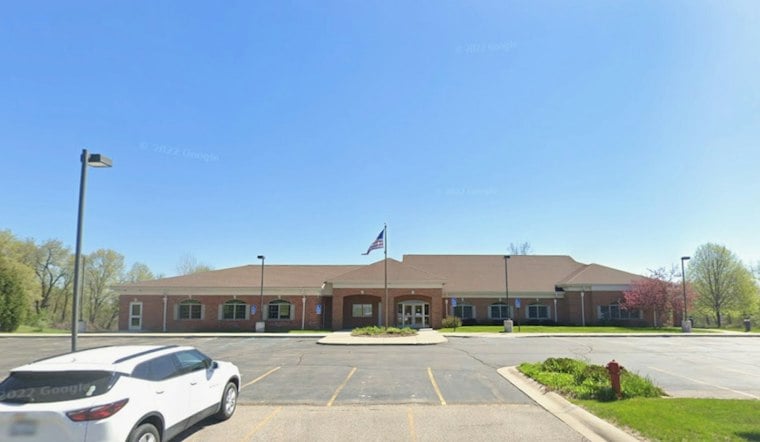
Oxford Township's Planning Commission has started rewriting the rulebook for data centers, racing a clock that runs out in February 2027 when the township's one-year moratorium on new applications expires. The panel held a meeting at Oxford High School's auditorium to walk residents through draft zoning amendments that would govern noise, water use, cooling systems, and land requirements for any future data center project in the community.
The moratorium itself dates back to February 11, when the Oxford Township Board of Trustees unanimously voted to pause data center applications for a year, according to The Oakland Press. Trustees said at the time that the township simply lacked specific zoning rules to handle the technology, a gap officials are now trying to close before the pause lifts. The stakes for finishing on time are real: if no ordinance is adopted by the deadline, Oxford Township would have to review any data center application under its current, less-specific standards.
Getting to this point has not been easy logistically. The commission's original July meeting on the draft ordinance had to be postponed after roughly 200 residents showed up, blowing past the township hall boardroom's 125-person fire code capacity, according to the Oxford Leader. That overflow crowd forced officials to shift subsequent public hearings to the high school auditorium, a venue big enough to accommodate the turnout safely.
What the Draft Ordinance Would Actually Require
The proposed amendments define data centers for the first time in township code and would make them a special land use within a new data center overlay district, covering light industrial I-1 and general industrial I-2 parcels north of Ray Road and south of Davison Lake Road, per the Oakland Press report. Developers would be required to submit noise studies, cooling system designs, and verification of utility demand and capacity, along with traffic analysis, screening, sound barriers, security plans, backup power arrangements, fuel storage details, and a decommissioning plan.
The draft also updates noise and vibration standards for all uses in the township, not just data centers. That matters because the equipment involved can get loud: roof- or ground-mounted cooling units generate 70 to 90 decibels at the source, and diesel backup generators run closer to 115 decibels, well past the 85-decibel threshold considered harmful to humans. A single 200,000-square-foot data center could require somewhere between 13 and 26 generators to keep running through a full outage, compared with just two or three for an office building of the same size.
Officials Say No Project Is on the Table Yet
Matteo Passalacqua, an associate planner working with Oxford Township through Carlisle Wortman Associates, said the ordinance rewrite was not prompted by any proposed project. The Oakland Press reports the township has received no data center development applications, related phone calls, or pre-application meetings. Passalacqua estimated the ordinance process could stretch into 2027, with the planning commission still needing to discuss amendments, hold public hearings, and forward its findings to the township board.
Officials are also constrained by state law in how far they can go. The Michigan Zoning Enabling Act prohibits municipalities from banning data centers outright, and Section 207 of the act specifically bars exclusionary zoning that eliminates lawful land uses when a regional public need exists, according to Fabius Township. Instead, Michigan municipalities may write ordinances that clarify parameters and guidelines for proposed projects — which is exactly the approach Oxford Township is taking with its overlay district and performance standards.
Residents Voice Water, Noise and Health Concerns
The scale of what's at stake became clear in the numbers officials shared. Data center campuses can span up to 10 million square feet across multiple buildings, with individual projects ranging from 15,000 to 1,000,000 square feet, and daily electricity consumption between 480 and 2,400 megawatt-hours — enough to power 15,000 to 100,000 households. Oxford Township itself has about 8,200 homes. Water use varies sharply by cooling method: hyperscale centers using evaporative cooling can consume 1 million to 5 million gallons a day, while closed-loop systems use an estimated 20,000 to 60,000 gallons daily, and air-cooled facilities use less water but more electricity.
Those figures fueled pointed questions from residents at the meeting. Mike Ratajski asked what benefits, if any, data centers would actually bring to Oxford. David Price raised concerns about water use, private wells, and the need for aquifer analysis. Kitty Clevenger said the current draft language looked weak and did not fully protect community health, sustainability, quality of life, or the environment. Claudia Vargas put it more bluntly, saying she would sell her house if a data center ever came to the township.
Residents pushed for limits on project size, stronger public-interest language, infrastructure protections, periodic audits, and a requirement that developers cover the full cost of any project. The draft ordinance already contemplates some of that: it would let the planning commission require development agreements, financial guarantees, or applicant-funded improvements, and would make developers pay the entire cost of needed public or private infrastructure. It would also require data centers to meet the township's strictest existing landscaping and screening standards, and could allow periodic third-party audits of noise and utility usage during and after construction.
Commissioner Ryan Austin said the commission would work to address residents' concerns, while commissioner David Wagner argued the township needs to enact the ordinance regardless, to put guardrails in place before any project ever applies. The planning commission ultimately voted unanimously to send the public input gathered at the meeting to township staff, directing further research and possible revisions to the draft map and text amendments.
Part of a Wider Statewide Reckoning
Oxford Township is far from alone. More than 50 Michigan municipalities — including Sterling Heights, Dearborn, Flint, and Garfield Township — had instituted temporary moratoriums by September to study and rewrite zoning rules for AI data centers, according to Michigan Public. Hoodline has reported on Dearborn's similar freeze as part of that regional wave.
The legal risk of getting the rules wrong is not hypothetical. In August, developer Wixom Industrial One LLC filed a federal lawsuit against the city of Wixom, alleging its six-month moratorium and proposed restrictions amounted to illegal exclusionary zoning, after the city rejected a moratorium waiver for a proposed 519,000-square-foot facility, as reported by WHMI. To help townships avoid similar fights, the Michigan Townships Association published a sample data center zoning ordinance in August and hosted legal guidance webinars addressing noise limits, setback buffers, water usage, and decommissioning bonds.
State incentives are pulling in the opposite direction from local caution. Governor Gretchen Whitmer signed Public Act 207 of 2024 in January 2025, extending a 6% sales tax exemption on qualified data center equipment through 2050, and up to 2065 for brownfield redevelopments, provided developments invest at least $250 million and create 30 high-paying jobs. In July, Whitmer introduced the Michigan Affordable and Responsible Growth Action Plan, which pushes for ratepayer protections while reiterating her intent to veto state bills that would impose a statewide data center moratorium, according to reporting compiled by Data Center Moratoriums; her plan also secured voluntary pledges from Google and Oracle on energy and water standards.
Meanwhile, State Senator Jim Runestad introduced legislation in September to repeal 2024 state tax reforms that currently keep the identities of data center companies and the size of their tax breaks confidential, according to Michigan Senate Republicans. DTE Energy has said it is tracking 10 to 15 hyperscale data center proposals across Michigan for 2025 and 2026, representing potential cumulative grid demand of up to 7 gigawatts — roughly the output of five to seven nuclear reactors. For Oxford Township, that statewide pressure is exactly why officials say they can't afford to let the moratorium expire without a plan in place.



