

























































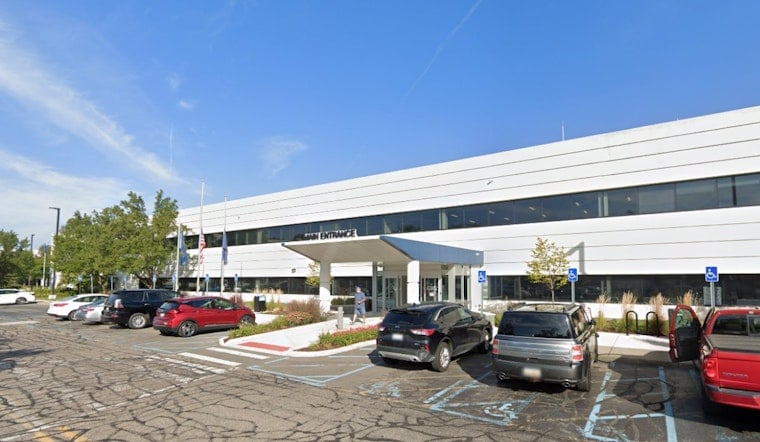
Dearborn's city council took the first of two required votes yesterday on an ordinance that would freeze new data center applications for six months, joining a growing list of Southeast Michigan communities scrambling to get ahead of the region's AI infrastructure boom. If approved on a second reading, the moratorium is expected to take effect in October and run through the end of March 2027.
The proposal, first reported by MLive, comes after the Dearborn Planning Commission unanimously recommended approval of the ordinance on August 10. Council member Michael Sareini said the goal is to ensure future data centers comply with land-use objectives and specific development standards, according to the outlet's reporting. Under the current zoning code, data processing is permitted in Dearborn's technology and research district and industrial districts, and the city previously removed data processing as a specifically listed use in its zoning ordinance, per MLive.
How the Pause Would Work
During the moratorium, Dearborn would still accept data-center applications, but would forward them immediately to the city's legal department and provide written communication to applicants explaining the timeline and their obligation to reapply once permanent standards are adopted, MLive reports. The city would also give its city council a copy of applicant communications. The proposed ordinance would add a formal data-center definition to Dearborn's zoning code for the duration of the pause, though data processing may still be permitted in the city's general industrial district without data-center-specific development standards, per the same reporting. City officials have said the temporary pause would let Dearborn study the issue before writing permanent rules — a strategy other Michigan communities have already tried.
Regional Protests Precede the Vote
Dearborn's council acted just days after protesters from Ypsilanti Township and Van Buren Township gathered on September 5 to raise concerns about water use, electricity demand and potential environmental impacts, according to MLive's reporting. Those two townships sit at the center of two of the region's most contentious projects. In Van Buren Township, Panattoni Development Corp. is planning a roughly 1-gigawatt hyperscale data center tied to Google's Project Cannoli on more than 280 acres north of I-94, a facility that has already generated organized opposition. Panattoni submitted an application in June to state environmental regulators to fill 13.55 acres of wetlands on the 282-acre site, according to DatacenterDynamics.
Google's proposal has also drawn scrutiny from Michigan's top law enforcement official. In June testimony submitted to the Michigan Public Service Commission, Attorney General Dana Nessel recommended raising Google's required minimum monthly demand payments from 80% to at least 90% and increasing exit fees for the Van Buren Township facility, arguing the changes would protect residential ratepayers from being stuck with stranded infrastructure costs, according to the State of Michigan. DTE Energy and Google had filed 20-year special power contracts for the project, asserting the arrangement would fund grid upgrades without raising residential electricity rates.
University of Michigan Project Fuels a Bigger Fight
In Ypsilanti Township, the flashpoint is a University of Michigan project. The university selected a 144-acre site there for a $1.2 billion high-performance computing facility built in partnership with Los Alamos National Laboratory, per MLive's reporting, and that facility has also generated significant local opposition. Because U-M is a public university, its development is constitutionally exempt from local zoning, according to Bridge Michigan, which reported in August that the university intends to proceed despite the township's resistance.
Township officials have pushed back through the tools they do control. Ypsilanti Township officials approved a 180-day moratorium on new power infrastructure supporting the university project, and the local water utility imposed a yearlong moratorium on water and sewer service for the development, per MLive's reporting.
A Statewide Pattern Takes Shape
Dearborn's move fits a broader pattern playing out across Michigan as artificial intelligence drives demand for massive computing facilities and the electricity and infrastructure needed to run them. Garfield Township's board voted unanimously in August to freeze new data centers and cryptocurrency mining operations for a year after discovering local zoning allowed data processing as a permitted by-right use without public review, as Hoodline previously reported. Other communities, including Wixom and Lenox Township, have adopted similar pauses to rewrite land-use rules before developers show up with applications.
Not every township has been able to hold the line. In Saline Township, general contractor Walbridge broke ground in June on The Barn, a $16 billion, 1.4-gigawatt OpenAI and Oracle data center campus, after the developer filed an exclusionary zoning lawsuit that ended in a court settlement, according to ENR. The township had initially rejected rezoning for the 250-acre site before entering a consent judgment that included millions of dollars in community and fire service funds. Nessel has since appealed a state energy regulator's approval of DTE Energy's power contracts for that project, filing with the Michigan Court of Appeals on August 7 to challenge what she and consumer advocates describe as an ex parte process that bypassed public hearings.
Tax Breaks Meet Political Backlash
The wave of proposals traces back to state tax incentives. Under Public Acts 181 and 207 of 2024, which took effect in April 2025, Michigan offers a 6% sales and use tax exemption through 2050 on enterprise data center equipment for developers investing at least $250 million and creating 30 full-time jobs paying 150% of the regional median wage, according to the Michigan Economic Development Corporation. The low job-creation threshold relative to the size of the tax breaks has drawn scrutiny, and Michigan Senate Democrats introduced a legislative package in June — Senate Bills 1046 through 1050 — that would cap data center water consumption at 2 million gallons per day, mandate community benefit agreements, and let municipalities reject proposals if agreements aren't reached, per LegiScan records. Companion legislation in the Michigan House aims to repeal the state's sales and use tax exemption for large data centers altogether.
The opposition has become a statewide political issue. Republican U.S. Senate candidate Mike Rogers endorsed a one-year statewide moratorium on new data centers on August 20, reversing his earlier support for fast-tracked AI infrastructure, according to the Detroit Metro Times. National polling from Reuters/Ipsos found only 14% of Americans would welcome a data center in their local community, a sentiment that has coincided with 95 municipal data center bans or moratoria passed across the country in 2026, per a tracker maintained by Programs.com.
Dearborn's council is set to take up the ordinance's second reading before the moratorium can formally take effect. In the meantime, the debate playing out in Van Buren Township and Ypsilanti Township offers a preview of the trade-offs Dearborn officials say they want to study before writing permanent rules of their own.



