

























































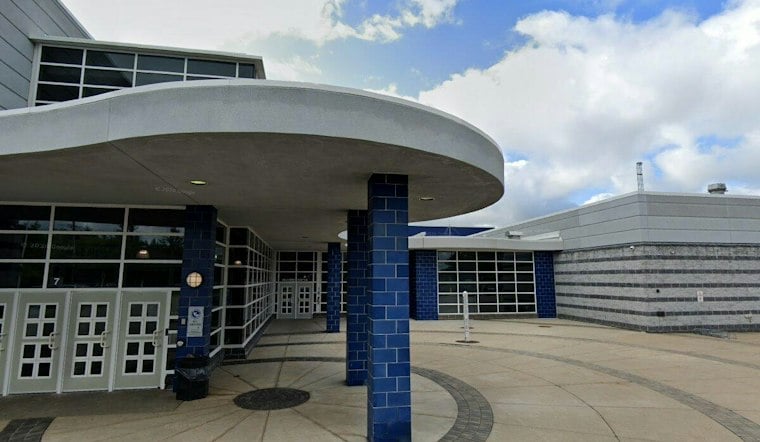
Walled Lake Central High School could be shuttered as its school board weighs shrinking the district from three high schools to two amid a steady enrollment slide. The board discussed the possibility at a special meeting Thursday but took no vote, leaving the fate of the school unresolved for now.
The facility study, prepared by consultant Keith McDonald, found steep declines in current and projected enrollment across Walled Lake Consolidated Schools, according to The Oakland Press. McDonald's report points to Walled Lake Central specifically, citing the building's age, recent bond spending that favored other schools, and the distances students would need to travel if one of the other two high schools closed. As reported by BND, Walled Lake's three high schools are averaging just over 50% utilization, well below the roughly 75% considered ideal for high school buildings.
The district's own numbers tell a stark story. Walled Lake Northern, Central and Western currently enroll 3,408 students combined but have a functional capacity of 6,537 — putting the three schools at just 52% of capacity. If Central were to close, Northern would rise to 76% capacity and Western to 77.5%, numbers far closer to the ideal range. By contrast, the district's 12 elementary schools and three middle schools are already running at 72% capacity, nowhere near as strained.
Two Decades of Shrinking Classrooms
The decline isn't new. Districtwide K-12 enrollment stood at 12,864 students in 2019, fell to 11,837 by 2025, and is projected to drop to 10,453 by 2030, according to the report. Over the past 20 years, total enrollment is down 24.1%, with high school enrollment falling even faster at 26.5%. The same report reviewed by BND put it in raw numbers: the district had 4,886 high school students in the 2005-06 school year and just 3,591 last year, with a projection of 3,363 within five years — a loss of roughly 100 more high-school students over that span.
McDonald told the board that the speed of the decline wasn't anticipated when Walled Lake Central was originally built, and he pointed to several forces reshaping enrollment over the past decade: changes to charter-school law that pulled students toward charter options, and the pandemic, which pushed some families toward private schools, homeschooling or virtual learning. He also said competition for students has intensified generally in recent years.
Board President Presses for More Options
Board President Susie Crafton asked McDonald how the district would respond to community pushback if Central were the one chosen to close, and she went further, asking the consultant to return with closure scenarios modeled on each of the district's other two high schools so the board could weigh all three possibilities rather than treating Central as the only option on the table. No vote was scheduled for Wednesday's meeting, and per BND's reporting, the board has not yet agreed on a timeline for making a final call.
Superintendent Michael Lonze was direct about the clock ticking, saying the administration needs to know by December or January if a high school is going to close in time for the change to take effect before the next school year. Lonze said a decision made as late as April or May would be unfair to both staff and the community, who would need lead time to plan for any consolidation ahead of the 2027-28 school year.
Part of a Much Bigger Michigan Trend
Walled Lake's dilemma mirrors a broader collapse in Michigan's school-age population. The state's K-12 enrollment has slid 20% over two decades, from 1.69 million students in 2002-03 to 1.351 million in 2025-26, per BND. An estimated 1,197 public and charter schools have closed statewide since 2000, according to an analysis cited in that same report.
The pattern extends nationwide. A study by Stanford researchers Thomas Dee and Jaymes Pyne found U.S. public school enrollment fell by more than 1.4 million students, or roughly 3%, between fall 2019 and fall 2024, even as teacher counts grew slightly over the same period, reporting from The Hechinger Report shows. One in four U.S. public schools has lost at least 15% of its student population since 2019, the same analysis found, even as research suggests that closing a school typically yields only modest, temporary budget savings.
Nationally, districts closed more than 1,000 schools in the 2025-26 academic year, up from 755 just a few years earlier in 2021-22, according to BND. More than 100 public schools across the country have been slated for closure or consolidation since 2025 alone, The New York Times reports, with Pittsburgh preparing to close 12 schools and Tulsa, Oklahoma, recently voting to close or consolidate 17. Five schools are closing around Florida's Tampa Bay area and three in Little Rock, Arkansas, the Times notes, part of what it describes as a wave of closures expected to accelerate as birth rates keep falling nationwide.
For Walled Lake, those national pressures are now landing squarely on one aging building. Whether Central, Northern or Western ultimately absorbs the cut remains an open question the board has yet to answer, but the superintendent's December-or-January marker means families likely won't be waiting long to find out.




