

























































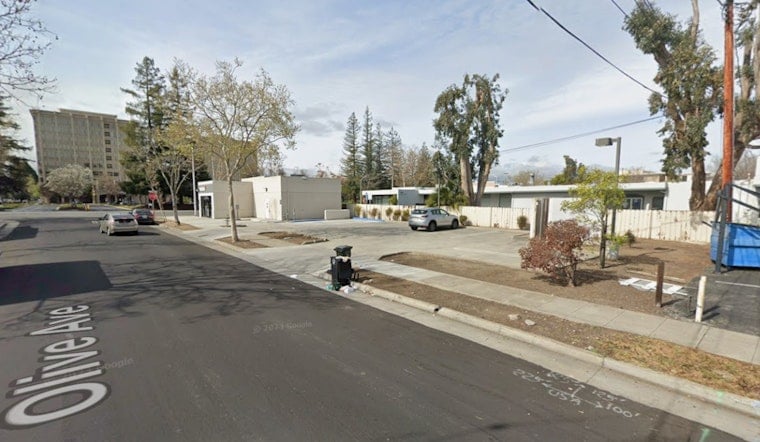
Palo Alto's City Council is set to decide next Tuesday whether to rezone a small residential lot in the Ventura neighborhood, a vote that has split city commissioners and stirred fears among neighbors that a new state housing law could ultimately override whatever limits the city sets. The property at 470 Olive Avenue is owned by the Agramonte family, who have asked the city to change its designation from single-family housing to the medium-density mixed-use zone known as NV-MXM.
The request, first detailed by the Palo Alto Online, would let the family redevelop the lot with more height and density than current zoning allows. According to the outlet's reporting, Thomas Agramonte and Jessica Rose Agramonte have said the rezoning is necessary to get housing built on the site that can benefit the community, and they've pointed to California's Senate Bill 79 as part of their case. The parcel contains a 1968 commercial office structure that spills onto the adjoining 2951 El Camino Real lot, and it has operated as a nonconforming commercial use since 1978, when Palo Alto designated the Olive Avenue portion for single-family homes, according to Palo Alto Civic.
A Divided Commission Sends the Decision Upstairs
On July 8, the Palo Alto Planning and Transportation Commission split 3-3 on a staff-backed motion to approve the rezoning, forwarding the matter to the council without a formal recommendation, per Palo Alto Civic's account of the meeting. Commissioners Bart Hechtman, Forest Peterson and Cari Templeton supported the change, concluding it was largely consistent with the city's plans for Ventura, while Chair Bryna Chang and Commissioners Kevin Ji and Allen Akin favored keeping the existing zoning designation, the outlet reported. Hechtman suggested the new zoning would provide a sufficient transition for the single-family neighborhood east of El Camino Real, per Palo Alto Online's reporting.
Akin took the opposing view, warning that recent state laws could make any resulting development taller and denser than the city currently envisions and saying the commission was speculating about a huge range of potential outcomes. The rezoning itself would raise the allowed height limit on the site from 35 to 55 feet, expand lot coverage limits from 35 percent to 100 percent, and elevate the floor-area ratio from 0.45 to 2.0 — changes city staff estimated could yield roughly seven additional housing units, according to Palo Alto Civic.
Senate Bill 79 Adds a Wild Card
The tension over the vote traces back to Senate Bill 79, the Abundant and Affordable Homes Near Transit Act, which was signed into law in October 2025 and took effect on July 1, mandating higher residential density and height allowances near major transit stops across ten urban counties, including Santa Clara County, according to the Fullerton Observer. Per Palo Alto Online, the law would allow the Agramontes to exceed existing zoning regulations with or without the city's consent, and developers could potentially use state provisions to build past the proposed 55-foot cap altogether.
The 470 Olive Avenue parcel could also be combined with three adjacent parcels along El Camino Real, opening the door to a larger development at 2951 El Camino Real, the outlet reported. Nearby El Camino Real properties are already zoned NV-MXM, while the lots behind them, closer to the neighborhood's interior, remain zoned for single-family homes — a patchwork that residents say makes piecemeal rezonings especially fraught.
Neighbors Point to a Crowded Pipeline
Matthew Bryant, who lives nearby on Pepper Avenue, has opposed the rezoning and argued that the city's piecemeal approach to neighborhood zone changes is problematic, according to Palo Alto Online. He cited cumulative traffic impacts from the growing list of projects already moving through Ventura's development pipeline and urged the Planning and Transportation Commission on July 8 to reject the proposal outright, warning that the combination of projects risks overwhelming a single micro-corridor.
Jason Robinson raised a similar concern, saying that approving the rezoning without a corridor-wide cumulative impact analysis would create safety and infrastructure liabilities, and urging the city to conduct a cumulative traffic and safety infrastructure study that would assess the combined impacts of housing projects across Ventura, per the outlet's reporting.
A Neighborhood Already in Transition
The Ventura neighborhood, south of Page Mill Road and east of El Camino Real, sits inside the North Ventura Coordinated Area Plan, a roughly 60-acre planning area bounded by Page Mill Road, El Camino Real, Lambert Avenue and the Caltrain tracks that the city adopted to transition former light-industrial land into a walkable, transit-oriented district near the California Avenue Caltrain station, according to the City of Palo Alto. The council previously approved that broader area plan, which raised height and density limits across much of northern Ventura.
Nearby, the Sobrato Organization has transformed a commercial campus on Portage Avenue and is preparing to build a townhouse development next to a refurbished cannery that once housed a Fry's Electronics store — part of the same 14.65-acre site where an affiliate filed plans for 74 townhomes earlier this year. Charities Housing, meanwhile, is advancing a 129-unit affordable-housing project at 3001 El Camino Real, building on the groundbreaking Hoodline covered in April, and Acclaim Properties is building a 368-apartment complex at 3150 El Camino Real, on the former site of a fish market. Ventura residents are also building accessory dwelling units on their own properties, adding still more density to a neighborhood already absorbing several large projects at once.
Weighing a Small Lot Against Big Citywide Pressure
City staff have framed the Olive Avenue rezoning as a modest contribution — about seven units — toward Palo Alto's obligation under California's 6th Cycle Regional Housing Needs Allocation to plan for 6,086 new housing units between 2023 and 2031. Yet city data showed only 680 units, or 11.2 percent of that goal, had received permits through December 2024, with 3,664 of the total required to serve lower-income households, according to SV@Home. That shortfall helps explain why city staff have pushed to approve infill sites even as neighbors raise cumulative-impact concerns.
The Olive Avenue debate also lands amid a broader pattern of the council backing large corridor developments despite objections. In August, the council unanimously approved an eight-story, 228-apartment tower at 762 San Antonio Road, following its April approval of a seven-story, 321-unit Builder's Remedy project at 3606 El Camino Real, as Hoodline reported. The council's September 8 vote on 470 Olive Avenue will determine whether that trend extends to one of Ventura's smallest and most contested parcels, with three commissioners' worth of support and three commissioners' worth of opposition already on record heading into the meeting.





