

























































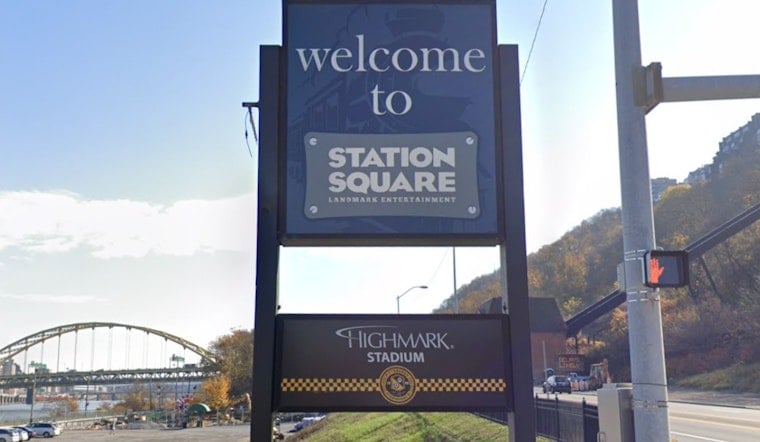
A touring festival celebrating Asian street food and culture is set to take over a Station Square parking lot in Pittsburgh from September 18 through September 20, bringing more than 80 food vendors, a marketplace of over 30 artisan sellers, and a 15-foot inflatable panda to the riverfront. Panda Fest will occupy the lot at 73 East Carson Street for three days of eating, shopping, and live entertainment as part of its expanding national tour.
According to WPXI, food vendors at the Pittsburgh stop will offer more than 200 Asian street food dishes representing China, Japan, Korea, Thailand, Vietnam and other regions. The event will run from 4 p.m. to 10 p.m. on Friday, September 18, 10 a.m. to 10 p.m. on Saturday, September 19, and 10 a.m. to 8 p.m. on Sunday, September 20. Alongside the food stalls, organizers plan traditional art demonstrations, contemporary dance, theatrical showcases, and live entertainment, plus a panda bounce house, themed treats, merchandise, interactive games, and photo spots.
Panda Fest is the creation of New York-based entrepreneur Xuan “BiuBiu” Xu, who previously launched the 2018 global pop-up The Egg House and the 2023 Chinese food festival Dragon Fest, according to Medium. Xu started the concept as a single-day New York pop-up called Panda Day in 2024 before expanding it into a national tour. In its first full year of touring in 2024, the festival produced 13 events across 11 U.S. cities and drew more than 500,000 total attendees, per Choose Chicago, before adding new 2026 stops in Pittsburgh, Denver, Orlando, and Houston.
Tickets, Pricing, and What's Included
Pittsburgh admission ranges from $10 Early Bird tickets to $14 General Admission, or $16 on Saturday, with $35 VIP passes that include fast-pass entry, exclusive VIP areas and restrooms, and a tote bag, according to Made in PGH. Every ticketholder receives a customized Pittsburgh-themed panda pin and headband, and Early Bird sales that opened July 28 were capped at 1,000 tickets per time slot. Tickets and event information are available online at pandafests.com, per WPXI's report.
Previous editions of Panda Fest have included lion dances, sugar painting, paper cutting, calligraphy, and K-pop dance performances, giving Pittsburgh attendees a sense of what the traveling festival typically offers beyond the food stalls. The marketplace portion will feature crafts, apparel, accessories, and artisanal goods inspired by Asian heritage across its more than 30 vendors.
Rules on Weapons, Outside Food, and Parking
Official festival rules strictly prohibit outside food and beverages, with exceptions only for one factory-sealed water bottle up to 16.9 ounces, infant formula, or medical dietary items, according to the official Panda Fest website. The event bans all weapons, including for off-duty and sworn law enforcement officers, along with smoking, vaping, and self-defense sprays. Children under six enter free without needing a ticket, the site notes.
Panda Fest maintains no affiliation with Station Square's parking garages or private lots, and organizers recommend attendees use rideshare services or public transit to reach the riverfront site, per the same site. Nearby paid parking structures include the Station Square Parking Garage and the lot at 237 West Carson Street.
A Riverfront Lot With Its Own History
Station Square, where the festival's East Lot sits along the Monongahela River, was established in 1976 by the Pittsburgh History & Landmarks Foundation as an adaptive-reuse festival marketplace that converted former Pittsburgh & Lake Erie Railroad buildings into a commercial district, according to the Pittsburgh Post-Gazette. The complex was later sold to commercial developer Forest City Enterprises in 1994. The East Lot itself was cleared after Allegheny County courts approved the 2014 demolition of Station Square's historic red-brick East Warehouse building, which previously housed nightlife venues including the Whim nightclub, to make way for parking and future development, the paper reported separately at the time.
Pittsburgh's Growing Asian Population
The festival's Pittsburgh debut arrives amid notable local demographic shifts. According to 2020 U.S. Census data reported by PublicSource, Pittsburgh's Asian population surged by 47% during the 2010s even as the city's total population fell by 0.89%. Countywide, U.S. Census Bureau estimates cited by Pittsburgh Quarterly show Allegheny County's Asian population grew by 23.9% between 2012 and 2017 to 48,396 residents, representing nearly 4% of the county's total population.
Pittsburgh already has established community-rooted gatherings celebrating Asian food and culture, including the monthly Squirrel Hill Night Market along Murray Avenue, which launched in 2015 and draws roughly 10,000 visitors per event, according to the Squirrel Hill Urban Coalition. The night market is a community-organized outdoor street festival with independent vendors, offering a community-organized counterpoint to the large-scale, ticketed touring model that Panda Fest brings to Station Square.
Panda Fest's Pittsburgh stop comes amid activity in other cities, including a planned Cincinnati event with more than 90 food vendors, a debut at Chicago's Grant Park, and other stops. The Pittsburgh dates mark the festival's first appearance in the city as its national footprint continues to expand into new metropolitan markets.





