

























































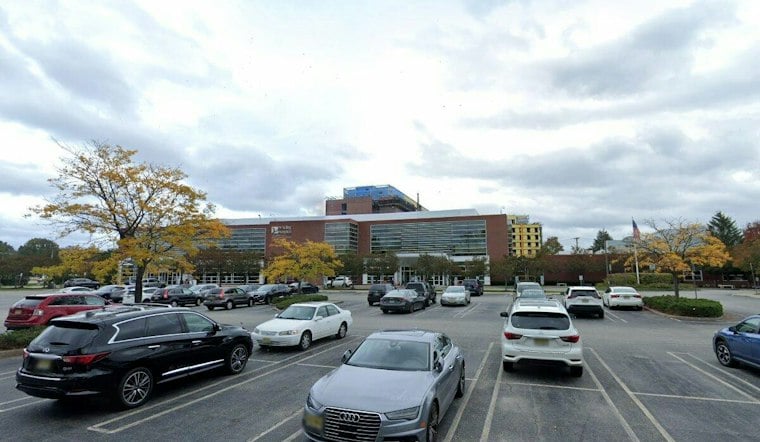
The Valley Hospital in Paramus has installed the Elekta Esprit Gamma Knife system, becoming the first health system in New Jersey to bring the technology into clinical use, according to Elekta. The new machine replaces the hospital's previous Elekta Icon unit at the Valley Gamma Knife Center and allows physicians to treat tumors and other conditions in the brain and skull without ever making an incision.
The hospital announced the installation on September 28, according to ROI-NJ, which first reported the news. Valley has offered Gamma Knife technology since 2011, using it to treat both benign and malignant conditions of the head and neck, per the same report. The Esprit is the latest version of the Leksell Gamma Knife line, a stereotactic radiosurgery platform that traces its roots to Sweden in the late 1960s, when Dr. Lars Leksell developed the concept; the technology first reached North American medicine at Pittsburgh's Presbyterian University Hospital in 1987, according to UPMC.
How the Technology Targets Tumors Without Cutting
Gamma Knife radiosurgery is a specialized form of radiation therapy built specifically for the brain, using hundreds of finely focused radiation beams aimed at a single defined target while sparing the surrounding healthy tissue, the ROI-NJ report notes. The Esprit system specifically relies on 192 simultaneous Cobalt-60 radiation sources converging on one point, achieving sub-millimeter precision while keeping the dose to healthy brain tissue extremely low, according to Imaging Technology News. Because there are no incisions involved, the procedure offers a non-invasive alternative to open brain surgery.
Chad DeYoung, a radiation oncologist and co-medical director of the Valley Gamma Knife Center, said the Esprit can treat complex brain conditions with sub-millimeter precision, providing effective treatment with fewer risks and shorter recovery times, per the ROI-NJ report. The system is used to treat acoustic neuromas, meningiomas, vestibular schwannomas, arteriovenous malformations, craniopharyngioma, gliomas, pineal tumors, pituitary tumors, and skull-base tumors, in addition to primary and metastatic brain tumors and trigeminal neuralgia.
A Neurosurgeon's Perspective on Precision Near Critical Brain Structures
Rupa Juthani, a neurosurgeon and co-medical director of the center, said the Esprit provides exceptional control and consistency near critical areas responsible for movement, speech, or vision, the outlet reported. That kind of precision matters given how common the conditions Gamma Knife treats can be: an estimated 200,000 people in the United States are diagnosed with brain metastases each year, making secondary brain tumors roughly ten times more common than primary brain tumors, according to the American Association of Neurological Surgeons. Trigeminal neuralgia, the severe facial-pain disorder also treated with the system, is diagnosed in roughly 15,000 people annually across the country, per Johns Hopkins Medicine.
Outpatient Procedure With Little Downtime
Gamma Knife radiosurgery is typically performed as an outpatient procedure that does not require general anesthesia, and most patients go home the same day, the ROI-NJ report states. Patients usually experience minimal disruption to their normal routines afterward, with little to no downtime.
The Esprit platform first received initial 510(k) premarket clearance from the U.S. Food and Drug Administration in October 2022, opening the door to its use across American medical centers, according to a release from Elekta. In July 2025, the FDA expanded that clearance to include non-invasive treatment of medically refractory, drug-resistant mesial temporal lobe epilepsy, marking a significant expansion of the platform's approved uses beyond brain tumors, per a separate Elekta announcement.
Why Dedicated Cranial Systems Still Matter
Research published in 2025 found that dedicated cranial radiosurgery platforms like the Gamma Knife deliver significantly lower radiation doses to normal brain tissue when treating multiple metastases, compared with multi-purpose linear accelerators or robotic body systems, according to a study in PubMed Central. Separately, a 2026 randomized phase III clinical trial presented by the Alliance for Clinical Trials in Oncology found that multi-session fractionated stereotactic radiosurgery following brain tumor surgery extended patient survival by a median of nine months compared with single-session treatment, as reported by Mirage News.
The upgrade arrives amid a period of rapid growth for Valley Health System, which relocated its primary acute-care hospital from Ridgewood to a newly built Paramus campus on April 14, 2024. Following record demand at the new facility, the health system presented plans to the Paramus Planning Board in July 2026 for a 200,000-square-foot expansion to add more than 100 inpatient beds, after recording 31,991 admissions and 81,664 emergency visits in 2025, according to Jersey Digs.


