

























































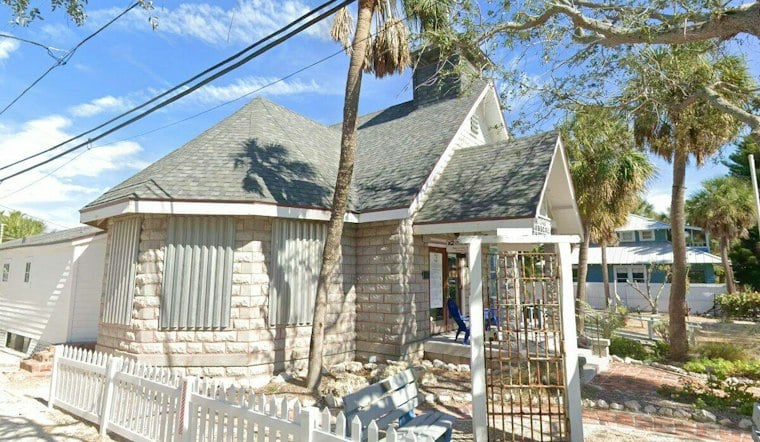
Two years after Hurricane Helene sent roughly 4.5 feet of water pouring into the Gulf Beaches Historical Museum, the 1917 landmark in Pass-a-Grille remains closed to the public, with county officials projecting a reopening in 2029. On Saturday, volunteers opened the doors for the first time since the storm for a resident storytelling event rather than a full relaunch.
The museum, tucked in the Pass-a-Grille neighborhood of St. Pete Beach, has sat shuttered since Hurricane Helene's storm surge tore through the barrier island community, according to FOX 13 Tampa Bay. The flooding damaged displays and belongings throughout the building, though Jerry Sarrube, vice president of the museum's board, said about 70 percent of what was inside was salvaged. Water damage hit display cases, shelving, maps, binders, and books, the station reports.
Among the items volunteers managed to save were logs documenting the Pass-a-Grille sunset bell tradition, a beloved local ritual that FOX 13 describes as 25 years old. According to Paradise News Magazine, the bell-ringing custom traces back to March 27, 1996, when local resident Captain Jim Myers started it at the nearby Paradise Grille. The bell has reportedly been rung every day since, except for four days during the COVID-19 pandemic, and the station notes a museum volunteer kept the tradition alive even during Helene itself.
A Church Turned Museum, Now Facing a Flood-Proofing Overhaul
The building was eventually given to Pinellas County for museum use, according to the station's report.
The museum is part of a coastal community exposed to extreme weather, a concern discussed in a study published through ERIC and the University of South Florida. The compound also includes a surplus military barracks moved to the grounds after World War II, per research from Digital Commons at the University of South Florida.
Pinellas County representatives recently toured the museum, and officials expect the design process to begin soon, the station notes. That design phase alone is expected to take about a year before construction can even start. The restoration will be funded primarily through FEMA grants, and per the same account, the plan calls for elevating all three connected historic structures above the 100-year floodplain to meet federal disaster-grant and local building standards.
Collection Safe in Largo While Volunteers Build a Storm Archive
While the physical building remains closed, the museum's salvaged collection and historical artifacts have been moved to Heritage Village, Pinellas County's living history museum in Largo, according to the Gulf Beaches Historical Museum. Sarrube projected the museum will reopen in 2029, the station reports.
In the meantime, museum volunteers and organizers plan to keep collecting stories and preserving Gulf Beaches community history, per the station's account. The recent storytelling event allowed residents to share their own memories of Hurricane Helene, and organizers are gathering those accounts with plans to turn them into a multimedia presentation once renovations are finished. Cory Brandt, Pinellas County's public participation and engagement coordinator, has been involved in that process, according to the station.
There's also a financial split behind the scenes: while government grants and county funds are covering the structural repairs and flood elevation work, the volunteer-led Friends of Gulf Beaches Historical Museum group is running its own fundraising effort to replace lost display cases, office supplies, and computer equipment, the museum's website notes. The museum sits within the Pass-a-Grille Historic District, listed on the National Register of Historic Places in October 1989 and expanded in 2003 to cover more than 400 contributing historic structures, according to Florida Memory, underscoring how much of the surrounding neighborhood shares the same preservation stakes.
Hurricane Helene's toll reached well beyond the museum's walls. The storm's surge inundated some coastal communities with nearly eight feet of water and brought more than six feet to St. Petersburg; Pinellas County's initial residential damage assessment topped $2 billion, according to the St. Pete Catalyst. The museum sits within the Pass-a-Grille Historic District, listed on the National Register of Historic Places in October 1989 and expanded in 2003 to cover more than 400 contributing historic structures, according to Florida Memory, underscoring how much of the surrounding neighborhood shares the same preservation stakes.


