

























































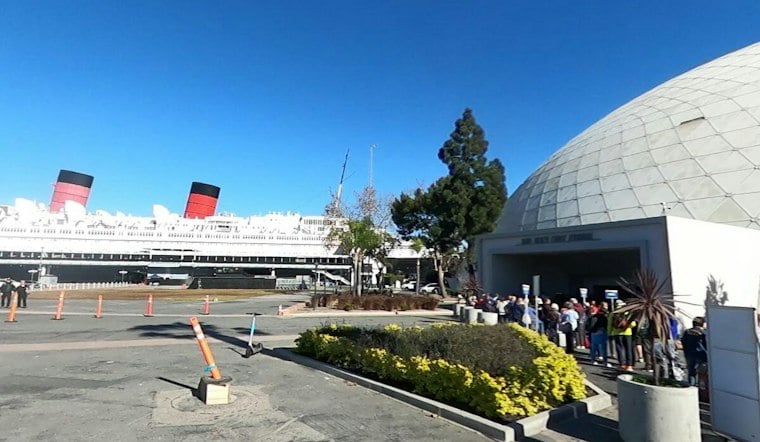
A passenger aboard Carnival Panorama went overboard Saturday during the ship's return to Long Beach, prompting a search and keeping thousands of travelers in their staterooms for hours. Announcements seeking the missing man began around 10:30 a.m.; by about 3:30 p.m., security teams were conducting cabin-by-cabin checks.
Carnival Panorama was sailing from Puerto Vallarta, Mexico, toward Long Beach when the incident occurred, according to the New York Post. Carnival confirmed the incident to The California Post and said it had notified the U.S. and Mexican Coast Guards as crew searched for the passenger, the Post reported. The ship turned around before continuing toward Southern California, and CCTV footage later confirmed that the passenger had gone overboard, according to Men's Journal.
A Ship Built for the Baja Run
The Panorama is a West Coast-based Carnival ship, a 133,500-ton vessel that debuted in December 2019 as the first new Carnival ship based on the U.S. West Coast in two decades, according to the Long Beach Post. The ship typically runs week-long Mexican Riviera itineraries out of its home port in Long Beach, making it one of the region's most familiar cruise vessels.
Federal law requires passenger ships embarking or disembarking in the U.S. to maintain exterior deck railings at least 42 inches high, a standard set under the Cruise Vessel Security and Safety Act of 2010, according to Professional Mariner. The requirement sets a federal safety standard for exterior deck railings.
Why Crews Search for Hours Before Confirming a Fall
Although the 2010 law also directed cruise ships to adopt technology capable of detecting or capturing images of people going overboard, Coast Guard regulatory guidelines describe image-capture systems, immediate detection and alarm systems, or a combination, Business Insider reported. In this case, the reported sequence involved a manual search and a review of footage before the passenger's fall was confirmed.
Broad industry figures provide context but do not establish what happened in this case. Researcher Dr. Ross Klein's data, cited by Quartz, includes 314 overboard incidents since 2000, while CLIA reported that successfully concluded investigations were, without exception, intentional or reckless, Business Insider reported. Quartz reported an average rescue rate of approximately 17% through mid-2017; that figure covers a wider set of incidents and should not be treated as a prediction for any individual event.
What the available records show
Carnival Cruise Line lists Long Beach as the departure point for Carnival Panorama's eight-day Mexican Riviera itinerary, placing the ship's regular route in the context of the Long Beach–Mexico sailing involved here, according to Carnival Cruise Line. The available federal record documents the regulatory focus on detection technology: a 2016 U.S. Coast Guard notice published in the Federal Register says the Coast Guard Authorization Act of 2015 required the agency to report to Congress on technology for immediately detecting passengers who fall overboard. That requirement explains why detection systems are part of the broader safety discussion, but it does not by itself show which technology was operating on Panorama or establish a case-specific recovery outcome.
Federal Jurisdiction Once the Ship Reaches Port
A cruise-ship death occurred in international waters.
In May, a male passenger died after climbing over his stateroom balcony and going overboard from the Carnival Liberty while sailing between Celebration Key and Nassau in the Caribbean.
Carnival has not released the identity of the passenger involved in Saturday's incident, and the Panorama continued on toward its Southern California port stop while the search continued.


