

























































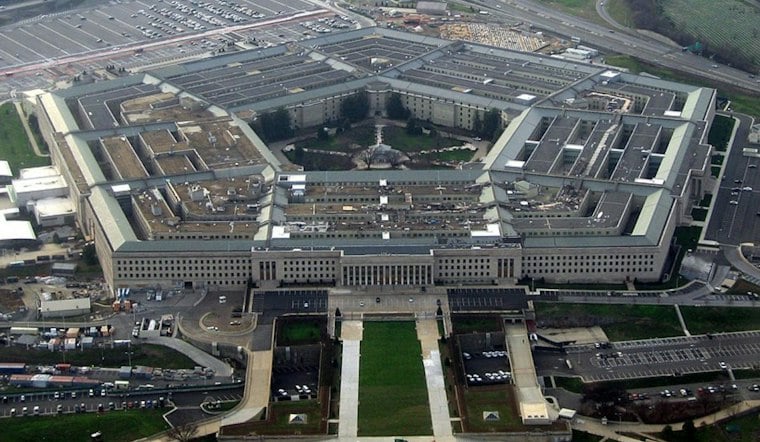
The Pentagon is moving toward awarding the contract to build the U.S. Navy's next-generation stealth fighter. The decision caps years of delays and funding disputes surrounding the program, known as the F/A-XX, which is meant to replace the aging F/A-18E/F Super Hornet fleet that has served the Navy since the 1990s.
As reported by Reuters, Boeing and Northrop Grumman are the two companies competing for the contract, which could be worth tens of billions of dollars over its lifetime based on previous similar programs. A Pentagon spokesperson said there is no additional information to share at this time, though the spokesperson added that the Pentagon continues work to award the F/A-XX contract in the near future. Lockheed Martin, which built both the F-22 and F-35, was eliminated from the competition in March 2025 after its design proposal failed to satisfy Navy requirements, according to Breaking Defense.
The timeline has already slipped past one very public deadline. Chief of Naval Operations Adm. Daryl Caudle said in April that the Navy expected to select a winner in August, a self-imposed target that came and went without an official announcement, per the same outlet's reporting. Breaking Defense has also reported that some Pentagon officials sought to delay the F/A-XX program by up to three years.
Congress Keeps Pushing Money Into a Stalled Program
Lawmakers have repeatedly stepped in to keep the program alive even as the Pentagon's own budget requests lagged. Congress earmarked $454 million for F/A-XX in the 2025 tax-cut and spending bill, then included $972 million for the program in fiscal 2026. Separately, congressional appropriators allocated $972 million in research and development funding for F/A-XX in January, plussing up the budget after the Pentagon had requested only $74 million for the fiscal year, according to DefenseScoop. Lawmakers urged the Navy to issue an award quickly to resolve the program stalemate.
The delays are not without a rationale from the top. The White House cautioned Congress last year that fully funding F/A-XX could slow progress on the Air Force's higher-priority F-47 sixth-generation fighter, a competition Boeing entered, Breaking Defense reported. Industrial-base concerns about building two sixth-generation fighters simultaneously help explain why the Navy's program kept getting pushed to the back burner even as lawmakers threw money at it.
What the Navy Wants From Its Next Jet
Operational requirements call for a combat radius roughly double that of the Super Hornet, which has about a 500 nautical mile range, while keeping the aircraft under an 85,000-pound maximum takeoff weight ceiling so it can still operate off carrier flight decks. That extended range is meant to let carrier strike groups operate outside adversary anti-ship missile engagement zones. Reuters notes the F/A-XX is expected to feature advanced stealth capabilities along with improved range and endurance, and it is designed as the centerpiece of the Navy's Next Generation Air Dominance family of systems — expected to integrate with uncrewed combat aircraft and the Navy's carrier-based air defense systems, according to USNI News.
For Northrop Grumman, winning would mark a return to a business it has not held in decades: it would be the company's first primary naval tactical fighter contract since it developed the carrier-based F-14 Tomcat, before Navy acquisitions shifted predominantly toward McDonnell Douglas and Boeing. For Boeing, the stakes run through St. Louis, Missouri, where the company invested $1.8 billion into its Advanced Combat Aircraft Facility to establish the site as its primary production base for sixth-generation fighter bids, as reported by The Aviationist. Hoodline has previously reported on how Boeing's St. Louis facilities are positioning the region for related drone production expansion tied to the Navy's MQ-25 Stingray program.
Workforce constraints in the defense industry underscore a broader challenge facing defense production. Estimates from manufacturing institutes put the number of open manufacturing jobs at more than 800,000, illustrating the workforce pressures that can affect advanced-defense production.
Bridging the Gap With Aging Jets
While the F/A-XX decision has dragged on, the Navy has had to spend heavily just to keep its current jets flying. The Navy awarded General Electric a $2.87 billion engine sustainment contract this month for F414 engines supporting a service-life extension program that raises Super Hornet airframe limits from 6,000 to 10,000 flight hours, according to Army Recognition. That Service Life Modification program is meant to keep existing F/A-18E/F jets operational through the 2030s, since the first F/A-XX production jets are not expected to enter service until that decade, with F/A-18 aircraft expected to remain in service into the 2040s. The Service Life Modification program is intended to extend Super Hornet service life. Mission capable rates are another fleet-readiness measure.
The F/A-XX delay leaves the Navy's future carrier-based fighter fleet unresolved. That warning comes as China fields advanced combat aircraft that Beijing describes as sixth-generation, and as China commissioned its first electromagnetic-catapult supercarrier, the Fujian, in November 2025 alongside expanding long-range anti-ship missile forces, according to Military Watch Magazine. The Fujian's commissioning came as China expanded its long-range anti-ship missile forces.





